



Bird guides protect nature, borders in SW China's Yunnan
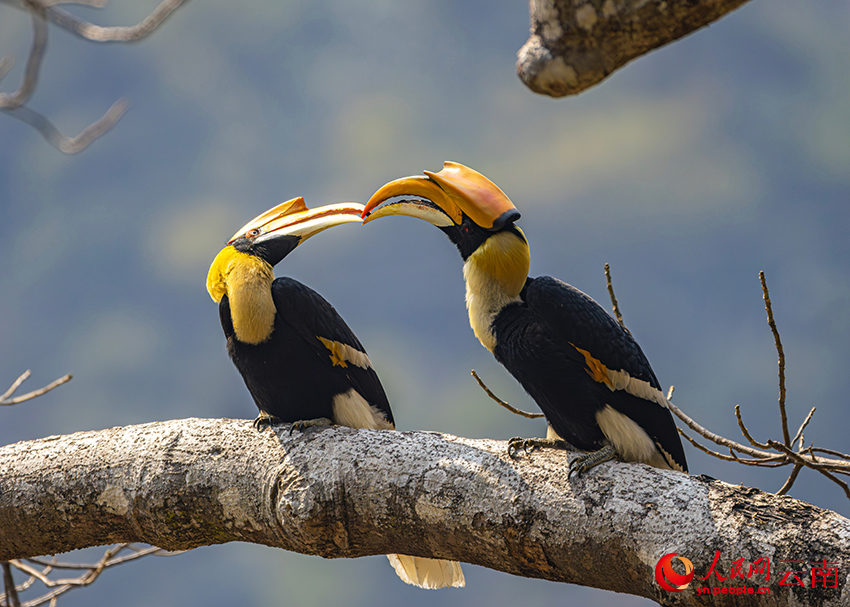
Photo shows great hornbills in Dehong Dai and Jingpo Autonomous Prefecture, southwest China's Yunnan Province. (Photo/Xu Jinhai)
In the forests of Shiti and Dagudi villages in Yingjiang county, Dehong Dai and Jingpo Autonomous Prefecture, southwest China's Yunnan Province, a familiar sight has emerged: groups of nimble figures moving through the trees, long-lens cameras in hand. They are local farmers and now go by a new name: "bird guides."
The two villages lie within the core zone of the Tongbiguan provincial nature reserve along the China-Myanmar border, near Xueli village, which is home to the country's only known site where three species of hornbills can be observed in the wild — a place known as "China's Hornbill Valley." The area is both a natural treasure trove of biodiversity and a frontline for safeguarding ecological and border security.
For generations, villagers here had few livelihood options. Mired in poverty, many turned to hunting and slash-and-burn farming to get by, caught in a vicious cycle of ecological degradation and poverty.
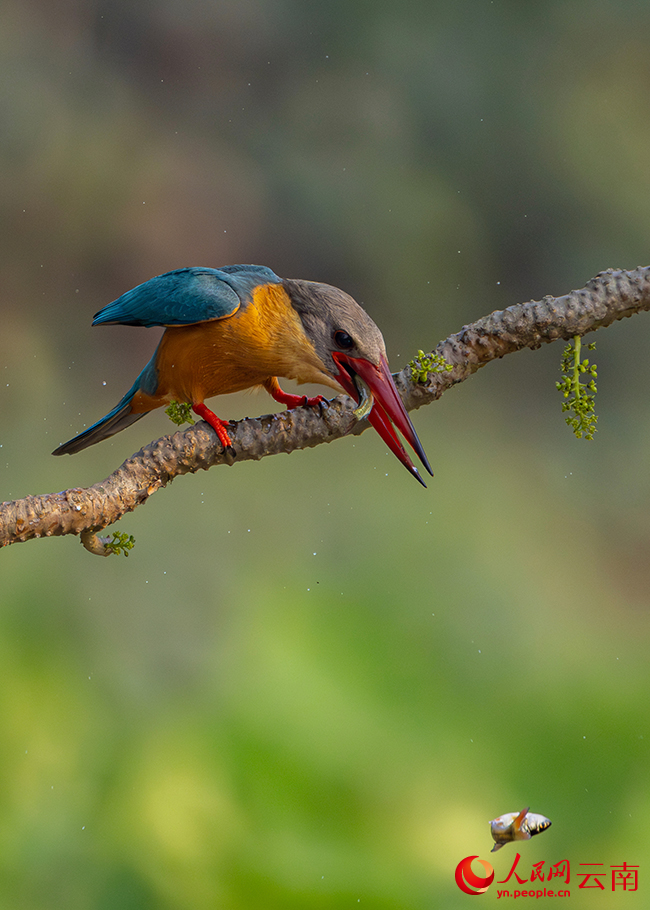
A stork-billed kingfisher catches a fish in Dehong Dai and Jingpo Autonomous Prefecture, southwest China's Yunnan Province. (Photo/Xu Jinhai)
That began to change as national policies on ecological conservation and border consolidation took effect. Dehong Prefecture, drawing on local conditions, has moved to integrate ecological protection with livelihood improvement and border governance.
Villagers in Yingjiang county are encouraged to form bird-watching cooperatives, build bird-watching ponds, work as bird guides and open B&Bs, developing a full industrial chain spanning bird-watching, photography, B&Bs and local agricultural products. Training programs covering ornithology, ecological conservation and national security awareness have helped villagers better understand and protect local bird species — and stay vigilant along the border — fostering a community-wide commitment to both ecological protection and border security.
"We used to hunt birds just to put food on the table. Now we protect the forest and photograph birds to build a better life — and to take care of our home," said Mu Hemen, a villager from Shiti village.
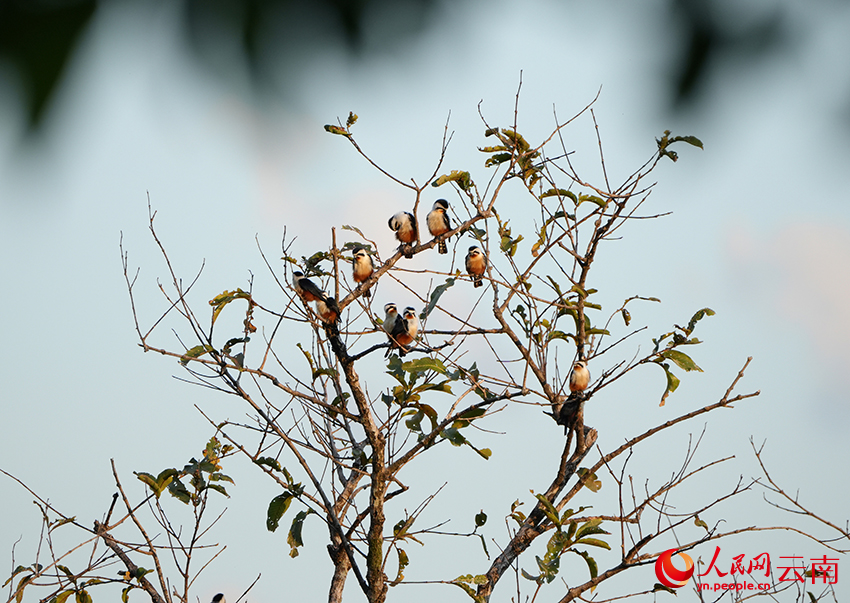
Collared falconets perch in a tree in Dehong Dai and Jingpo Autonomous Prefecture, southwest China's Yunnan Province. (Photo/Cai San)
Today, Xueli village has 37 bird-monitoring sites, 33 B&Bs and 10 restaurants. Villagers who once struggled to make ends meet are now benefiting from what locals call the "ecological dividend," with per capita income rising from under 2,000 yuan (about $293.36) in 2014 to more than 50,000 yuan today.
When leading tour groups, bird guides strictly enforce ecological conservation redlines, ensuring visitors do not stray into the reserve's core protected zone or disturb wildlife. When they encounter individuals using photography as a cover for illegally collecting wild plants and animals or scouting border facilities, they report them without hesitation.
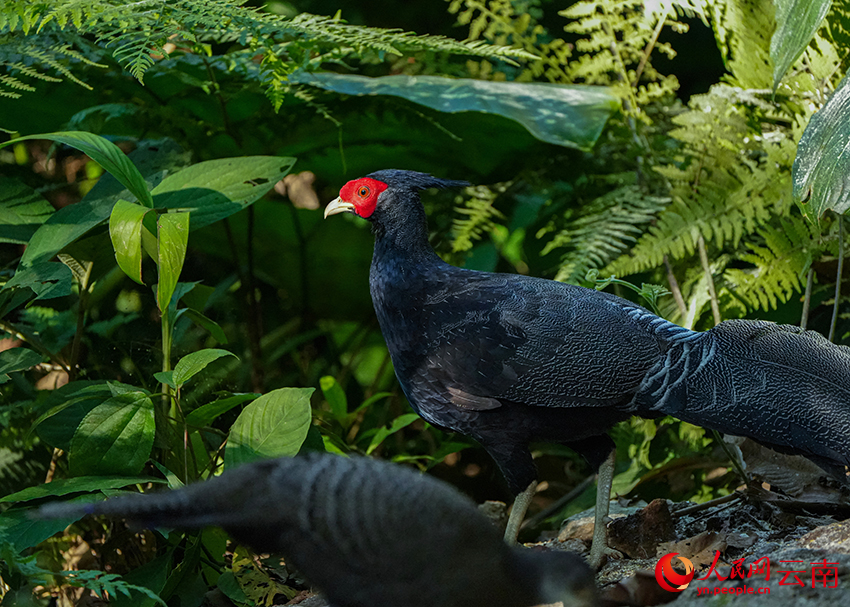
Photo shows kalij pheasants in Dehong Dai and Jingpo Autonomous Prefecture, southwest China's Yunnan Province. (Photo/Cai San)
Photos




Related Stories
- Ecological bird nests installed to protect migratory birds, power lines in Xinjiang
- Migratory birds seen on Yalu River estuary in Dandong, China's Liaoning
- Migratory birds flock to wetland park in E China's Anhui on northward journey
- Migratory birds pictured in China's Heilongjiang
- Caspian terns gather at Xinglin Bay in SE China's Xiamen
- Large number of herons seen in Jinjiang River in Chengdu, Sichuan
- In pics: birds seen at rice field in Bulacan Province, the Philippines
- Feature: Guardian's 40 years of protecting migratory birds at China's largest freshwater lake
- Migratory birds grace mangroves in S China's Guangxi
- Pic story of two generations of bird guardians in China's Jilin
Copyright © 2026 People's Daily Online. All Rights Reserved.
