



China claims global auto sales lead from Japan, sets sights on quality
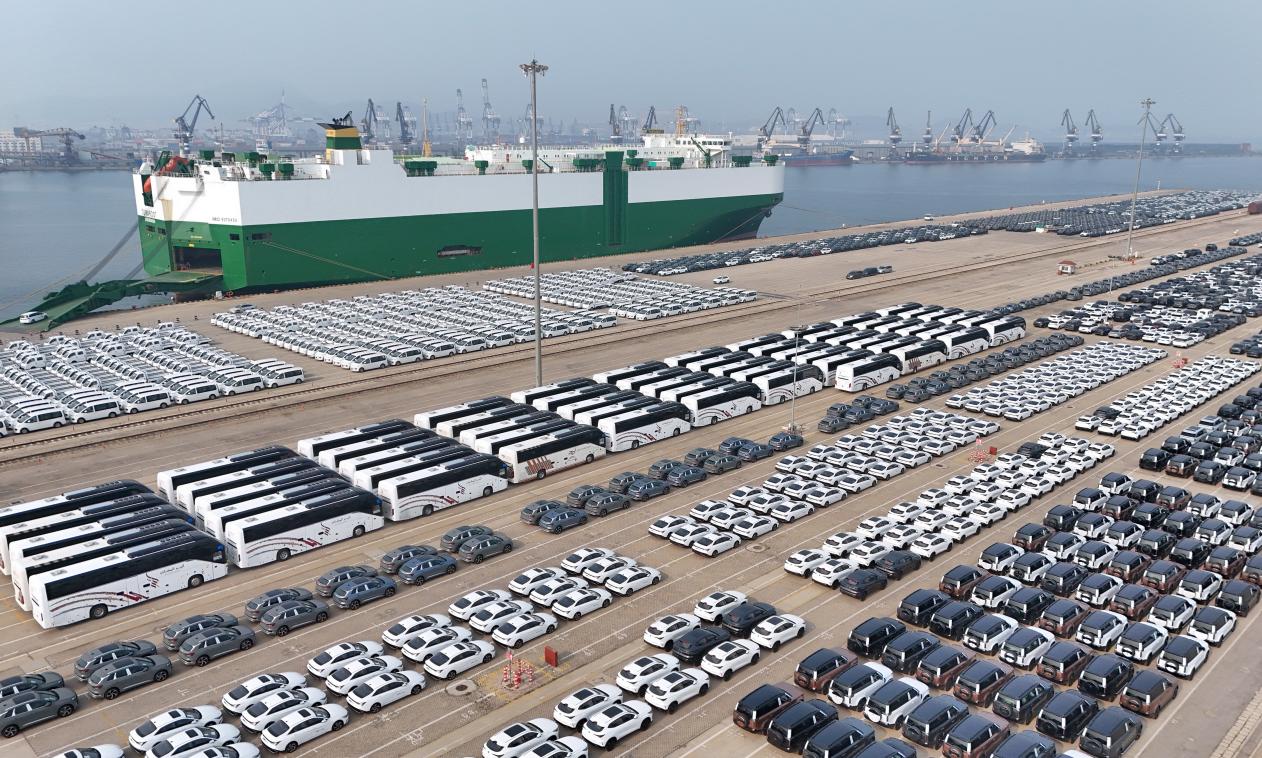
Chinese made vehicles are parked at the Yantai Port in east China's Shandong province, ready to be shipped overseas. (Photo/Tang Ke)
In a significant shift for the global automotive industry, Chinese automakers sold nearly 27 million vehicles worldwide in 2025, surpassing Japan's approximate 25 million sales. This marks the first time China has ended Japan's 25-year reign as the global sales leader.
The milestone is underscored by three Chinese companies now ranking among the world's top ten automakers. Notably, BYD secured its position as the global leader in new energy vehicle (NEV) sales for the fourth consecutive year.
The shift has sparked a wave of online comparisons: Nokia watching Apple's rise, or Kodak facing the digital revolution.
However, the rise of Chinese automakers is not simply a story about volume. It signals a generational transformation in the global auto industry, driven by strategic foresight and sustained innovation.
Often described as a "crown jewel" of modern industry, the automotive sector is a key indicator of a country's manufacturing strength.
In the early 20th century, Ford pioneered assembly-line production, shifting the industry's center from Europe to the United States. In the 1970s, following the oil shocks, Japanese automakers built global dominance on fuel efficiency and lean production. By 1980, Japan had overtaken the United States, and since 2000, companies like Toyota, Honda and Nissan set the pace.
Now, momentum has shifted decisively towards China.
As global decarbonization efforts accelerated, Chinese automakers moved quickly into electrification and intelligent technologies. This led to rapid advancements in areas like battery technology, large in-car displays, and urban Navigation on Autopilot (NOA).
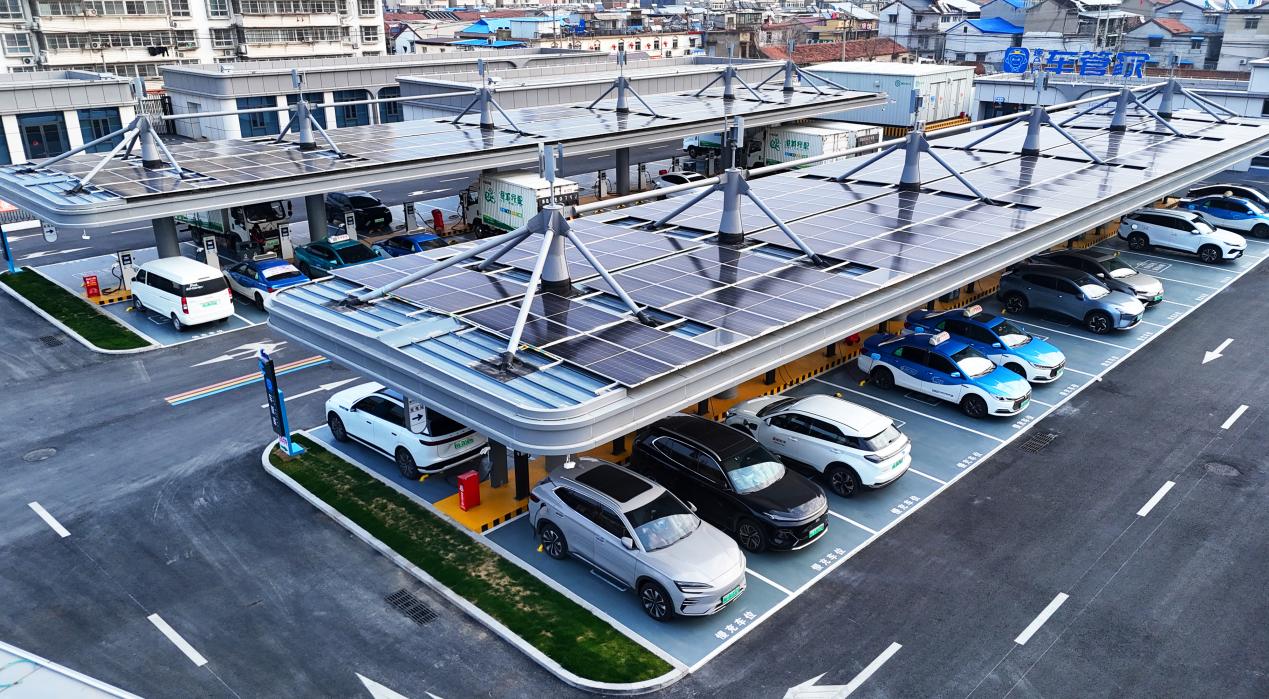
Photo shows a fast charging facility for new energy vehicles in Lianyungang, east China's Jiangsu province. (Photo/Geng Yuhe)
Meanwhile, segments of the Japanese auto industry deliberated over the pace of transition, debating whether electric vehicles would fully supplant hybrids.
This divergence in approach led to a widening gap. By 2025, NEVs accounted for nearly 60 percent of China's auto market, compared with less than 3 percent in Japan.
China's rise reflects a long-term strategic vision, not an overnight success. NEVs were designated a priority of the National High-tech R&D Program (863 Program) as early as 2001.
Over more than two decades, policies ranging from purchase subsidies to charging infrastructure development, alongside sustained technological breakthroughs and market cultivation, have laid a solid foundation for the industry.
Furthermore, China's comprehensive industrial chain and vast domestic market provided fertile ground for the rapid innovation and large-scale deployment of NEVs.
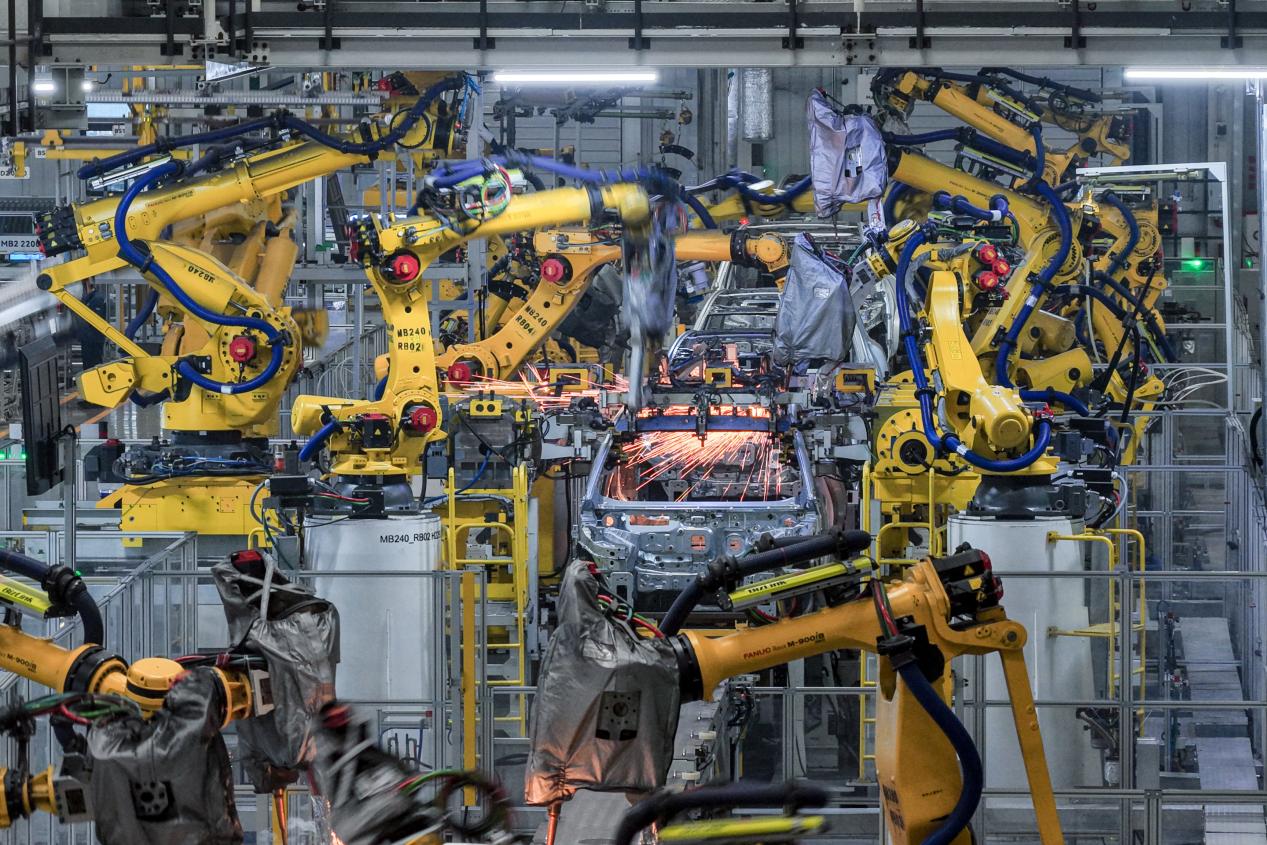
Robotic arms weld car frames in a smart factory of Chinese automaker Seres in Liangjiang New Area, southwest China's Chongqing municipality. (Photo/Wang Jiaxi)
This well-integrated ecosystem, encompassing upstream sectors like advanced materials, accelerated battery breakthroughs and enabled significant economies of scale.
This industrial clustering not only fosters coordinated innovation but also significantly reduces costs and shortens development cycles. Some estimates suggest Chinese automakers can develop a new electric vehicle in about 18 months -- more than twice as fast as many Japanese counterparts.
An analyst at Japan's Mizuho Bank attributed this to a combination of advanced technology, cost advantages and rapid R&D capabilities.
Yet, scale does not equate to strength. Despite a sharp drop in net profit in 2025, Toyota continues to generate higher per-vehicle profit -- around 17,000 yuan ($2,470) -- than its Chinese competitors.
Having secured the title of "volume champion," Chinese automakers now face the challenge of becoming "quality champions." Key hurdles remain: building stronger brand premium, navigating regulatory headwinds such as carbon tariffs and data security reviews in Europe and the United States, making charging as seamless as refueling; and advancing autonomous driving from promise to reality.
Each milestone reveals new challenges. However, one fact is undeniable: China's auto industry has moved to the center of the global stage. Its focus is shifting beyond speed and scale to pursuing long-term excellence and enduring quality in the new energy era.
Photos



Related Stories
- Chinese automakers overtake Japanese counterparts to lead global sales for 1st time: media
- China's Jiangsu accelerates automotive industry growth
- Chinese automakers gain broader foothold in Namibia's market
- China targets 100,000 fuel cell vehicles by 2030
- BBA's sales are 'losing steam' – innovation is redefining the future: People's Daily Rui Ping
- Feature: Chinese carmakers step up presence at Hungary auto show
- Chinese firm joins international automotive standardization organization
- Chinese automaker NIO enters Thailand with Firefly brand launch
- China's auto industry maintains global lead in production and sales for 17 consecutive years
- China issues compliance guide on auto pricing conduct
Copyright © 2026 People's Daily Online. All Rights Reserved.
