



World Data Organization established to bridge global data divide
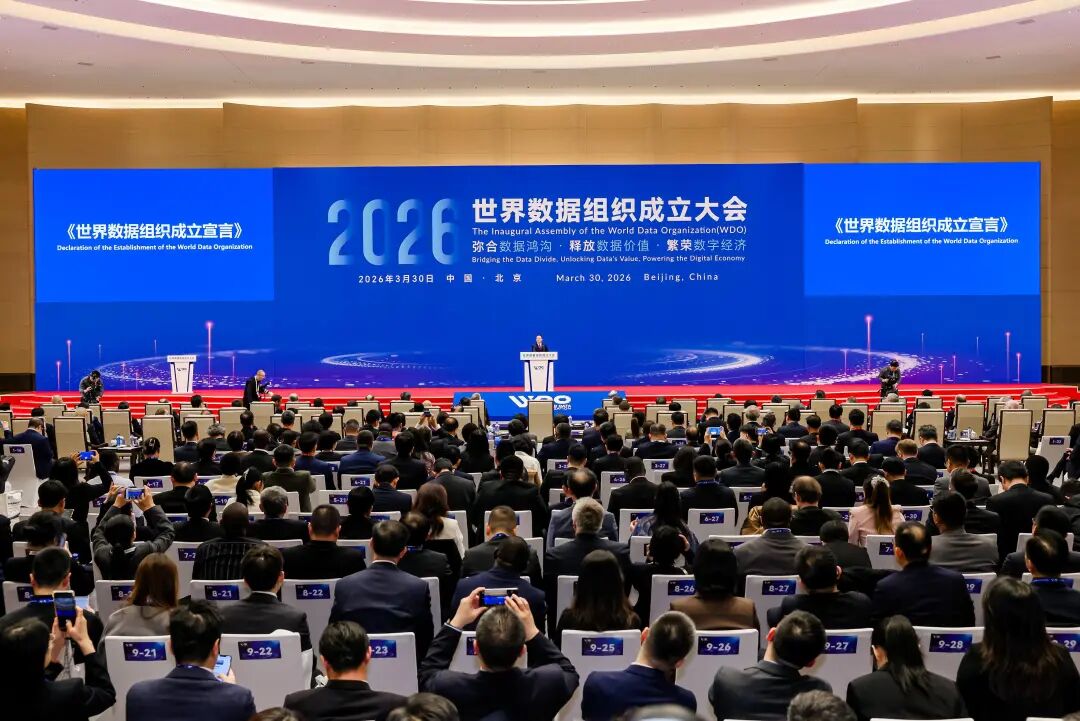
The World Data Organization is officially established, March 30. (Photo from Science and Technology Daily)
The World Data Organization (WDO) was officially established in Beijing on March 30, marking a new step toward strengthening global cooperation in data development and governance.
According to its preparatory committee, the organization is a professional, non-governmental, and non-profit international body voluntarily established by relevant entities and individuals in the global data sector. It is committed to "bridging the data divide, unlocking the value of data, and boosting the digital economy."
The launch of the WDO comes at a time when the world is rapidly entering an intelligent, data-driven era. The development and utilization of data resources are reshaping production, lifestyles, and governance, injecting fresh momentum into global technological innovation, economic growth, and social progress.
Tan Tieniu, chairman of WDO, highlighted the context for the organization's creation. He noted the sluggish pace of global economic recovery and the diminishing returns of traditional drivers like trade and investment. Meanwhile, the rise of the digital economy and the rapid development of artificial intelligence highlight the central role of data.
"How to fully unlock the potential of data and accelerate the growth of the digital economy is a shared challenge for humanity," he said, adding that a widely recognized international platform is needed to help address these issues.
Hu Jianbo, head of the National Data Administration's National Data Development Research Institute, said the organization will bring together enterprises, research institutions, industry groups, technical communities, and social organizations from around the world. Its goal is to build a global platform for cooperation on data development and governance.
The WDO plans to achieve its mission through several key activities: promote member services and industry self-regulation, conduct policy research and compliance services, facilitate connectivity of key infrastructure, deepen industry studies and public-interest initiatives, and provide platforms for exchange and collaboration. Through these efforts, it aims to enhance data resource utilization, promote global digital economy, and ensure that the benefits of digital and intelligent development are shared by more countries and regions.
"Huge productivity potential lies in data. China is the first country to recognize data as a factor of production, and the current development of the smart economy is bearing witness to the crucial value of data," said Zhang Xianghong, member of the National Data Expert Advisory Committee and professor at Beijing Jiaotong University. "Globally, a large number of people still lack internet access, and many low-income countries remain uncovered by 5G networks."
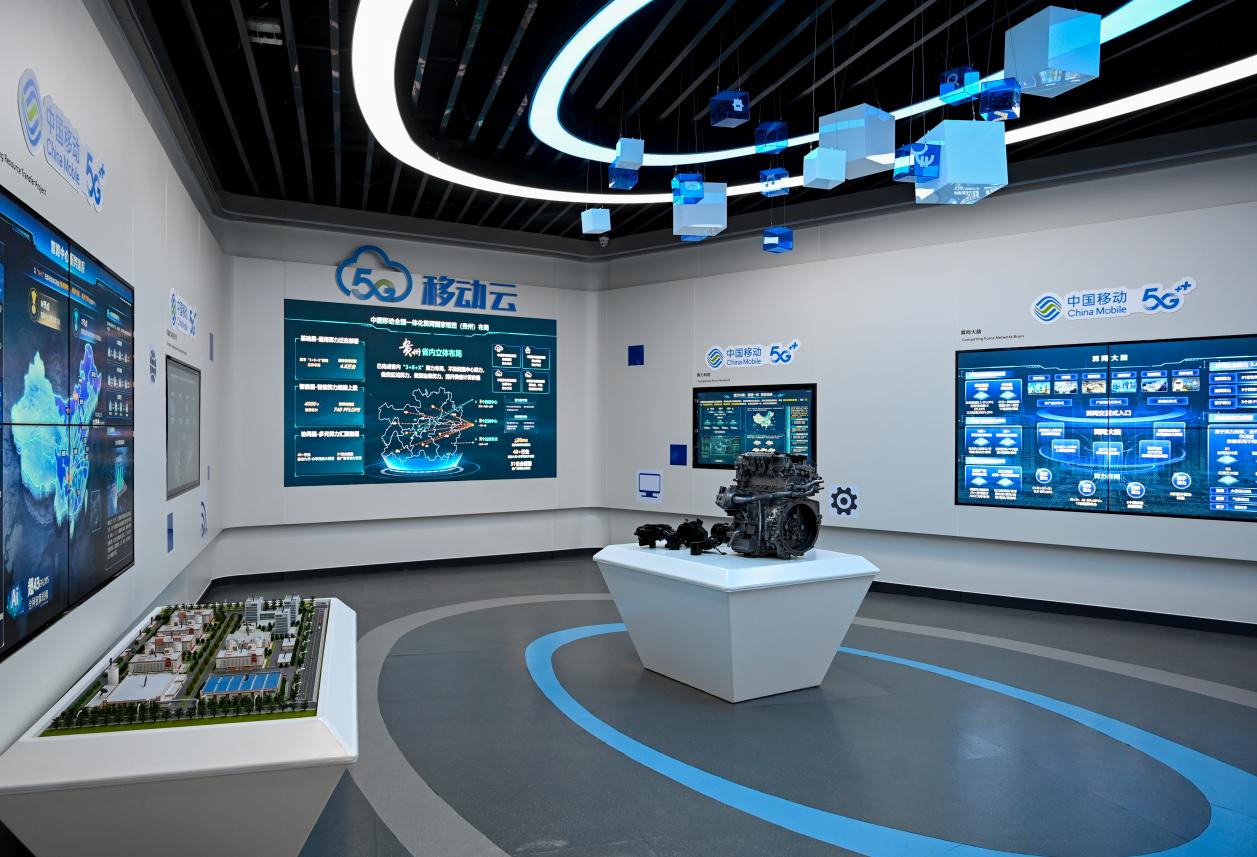
Photo shows an exhibition hall of the National Big Data (Guizhou) Comprehensive Pilot Zone. (Photo/Jia Zhi)
He believes that by sharing development concepts and practical experience, the WDO can help advance joint technology development, promote the sharing of achievements, improve data infrastructure connectivity, and strengthen digital talent training, allowing more countries to benefit from the digital dividend.
"The greater the flow of data, the more value it can unlock. Yet data is characterized by high mobility and high sensitivity, and its flow still faces challenges such as fragmented standards and rules, which constrain the release of data value," said Fang Yi, member of the National Technical Committee 609 on Data of Standardization Administration of China and chairman of MR Tech, a leading Chinese enterprise in data and intelligent technology.
He noted that standardized and institutionalized cooperation is particularly crucial amid the ongoing scientific and technological revolution and industrial transformation, helping to overcome bottlenecks in data circulation and support the high-quality development of the digital economy.

Robots are training at a data collection center for embodied artificial intelligence in Deqing, east China's Zhejiang province. (Photo/Zhao Ning)
So far, the WDO has brought together more than 200 members from over 40 countries.
Tan said the organization will work to address differences in national data policies, promote industry consensus, and develop standard recommendations and best practices. It will also provide reference frameworks for governments and research institutions, helping multinational companies reduce compliance costs.
At the same time, the WDO will also deepen the development and utilization of data in practical sectors including healthcare, education and energy, facilitate project implementation and industrial innovation, and strengthen talent training, especially helping countries of the Global South and developing countries enhance their data capabilities.
Photos



Related Stories
- Subsea server cooling: pioneering green data centers emerge in S China
- Chinese vice premier calls for enhancing global data governance
- World Data Organization established in Beijing
- Harnessing Xizang's high-plateau environment to build greener, more efficient data centers
- China to beef up personal data protection in internet applications
- China to accelerate building data property rights registration system
- China advances international cooperation on data standards
- China innovates network technology, achieving efficient data transmission
- China issues guideline to boost data-related disciplines
- China Dynamics: China's data industry more than doubles in market size during 2021-2025 period
Copyright © 2026 People's Daily Online. All Rights Reserved.
