



Boao Forum for Asia highlights Asia's growing role in driving global growth
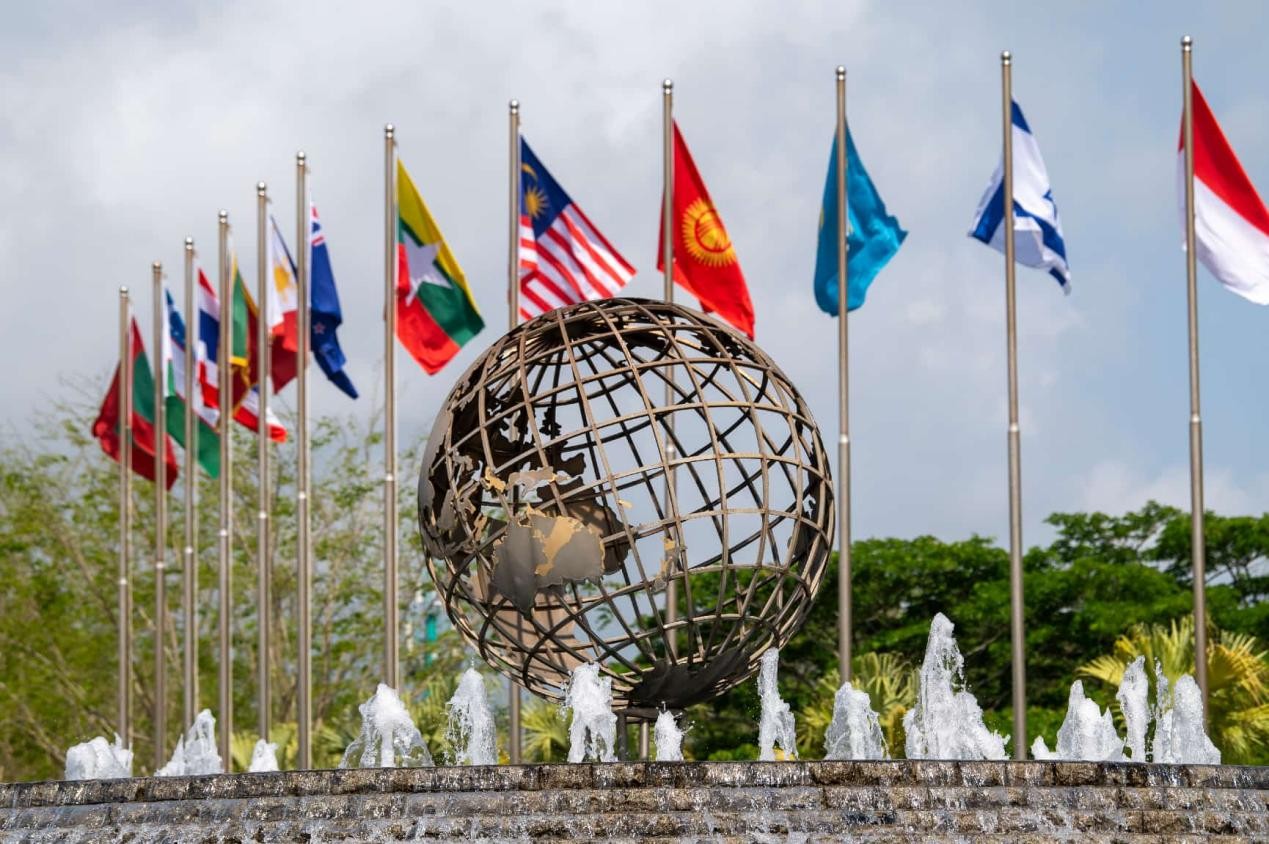
Photo shows a fountain square in front of the Boao Forum for Asia International Conference Center in Boao, south China's Hainan province. (Photo/Meng Zhongde)
Asia's economy continues to demonstrate strong resilience and positive momentum, making an important contribution to global growth and sustainable development, according to flagship reports of the Boao Forum for Asia (BFA).
The two reports, titled "Asian Economic Outlook and Integration Progress Annual Report 2026" and "Sustainable Development: Asia and the World Annual Report 2026," respectively, were released at a press conference for the BFA Annual Conference 2026 held in south China's Hainan province on March 24.
Attendees emphasized the immense potential of regional cooperation in Asia, calling for stronger confidence and joint efforts to address global challenges and inject greater certainty and positive momentum into an increasingly turbulent world.
"Sustainable Development: Asia and the World Annual Report 2026" pointed out that Asia plays a key role in promoting global economic growth, advancing economic transformation, and improving global governance.
Thanks to joint efforts across the region, Asia's progress toward the United Nations 2030 Agenda for Sustainable Development ranks among the strongest worldwide, with 10 out of 17 goals advancing faster than the average of other regions, further highlighting the region's resilience.
Yose Rizal Damuri, executive director of the Centre for Strategic and International Studies, Indonesia, projected that Asia's share of the world's GDP will rise to 49.7 percent this year. He said that Asia is a major source of global trade demand and supply, and an important driver of global economic progress.
Across the region, infrastructure projects such as cross-border power grids and renewable energy initiatives are steadily advancing. Regulatory and standard connectivity is also expanding into emerging areas including digital trade and cross-border payments.
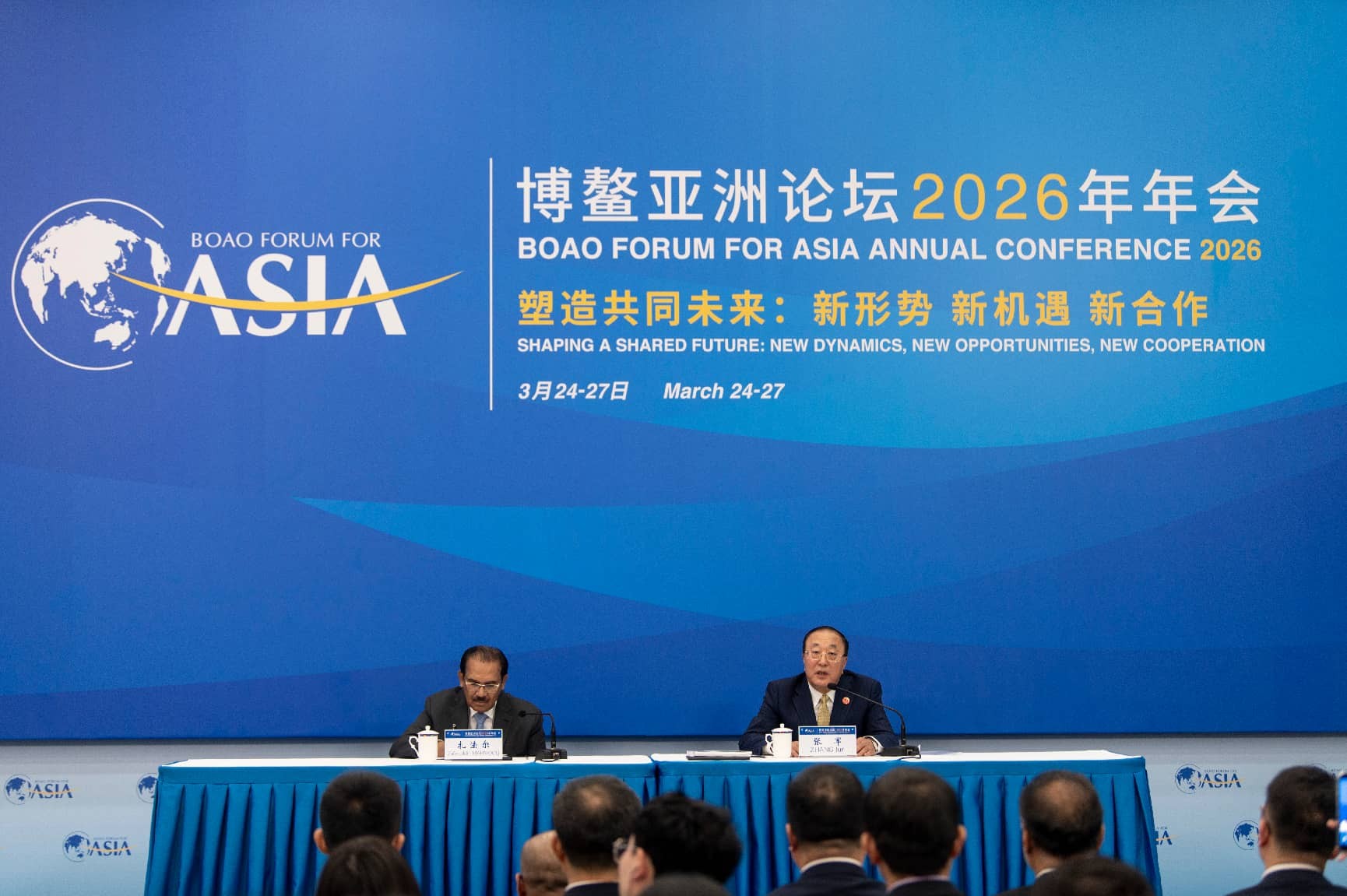
A press conference for the Boao Forum for Asia (BFA) Annual Conference 2026 and launch of the BFA flagship reports is held in Boao, south China's Hainan province, March 24, 2026. (Photo/Meng Zhongde)
Holger Bingmann, vice chairman of the Executive Board of the International Chamber of Commerce, emphasized that the real opportunity lies in restoring confidence in global free trade. In an era of uncertainty, openness itself is a powerful strength, he said, stressing the need to build new bridges to connect different regions and communities.
Amid a complex and uncertain international landscape, "stability" has emerged as a recurring theme at the forum. Denis Depoux, global managing director of Roland Berger, observed that countries in the Asia-Pacific, including China, are committed to anchoring stability through peace, cooperation, and multilateralism, an approach that is crucial for boosting investor confidence and fostering a stable investment environment.
"Asian Economic Outlook and Integration Progress Annual Report 2026" highlighted a major shift in the global artificial intelligence (AI) landscape. As the center of AI development increasingly moves toward Asia, regional economies are leveraging their large digital populations, diverse application scenarios, and systematic policy support to transition from followers to leaders, reshaping the global AI innovation ecosystem.
Deloitte China Research partner Lydia Chen noted that China has developed a comprehensive framework spanning computing infrastructure, talent cultivation, industrial support, and governance. She called on Asian countries to strengthen talent exchange networks and build cross-border technology cooperation platforms to sustain long-term competitive advantages.
Michele Geraci, former undersecretary of state at Italian Ministry of Economic Development, shared a personal example of regional connectivity: "I can now travel from Laos to China by train, thanks to the China-Laos Railway. With speeds reaching 150 kilometers per hour, travel time has been significantly reduced." In his view, cooperation in areas such as technology and infrastructure is helping drive shared development across Asia.
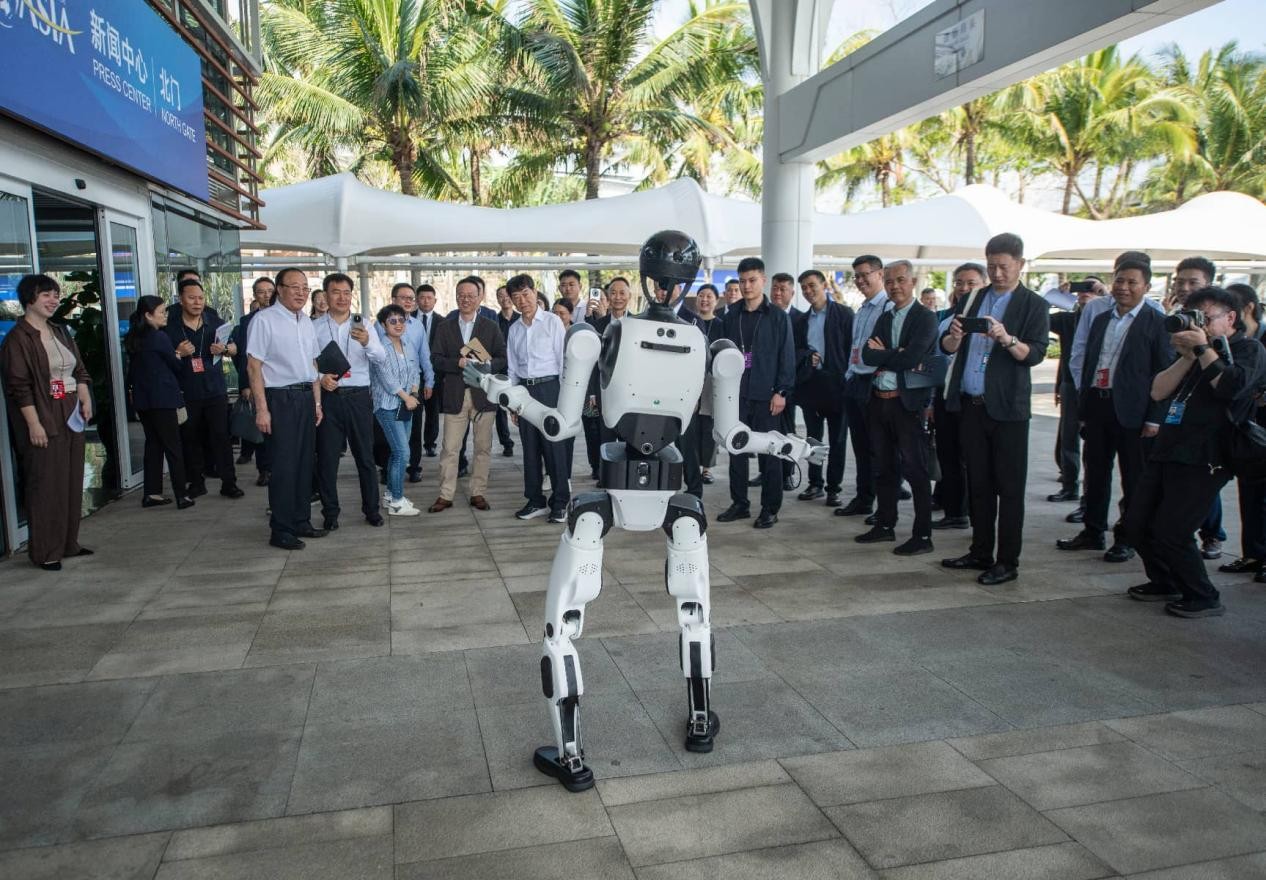
A humanoid robot is seen at the media center of the Boao Forum for Asia Annual Conference 2026, March 23, 2026. (Photo/Meng Zhongde)
Over its 25-year history, the BFA has become a witness to the key milestones in Asia's development. From the launch of the Regional Comprehensive Economic Partnership (RCEP) to the signing of the China-ASEAN Free Trade Area 3.0 Upgrade Protocol, and from the operation of the China-Laos Railway and the Jakarta-Bandung High-Speed Railway to the ongoing construction of Malaysia's East Coast Rail Link, regional cooperation continues to gain momentum.
Former President of the Philippines Gloria Macapagal Arroyo described this year's BFA annual conference as a milestone event. As China's global influence grows, she said, the forum is playing an increasingly prominent role as a platform for dialogue among political, business, and academic leaders from across Asia and beyond.
Countries across Asia hope to further advance integrated economic cooperation, said Kairat Sarybay, Secretary General of the Conference on Interaction and Confidence Building Measures in Asia. He said that geopolitical tensions, uncertainties in international trade, and rising protectionism pose challenges to global development, and that advancing economic integration in Asia will help boost confidence among all stakeholders.
BFA Secretary General Zhang Jun emphasized that the forum remains rooted in Asia while embracing the world, committed to advancing regional economic integration, strengthening exchanges and cooperation, and deepening mutual understanding and trust.
While acknowledging that the path toward economic integration and sustainable development will inevitably involve challenges, Zhang stressed that with strong confidence, solidarity, and perseverance, Asia can continue to move toward high-quality development and build a new growth paradigm that supports the "Century of Asia."
Photos
Related Stories
- Rural economies prosper in Boao Forum host town
- China's top legislator holds discussions with representatives of Chinese, foreign entrepreneurs
- BFA Annual Conference 2026: panel discussion on blue economy
- BFA Annual Conference 2026: panel discussion on "AI+Healthcare"
- Full text: Keynote speech by China's top legislator Zhao Leji at plenary of Boao Forum for Asia Annual Conference 2026
Copyright © 2026 People's Daily Online. All Rights Reserved.
