



"Chinamaxxing": a new wave of global cultural engagement
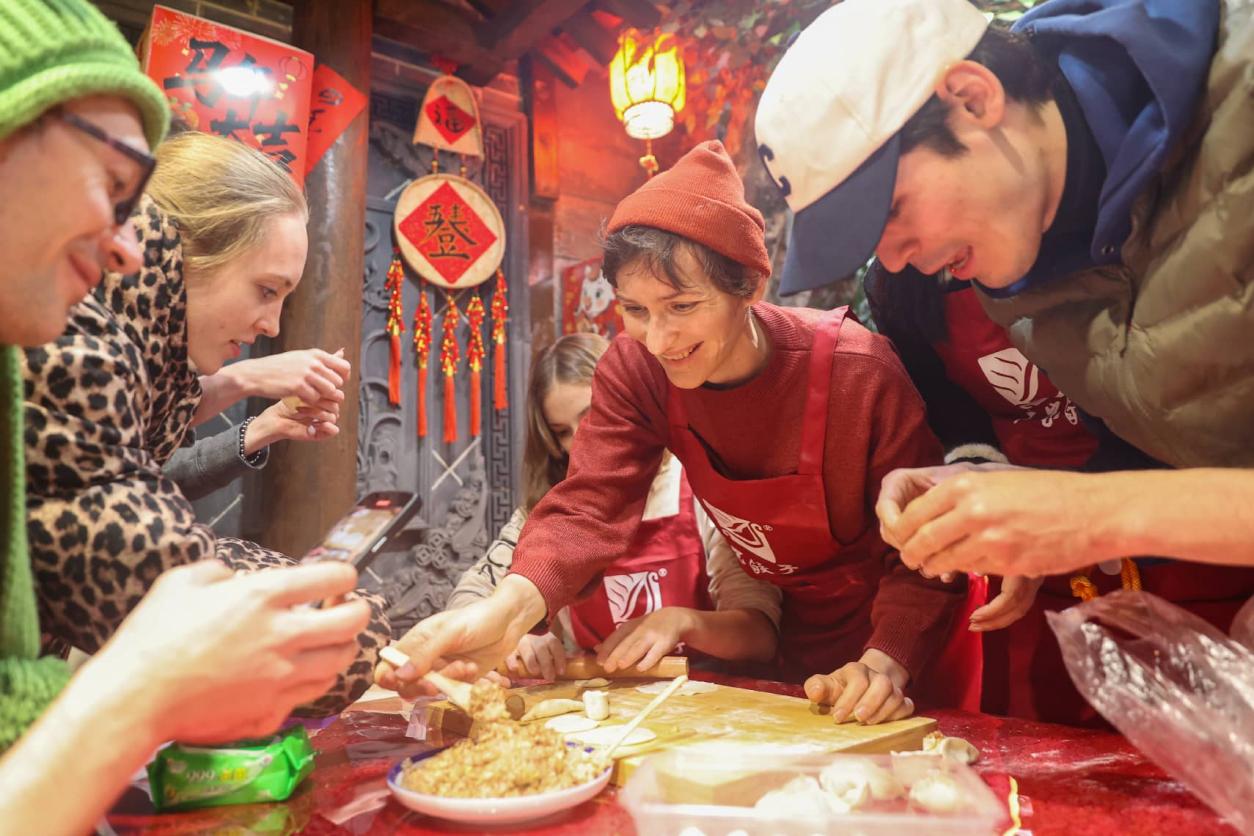
Foreign tourists make dumplings in a hotel in Sanmenxia, central China's Henan province. (Photo/Sun Meng)
Recently, a trend dubbed "Chinamaxxing" has been gaining traction on overseas social media. How this phenomenon is interpreted reflects differing attitudes toward cross-cultural exchange.
A growing number of overseas netizens describe themselves as being in a "Chinamaxxing" phase -- embracing Chinese ways of living. One original video tagged "becoming Chinese" has garnered over a million views, as practices like brewing wellness tea and practicing traditional Chinese health exercise Baduanjin(traditional Chinese health exercises) become symbols of a "cool" lifestyle among young people abroad.
And the trend is now moving offline. At markets in Kuala Lumpur, Malaysia, mamianqun, which literally translates into "horse-face skirts," a traditional Chinese costume, has become top sellers. In Italy, Spring Festival items such as couplets, paper-cuttings and zodiac-themed cultural products are enjoying brisk sales.
More people now believe that the best way to experience Chinamaxxing is to visit China in person. Data shows that during the Spring Festival holiday this year, inbound tourist visits to China doubled year on year.
Some media outlets have interpreted the Chinamaxxing trend not as cultural "role-playing," but as a form of "subconscious identification." Chinese culture is fully capable of inspiring such resonance.
By blending history with modernity, and tradition with fashion, China offers a uniquely rich cultural experience.
In today's China, one can enjoy the convenience of "doing it all with one smartphone." At the same time, traditional ways of living endure -- imbued with a sense of mindfulness, where everyday moments are approached with care and intention. Modern infrastructure like high-speed rail and 5G connects the country, while lesser-known "hidden gem" cities invite leisurely exploration. Cutting-edge technological innovation thrives alongside the unhurried craftsmanship of intangible cultural heritage.
As international visitors engage with and experience Chinese culture, what begins as a "cool" encounter often evolves into deeper reflection on ways of life, revealing the true essence and appeal of cross-cultural exchange.
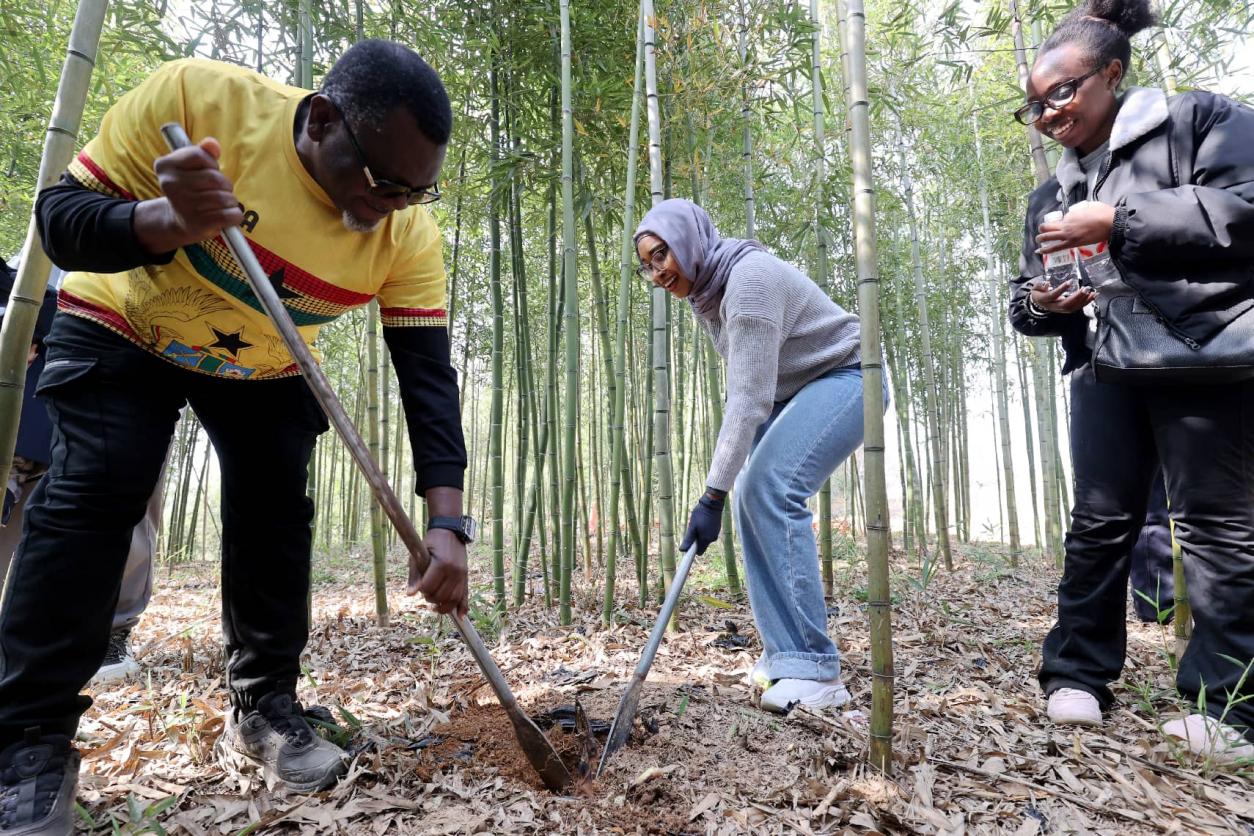
Foreigners dig up bamboo shoots in an agricultural park in Huzhou, east China's Zhejiang province. (Photo/Xie Shangguo)
The rise of the Chinamaxxing trend offers a fresh lens through which to understand China. There was a time when misconceptions and biases about the country circulated widely in some Western societies, shaping a distorted image of China. Today, however, China's continued development, expanding opening up and technological advances have paved the way for this Chinamaxxing phenomenon.
As more people engage with China firsthand, their understanding of the country deepens -- moving beyond traditional cultural symbols to shape a more nuanced view of the country. This shift, subtle yet profound, is reshaping global perceptions of China.
As some international observers noted: "What people see on TikTok is not a static, traditional China, but a modern and confident one." It offers, in their words, "a powerful correction to the image many grew up with."
That said, overcoming entrenched biases takes time. While more young people abroad are embracing habits like drinking warm lemon honey water, some in Western societies react with unease even anxiety.
They frame the Chinamaxxing trend as a form of "cultural shock," claiming that young people are "betraying" their own societies on aesthetic, moral, or even political grounds. Casting normal cultural exchange as "cultural infiltration" or "ideological invasion", or forcing it into a geopolitical narrative, says more about their own mindset than about the trend itself. Such thinking is increasingly out of step with the interconnected world, where exchanges among civilizations are constant.
As The Guardian, UK aptly observed, if embracing elements of other cultures, from Chinese aesthetics to French country kitchens, qualifies as "betrayal," then such "traitors" are everywhere.
Cultural exchange and mutual learning among civilizations is not a zero-sum game. The global spread of Chinese culture does not rely on imposition or indoctrination, but on sharing rooted in equality, respect and voluntary participation.
As more people around the world are naturally drawn to Chinese culture, rather than reacting with unnecessary anxiety, it may be wiser -- as one commentator suggested -- to pause, relax, and enjoy a cup of tea.
Photos




Related Stories
- On the Plan | China an 'island of stability,' says Vice Rector at HSE University
- China's development: Why it resonates beyond ideology
- China issues import tax incentives for sci-tech popularization
- Western leaders step up engagement with China amid global uncertainty
- Reading China's modernization through 50,000 kilometers of high-speed rail
- Good neighbors, shared future
- In a turbulent world, China's diplomacy stands out as a refreshing current: Global Times editorial
- In 2026, the world can continue to place expectations on China: Global Times editorial
- The 2025 Global Survey on Impression and Understanding of China EP03
- The 2025 Global Survey on Impression and Understanding of China EP02
Copyright © 2026 People's Daily Online. All Rights Reserved.
