



Manas in China's Xinjiang steps up improvement of sheep breeding
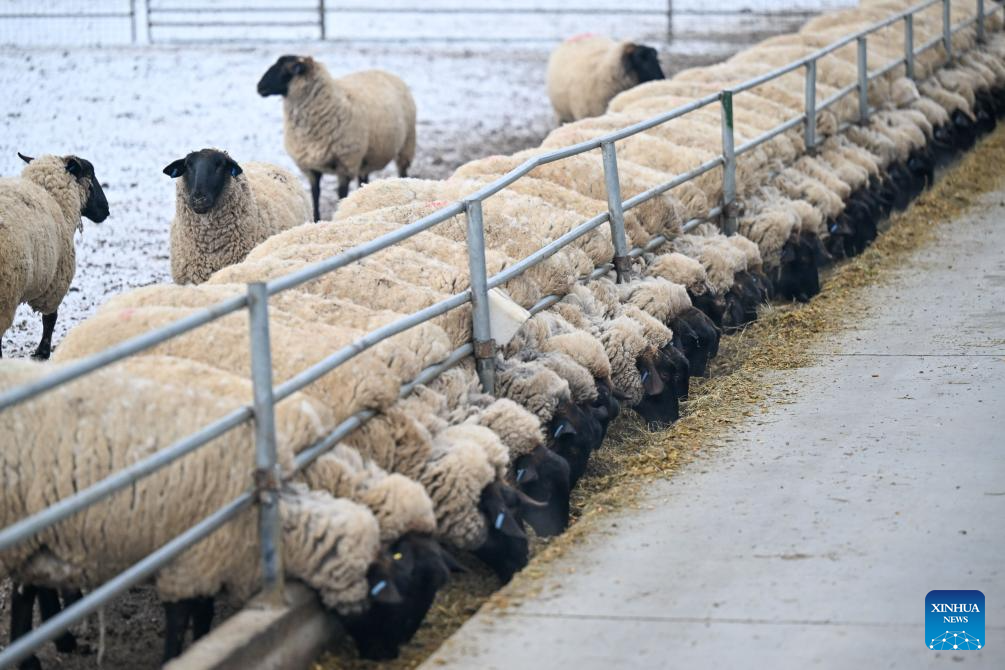
This photo taken on March 3, 2026 shows sheep at a sheepfold in Manas County of Changji Hui Autonomous Prefecture, northwest China's Xinjiang Uygur Autonomous Region.
Pastoral areas of Xinjiang welcome the lambing season. In Manas County of Changji Hui Autonomous Prefecture, about 180,000 breeding ewes have so far given birth to some 130,000 lambs, and lambing is expected to continue until early April.
In recent years, Manas has stepped up the improvement of sheep breeding to boost productivity, survival rate and meat quality. By shortening the time to market and increasing value added, improved breeds have become a key driver of industrial efficiency and higher incomes for local herders. (Xinhua/Ding Lei)
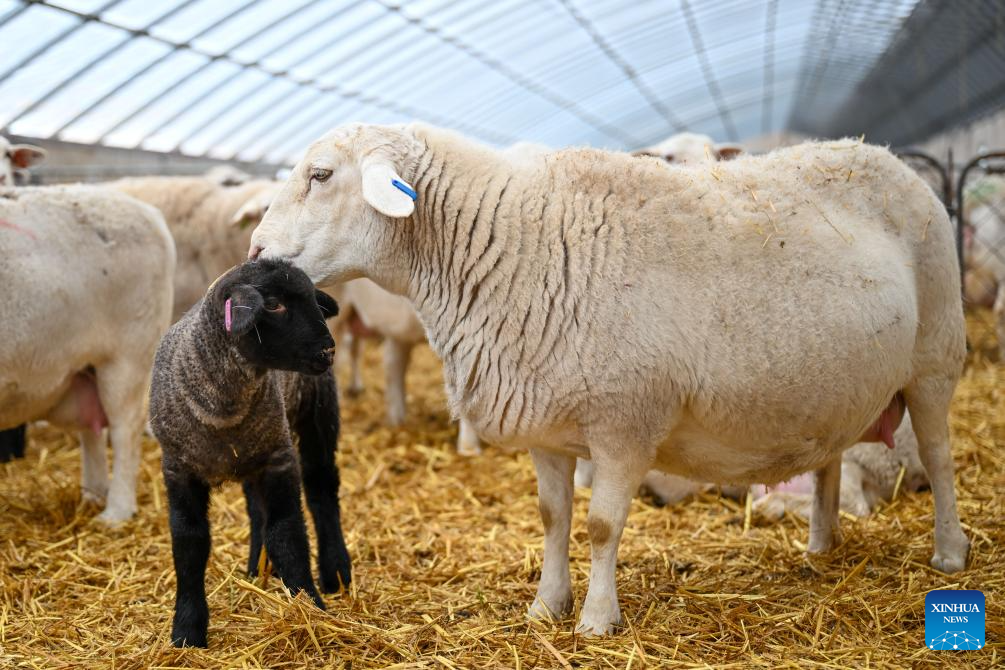
This photo taken on March 3, 2026 shows a lamb (L) standing beside a ewe at a sheepfold in Manas County of Changji Hui Autonomous Prefecture, northwest China's Xinjiang Uygur Autonomous Region.
Pastoral areas of Xinjiang welcome the lambing season. In Manas County of Changji Hui Autonomous Prefecture, about 180,000 breeding ewes have so far given birth to some 130,000 lambs, and lambing is expected to continue until early April.
In recent years, Manas has stepped up the improvement of sheep breeding to boost productivity, survival rate and meat quality. By shortening the time to market and increasing value added, improved breeds have become a key driver of industrial efficiency and higher incomes for local herders. (Xinhua/Ding Lei)
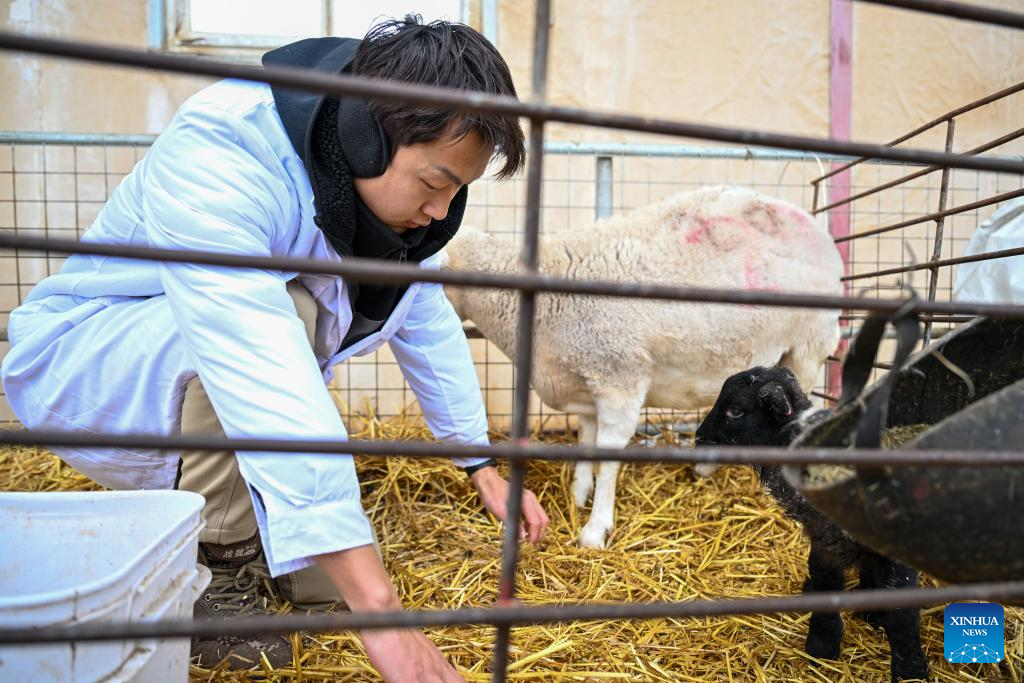
A staff member adds layers of straw to keep the sheepfold warm in Manas County of Changji Hui Autonomous Prefecture, northwest China's Xinjiang Uygur Autonomous Region, on March 3, 2026.
Pastoral areas of Xinjiang welcome the lambing season. In Manas County of Changji Hui Autonomous Prefecture, about 180,000 breeding ewes have so far given birth to some 130,000 lambs, and lambing is expected to continue until early April.
In recent years, Manas has stepped up the improvement of sheep breeding to boost productivity, survival rate and meat quality. By shortening the time to market and increasing value added, improved breeds have become a key driver of industrial efficiency and higher incomes for local herders. (Xinhua/Ding Lei)
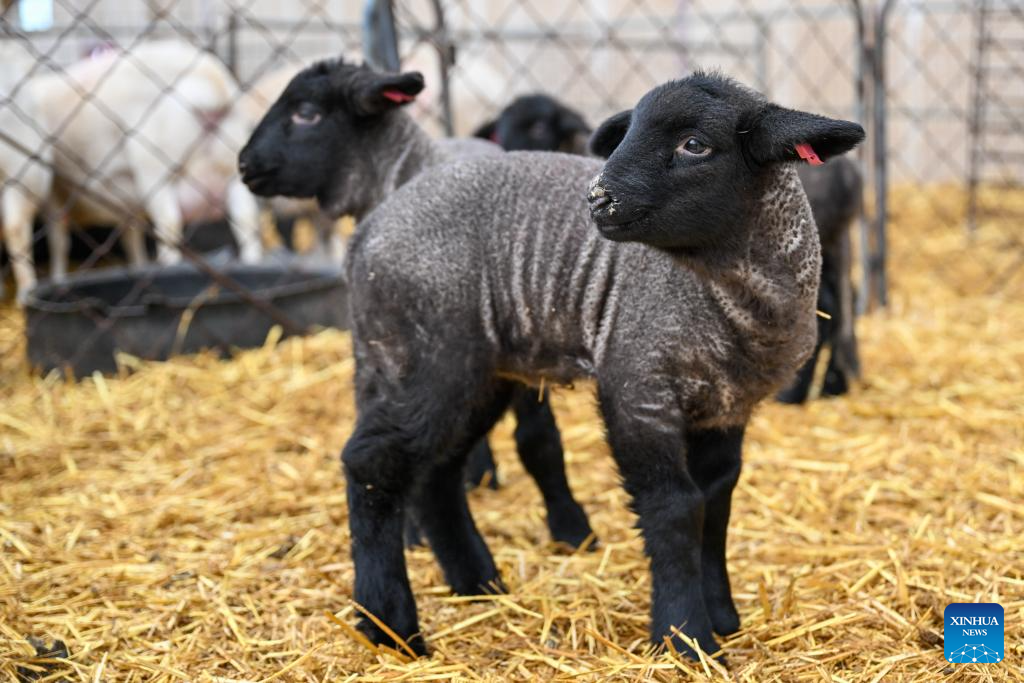
This photo taken on March 3, 2026 shows lambs at a sheepfold in Manas County of Changji Hui Autonomous Prefecture, northwest China's Xinjiang Uygur Autonomous Region.
Pastoral areas of Xinjiang welcome the lambing season. In Manas County of Changji Hui Autonomous Prefecture, about 180,000 breeding ewes have so far given birth to some 130,000 lambs, and lambing is expected to continue until early April.
In recent years, Manas has stepped up the improvement of sheep breeding to boost productivity, survival rate and meat quality. By shortening the time to market and increasing value added, improved breeds have become a key driver of industrial efficiency and higher incomes for local herders. (Xinhua/Ding Lei)
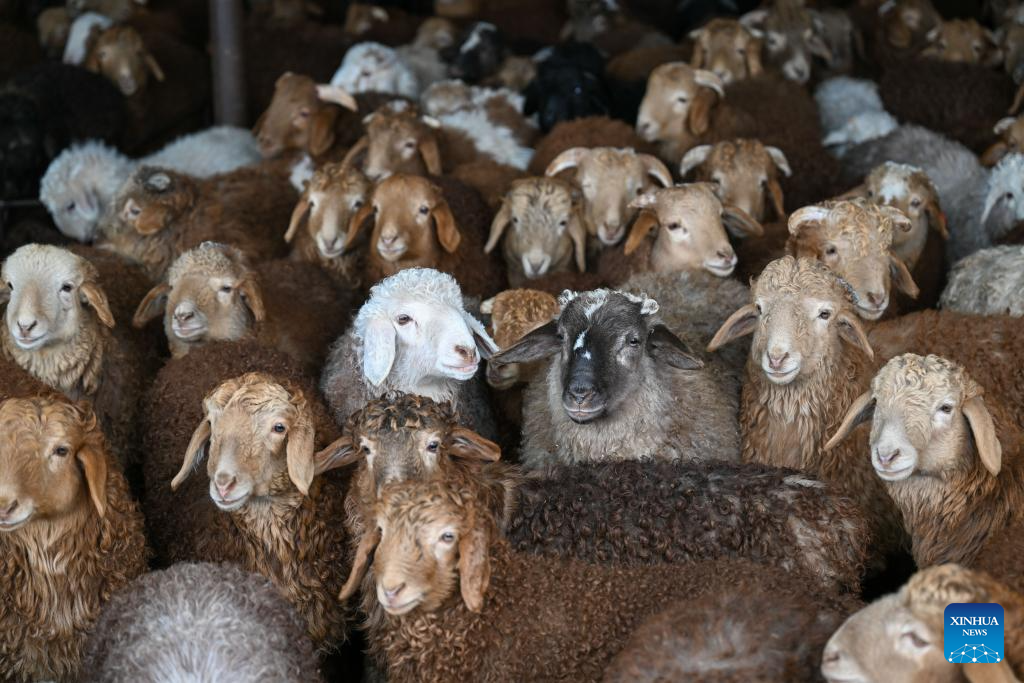
This photo taken on March 3, 2026 shows a flock of sheep at a sheepfold in Manas County of Changji Hui Autonomous Prefecture, northwest China's Xinjiang Uygur Autonomous Region.
Pastoral areas of Xinjiang welcome the lambing season. In Manas County of Changji Hui Autonomous Prefecture, about 180,000 breeding ewes have so far given birth to some 130,000 lambs, and lambing is expected to continue until early April.
In recent years, Manas has stepped up the improvement of sheep breeding to boost productivity, survival rate and meat quality. By shortening the time to market and increasing value added, improved breeds have become a key driver of industrial efficiency and higher incomes for local herders. (Xinhua/Ding Lei)
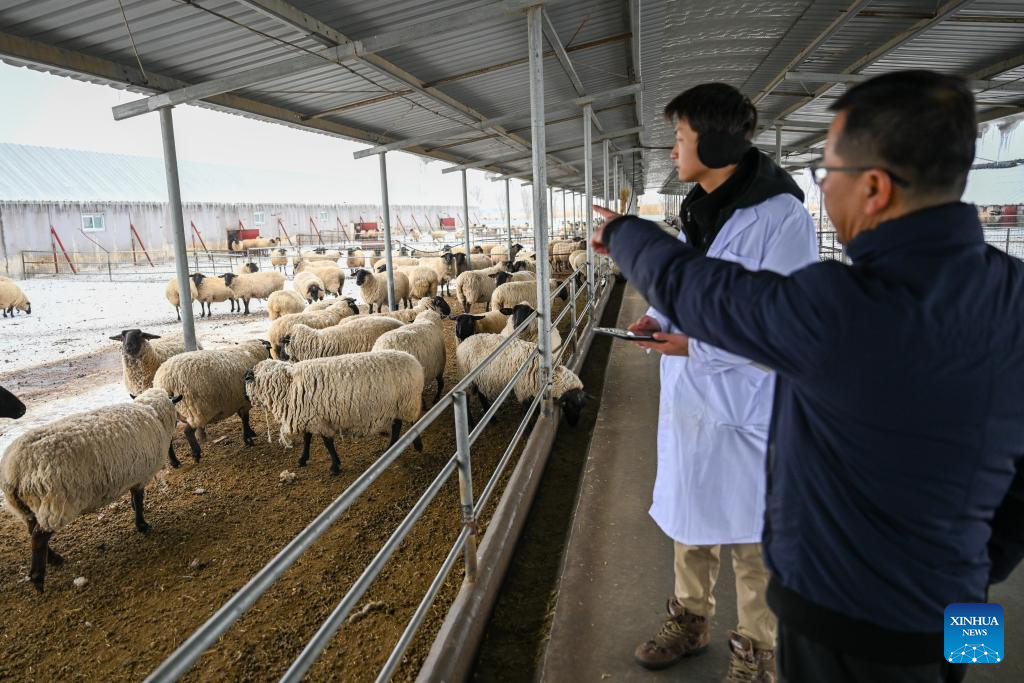
Staff members check the condition of ewes at a sheepfold in Manas County of Changji Hui Autonomous Prefecture, northwest China's Xinjiang Uygur Autonomous Region, on March 3, 2026.
Pastoral areas of Xinjiang welcome the lambing season. In Manas County of Changji Hui Autonomous Prefecture, about 180,000 breeding ewes have so far given birth to some 130,000 lambs, and lambing is expected to continue until early April.
In recent years, Manas has stepped up the improvement of sheep breeding to boost productivity, survival rate and meat quality. By shortening the time to market and increasing value added, improved breeds have become a key driver of industrial efficiency and higher incomes for local herders. (Xinhua/Ding Lei)
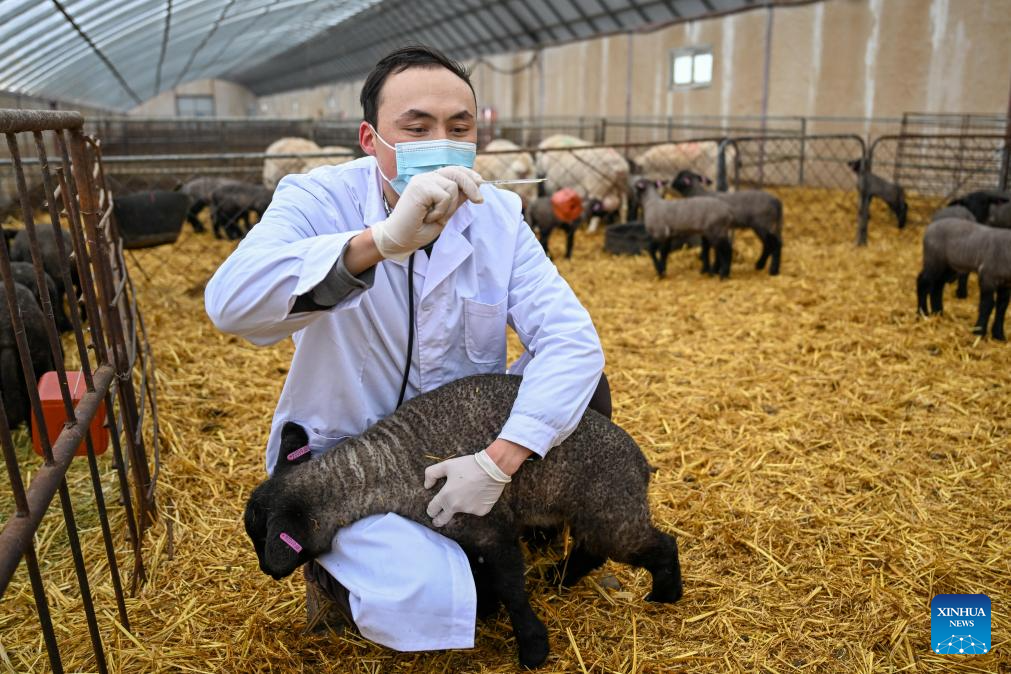
A staff member checks the body temperature of a lamb at a sheepfold in Manas County of Changji Hui Autonomous Prefecture, northwest China's Xinjiang Uygur Autonomous Region, on March 3, 2026.
Pastoral areas of Xinjiang welcome the lambing season. In Manas County of Changji Hui Autonomous Prefecture, about 180,000 breeding ewes have so far given birth to some 130,000 lambs, and lambing is expected to continue until early April.
In recent years, Manas has stepped up the improvement of sheep breeding to boost productivity, survival rate and meat quality. By shortening the time to market and increasing value added, improved breeds have become a key driver of industrial efficiency and higher incomes for local herders. (Xinhua/Ding Lei)
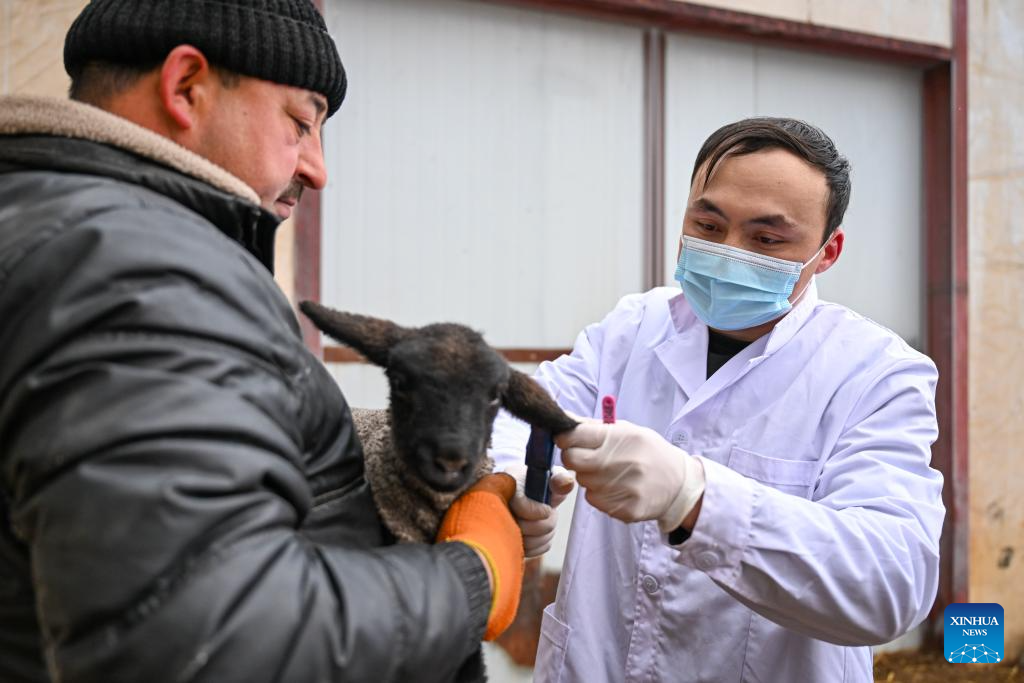
Staff members put on an ear-tag on a lamb at a sheepfold in Manas County of Changji Hui Autonomous Prefecture, northwest China's Xinjiang Uygur Autonomous Region, on March 3, 2026.
Pastoral areas of Xinjiang welcome the lambing season. In Manas County of Changji Hui Autonomous Prefecture, about 180,000 breeding ewes have so far given birth to some 130,000 lambs, and lambing is expected to continue until early April.
In recent years, Manas has stepped up the improvement of sheep breeding to boost productivity, survival rate and meat quality. By shortening the time to market and increasing value added, improved breeds have become a key driver of industrial efficiency and higher incomes for local herders. (Xinhua/Ding Lei)
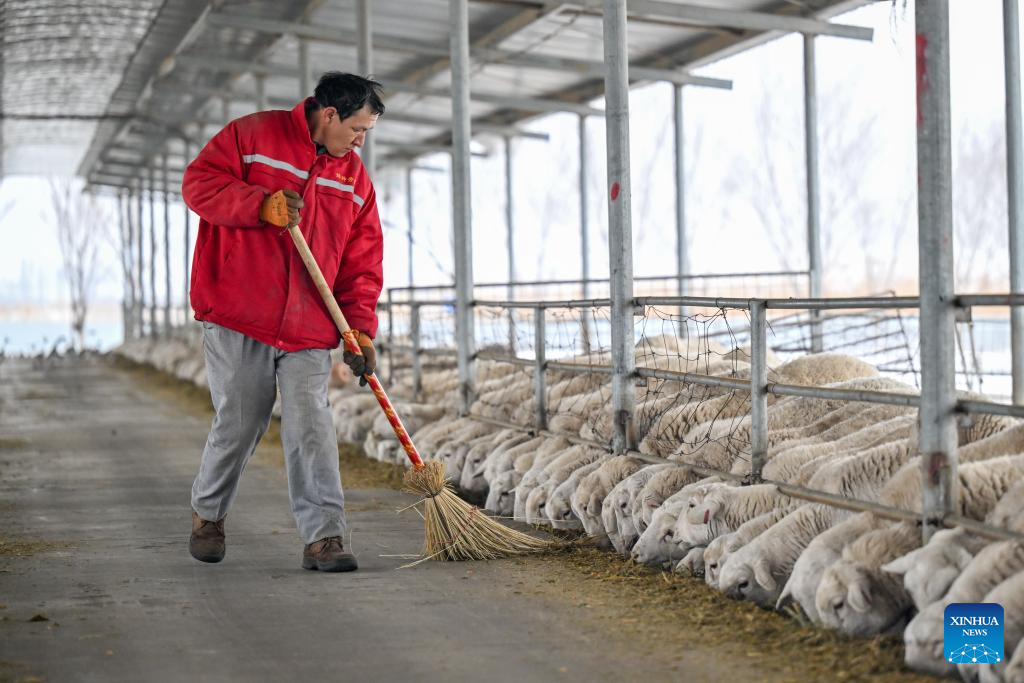
A staff member cleans the sheepfold in Manas County of Changji Hui Autonomous Prefecture, northwest China's Xinjiang Uygur Autonomous Region, on March 3, 2026.
Pastoral areas of Xinjiang welcome the lambing season. In Manas County of Changji Hui Autonomous Prefecture, about 180,000 breeding ewes have so far given birth to some 130,000 lambs, and lambing is expected to continue until early April.
In recent years, Manas has stepped up the improvement of sheep breeding to boost productivity, survival rate and meat quality. By shortening the time to market and increasing value added, improved breeds have become a key driver of industrial efficiency and higher incomes for local herders. (Xinhua/Ding Lei)
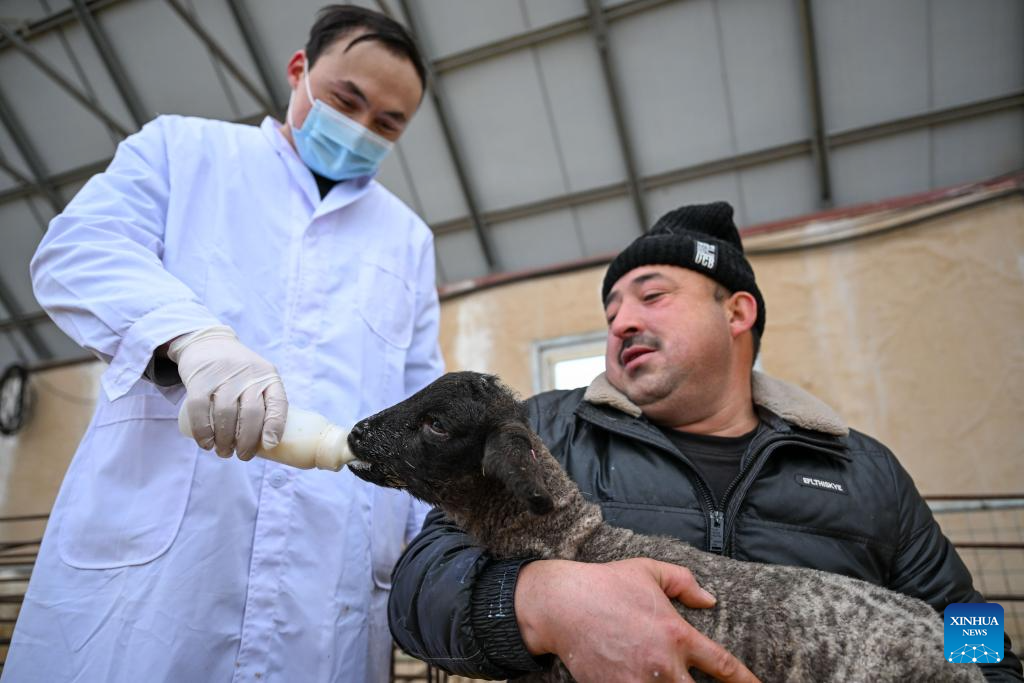
Staff members feed a lamb at a sheepfold in Manas County of Changji Hui Autonomous Prefecture, northwest China's Xinjiang Uygur Autonomous Region, on March 3, 2026.
Pastoral areas of Xinjiang welcome the lambing season. In Manas County of Changji Hui Autonomous Prefecture, about 180,000 breeding ewes have so far given birth to some 130,000 lambs, and lambing is expected to continue until early April.
In recent years, Manas has stepped up the improvement of sheep breeding to boost productivity, survival rate and meat quality. By shortening the time to market and increasing value added, improved breeds have become a key driver of industrial efficiency and higher incomes for local herders. (Xinhua/Ding Lei)
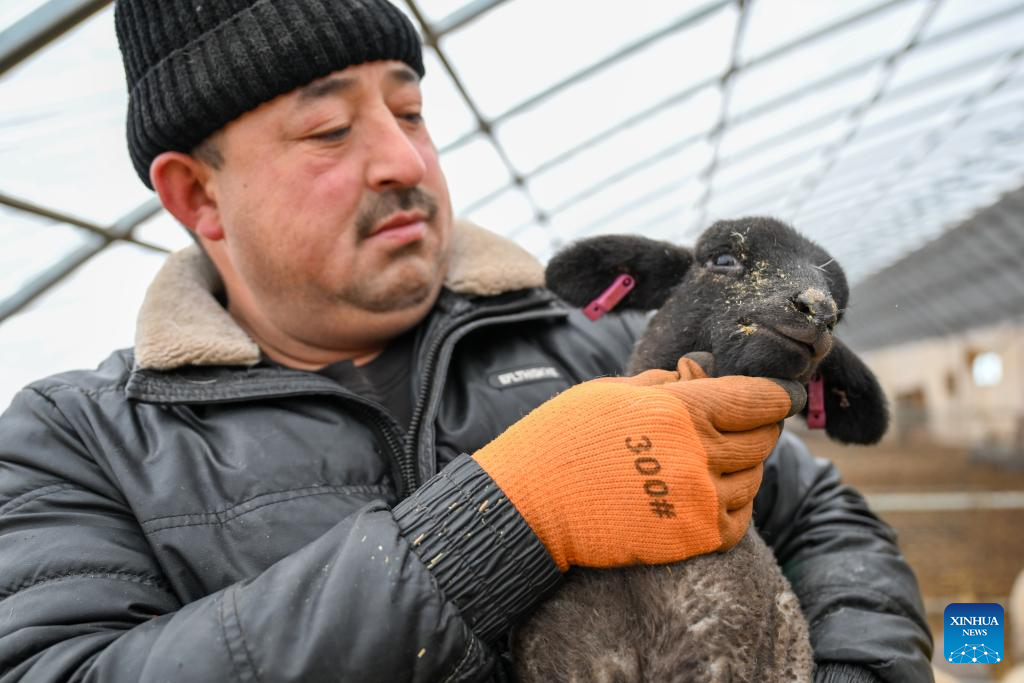
A staff member checks the condition of a lamb at a sheepfold in Manas County of Changji Hui Autonomous Prefecture, northwest China's Xinjiang Uygur Autonomous Region, on March 3, 2026.
Pastoral areas of Xinjiang welcome the lambing season. In Manas County of Changji Hui Autonomous Prefecture, about 180,000 breeding ewes have so far given birth to some 130,000 lambs, and lambing is expected to continue until early April.
In recent years, Manas has stepped up the improvement of sheep breeding to boost productivity, survival rate and meat quality. By shortening the time to market and increasing value added, improved breeds have become a key driver of industrial efficiency and higher incomes for local herders. (Xinhua/Ding Lei)
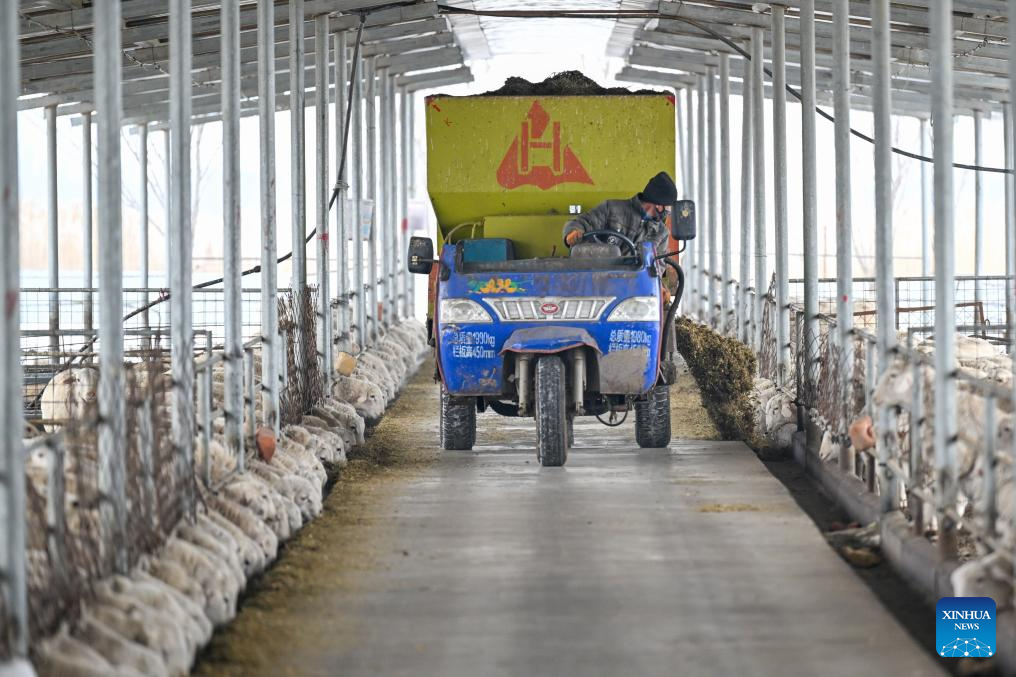
A staff member drives a vehicle equipped with an automatic feeding dispenser at a sheepfold in Manas County of Changji Hui Autonomous Prefecture, northwest China's Xinjiang Uygur Autonomous Region, on March 3, 2026.
Pastoral areas of Xinjiang welcome the lambing season. In Manas County of Changji Hui Autonomous Prefecture, about 180,000 breeding ewes have so far given birth to some 130,000 lambs, and lambing is expected to continue until early April.
In recent years, Manas has stepped up the improvement of sheep breeding to boost productivity, survival rate and meat quality. By shortening the time to market and increasing value added, improved breeds have become a key driver of industrial efficiency and higher incomes for local herders. (Xinhua/Ding Lei)
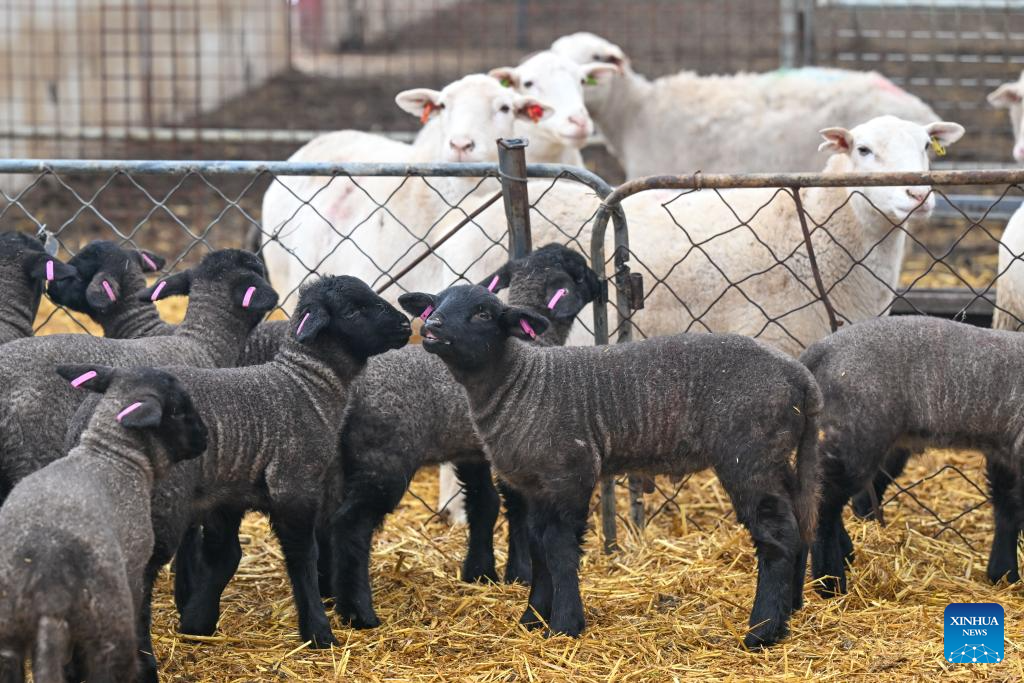
This photo taken on March 3, 2026 shows lambs (front) at a sheepfold in Manas County of Changji Hui Autonomous Prefecture, northwest China's Xinjiang Uygur Autonomous Region.
Pastoral areas of Xinjiang welcome the lambing season. In Manas County of Changji Hui Autonomous Prefecture, about 180,000 breeding ewes have so far given birth to some 130,000 lambs, and lambing is expected to continue until early April.
In recent years, Manas has stepped up the improvement of sheep breeding to boost productivity, survival rate and meat quality. By shortening the time to market and increasing value added, improved breeds have become a key driver of industrial efficiency and higher incomes for local herders. (Xinhua/Ding Lei)
Photos




Related Stories
- Conservationist dedicates decades to protecting Przewalski's horses in NW China's Xinjiang
- Shehuo gala held in Urumqi, NW China's Xinjiang
- Xinjiang Story: Powering up Xinjiang's winter boom
- Major ski resorts gain strong popularity in Altay, NW China's Xinjiang
- Shehuo gala attracts audience with traditional folk art in Urumqi
Copyright © 2026 People's Daily Online. All Rights Reserved.
