



Conservationist dedicates decades to protecting Przewalski's horses in NW China's Xinjiang
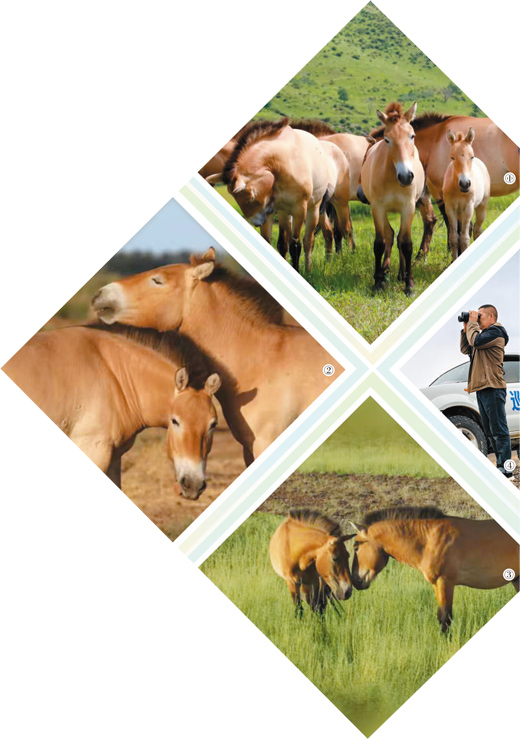
① Photo shows Przewalski's horses in the Kalamaili Ungulate Nature Reserve in northwest China's Xinjiang Uygur Autonomous Region. (Photo/Zhang Hefan)
② Photo shows Przewalski's horses in the Kalamaili Ungulate Nature Reserve in northwest China's Xinjiang Uygur Autonomous Region. (Photo/Zhang Hefan)
③ Photo shows Przewalski's horses in the Kalamaili Ungulate Nature Reserve in northwest China's Xinjiang Uygur Autonomous Region. (Photo/Zhang Hefan)
④ Adabiyat patrols the wilderness to monitor Przewalski's horses in northwest China's Xinjiang Uygur Autonomous Region. (Photo/Zhang Hefan)
"A few days ago, I saw a herd of Przewalski's horses drinking water over there. Today I'm going to check on them," said Adabiyat, head of the monitoring team at the Przewalski's horse release and protection station in the Kalamaili Ungulate Nature Reserve in northwest China's Xinjiang Uygur Autonomous Region.
Adabiyat has devoted more than two decades to protecting the Przewalski's horse. He has built up extensive experience, and younger colleagues often joke, "It's as if he's fitted every horse herd with a tracking device. Whenever he heads out on patrol, he always knows exactly where to find them."
To better protect the horses, Adabiyat carefully records detailed information during every patrol, including the date, weather conditions, patrol route, location and the number of horses observed.
In summer, the horses are usually found within around 20 kilometers of water sources. In winter, especially after snowfall, they can roam as far as 70 to 80 kilometers away, he said, noting that the vast distances make monitoring more challenging. If the team fails to locate them one day, they resume the search the next and continue until the herd is found.
The Junggar Basin in Xinjiang is the native home of the Przewalski's horse. After years of dedicated conservation efforts, the population has been steadily increasing, and horses released into the wild are gradually regaining their natural instincts as they learn to survive alongside goitered gazelles and Mongolian wild asses.
Today, surveillance cameras have been installed in areas where Przewalski's horses are frequently spotted. Every morning after waking up, Adabiyat checks the monitoring screens for signs of their activity. "In hilly terrain where the cameras can't capture the horses, manual monitoring is still essential," he said.
Adabiyat joined the nature reserve as a horse keeper after graduating in 2001. At that time, the number of horses was very small. He said releasing the horses into the wild was an arduous task, full of uncertainty. On Aug. 28, 2001, 27 Przewalski's horses were returned to nature for the first time.
"Life out here is tough. My face burns under the summer sun, and my hands go numb in the winter cold," Adabiyat said. But with the Przewalski's horses back home, he knows it's his responsibility to protect them.
Photos

Related Stories
Copyright © 2026 People's Daily Online. All Rights Reserved.
