



Guangzhou's transformation reflects China's commitment to high-quality development
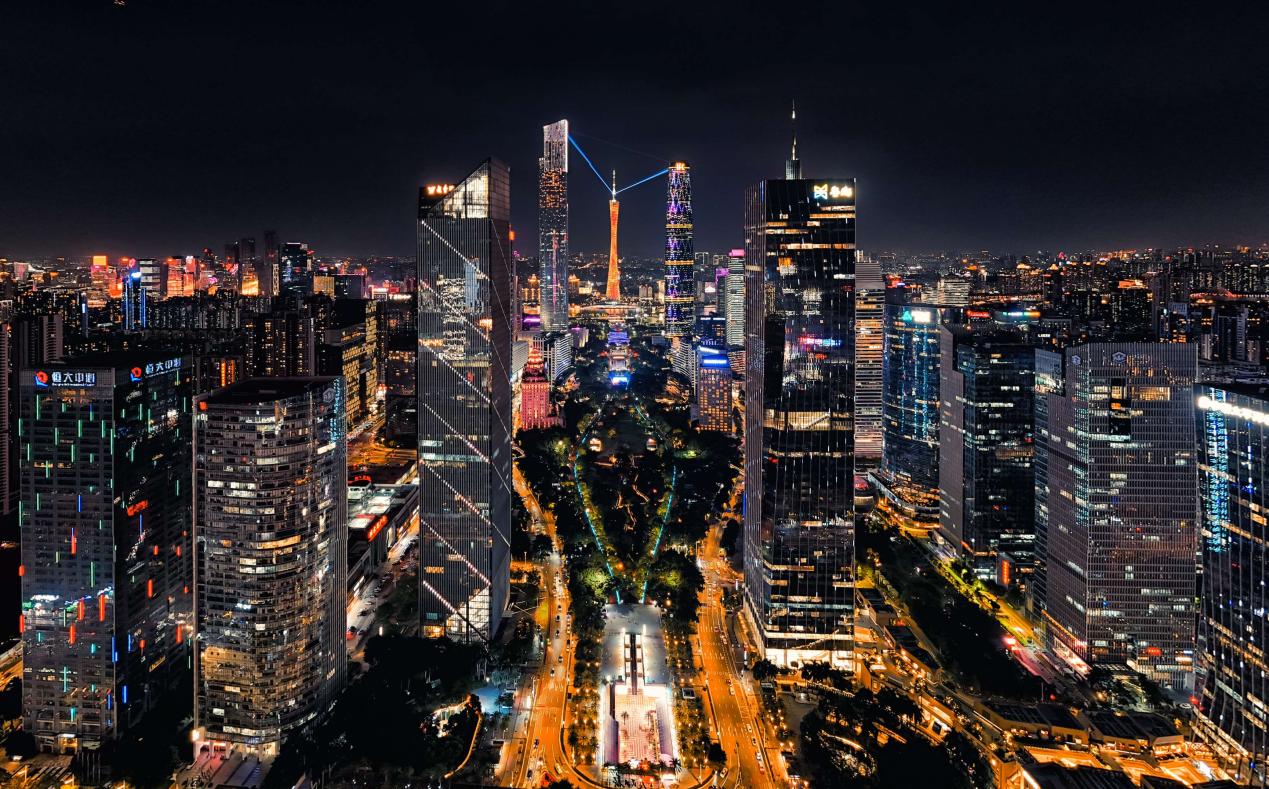
Photo shows the Tianhe central business district of Guangzhou, south China's Guangdong province. (Photo/Zheng Cong)
Cities serve as vital engines of modernization and provide a compelling lens for understanding the trajectory of Chinese modernization. Two recent developments in Guangzhou, south China's Guangdong province, exemplify this transformation.
In the first ten months of 2025, Guangzhou’s total import and export volume surpassed 1 trillion yuan (approximately $141.55 billion), setting a record for the period. Simultaneously, a Nature Index supplement ranked Guangzhou sixth among the world’s top ten science cities, ahead of the San Francisco Bay Area.
In the first 10 months of this year, the city's total import and export value exceeded 1 trillion yuan ($141.55 billion), hitting a record high for the same period. Around the same time, the newly released "Nature Index 2025 Science Cities" supplement ranked Guangzhou sixth among the world's leading 10 science cities, surpassing the San Francisco Bay Area in the United States.
From an ancient trading hub to an emerging center for scientific innovation, Guangzhou's transformation reflects China's growing confidence and momentum in driving high-quality development. Scientific and technological innovation, as the core driver for developing new quality productive forces, is increasingly becoming the principal engine of growth. Cities with robust innovation capabilities and dynamic ecosystems, such as Guangzhou, are at the forefront of this shift.
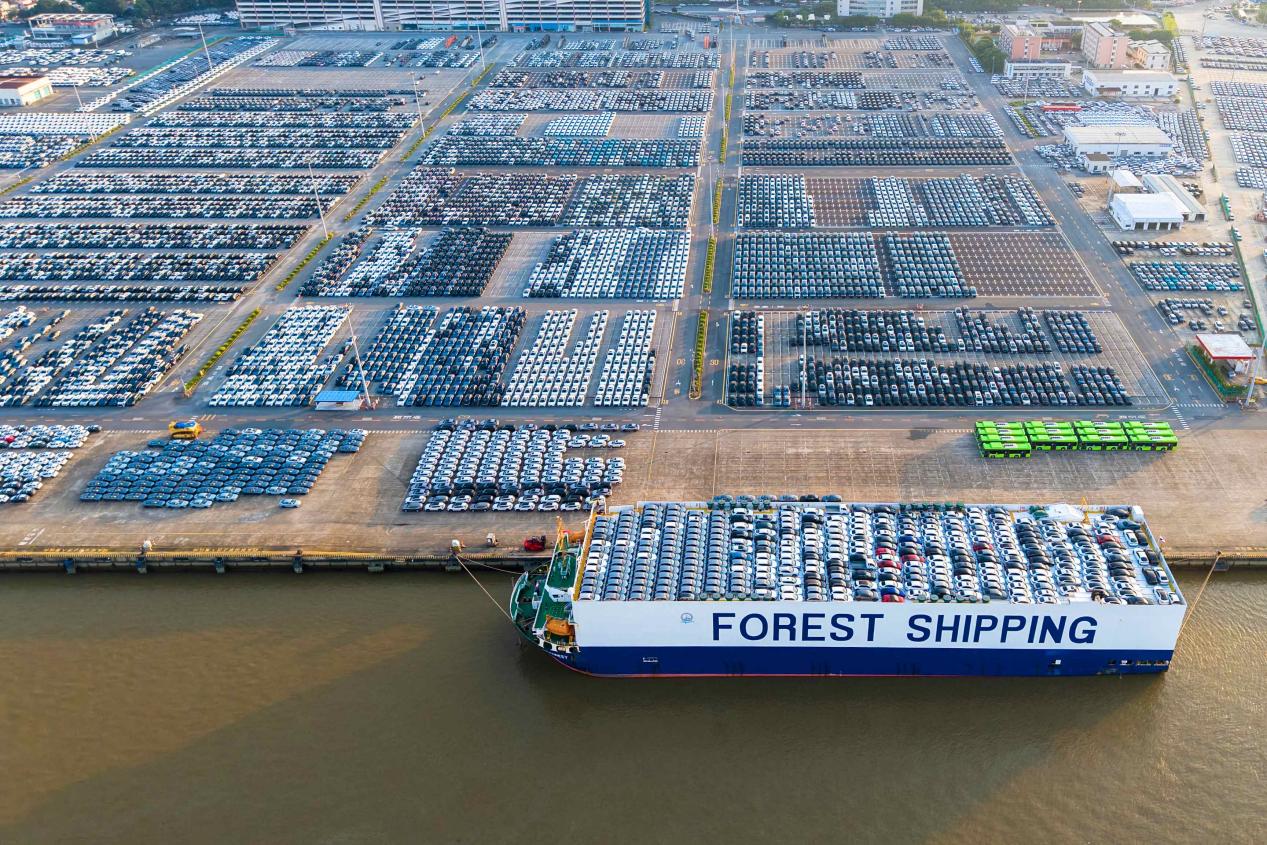
Chinese-made vehicles are about to be exported at a terminal in Nansha district, Guangzhou, south China's Guangdong province. (Photo/Lyu Danghua)
The city's achievements in marine science offer a vivid example. For the 15th National Games, the ceremonial flame was ignited using natural gas hydrates, or "combustible ice," extracted from the deep sea. This was made possible through collaboration among research institutes, universities, and enterprises.
The Guangzhou Marine Geological Survey provided critical deep-sea engineering expertise; companies developed high-efficiency solar tracking systems; and China's largest scientific research vessel, the Meng Xiang, meaning "Dream" in Chinese, delivered the remarkable feat of extracting and utilizing marine energy.
Guangzhou is forging a path where innovation and industrial development are mutually reinforcing. From Nansha Science City to the China-Singapore Guangzhou Knowledge City, a strategic innovation corridor now links 30 percent of the city's universities and research institutes, 51 percent of its high-tech enterprises, and 74 percent of its unicorn companies, forming a powerful engine for future growth.
Major breakthroughs often involve extended timeframes, significant risk, and considerable complexity. Therefore, aligning a well-functioning market with a proactive government is crucial. Guangzhou continues to enhance its foundational innovation systems to build a resilient innovation ecosystem.
Entrepreneurial success stories underscore this environment. He Xiaopeng, chairman of Chinese automaker Xpeng Motors, recalls receiving vital support from Guangzhou's Tianhe district during his first startup. When launching XPeng, he again chose Guangzhou, where the company has grown into a leading player in China's new energy vehicle industry.
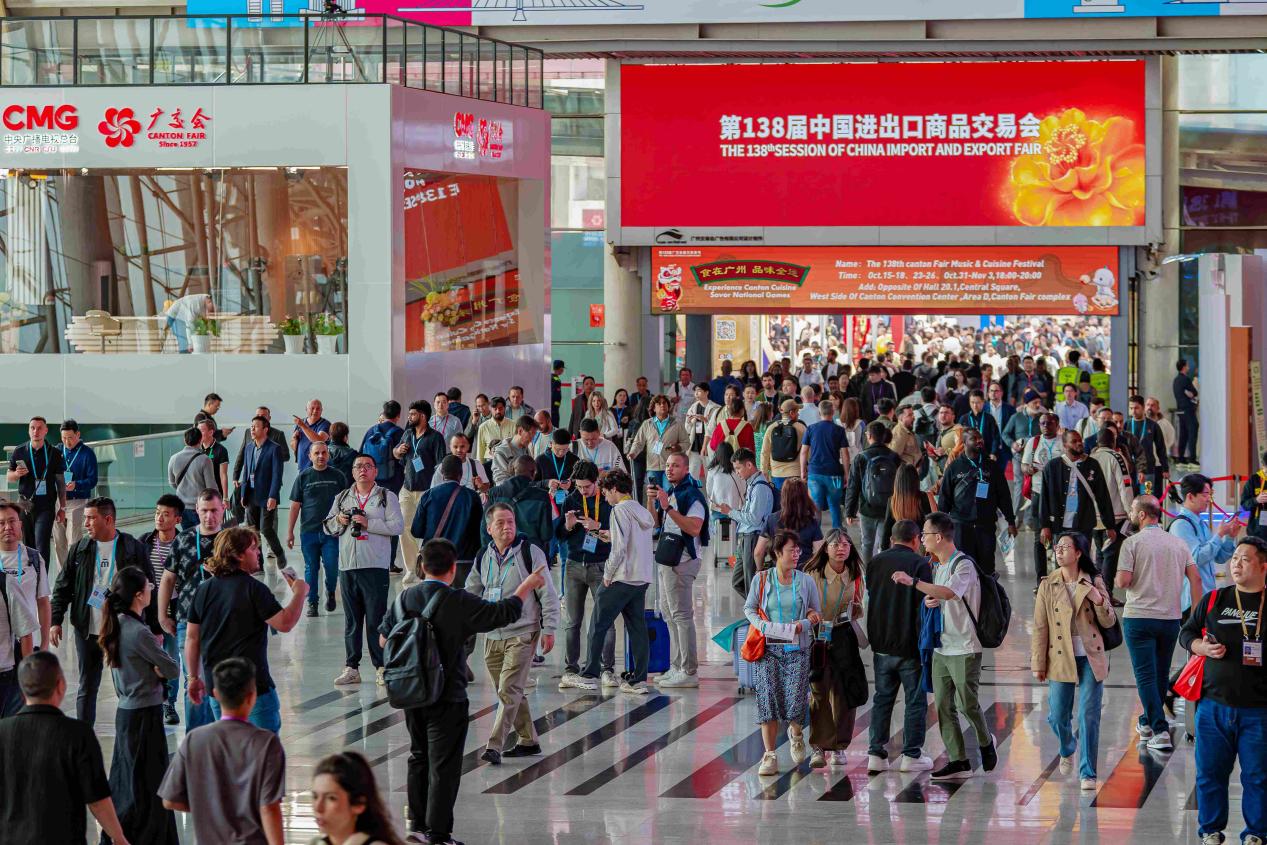
Photo taken on Oct. 23, 2025 shows the 138th Canton Fair, known officially as the China Import and Export Fair. (Photo/Huang Taiming)
In the first 10 months of this year, the number of newly registered businesses in emerging fields such as low-altitude economy, aerospace, future networks and quantum technologies, deep-sea and deep-space exploration, and intelligent unmanned systems, all grew by more than 100 percent. The rapid rise of emerging and future-oriented industries affirms the strength of Guangzhou's innovation ecosystem and industrial potential.
Openness and mutually beneficial is foundational to Chinese modernization. Guangzhou is enhancing institutional innovation to foster high-level opening up. In Nansha district of the city, the newly launched "Offshore Link" service platform and a supporting "white list" mechanism are streamlining cross-border financial transactions for key enterprises.
Since the establishment of the Nansha Area of the China (Guangdong) Pilot Free Trade Zone, 45 of its institutional innovations have been replicated nationwide, reinforcing its status as a reform testbed. At the same time, Guangzhou is deepening supply chain collaboration. Guangzhou-based automaker GAC Group is expanding into Western Europe with its intelligent cockpit technologies, while Guangzhou refrigerator manufacturer Wanbao is equipping refrigerators bound for Africa with battery backups to address power outages.
In the first 10 months of this year, Guangzhou's trade with the EU and ASEAN grew by 23.9 percent and 31.1 percent respectively, while trade with Belt and Road partner countries and BRICS members both increased by over 20 percent. Diversifying markets has unleashed new momentum for Guangzhou's foreign trade.
Across China, inland provinces are gaining unprecedented access to global markets: the Yangtze River's "Golden Waterway" has provided Jiangxi province in eastern China with a vital maritime route, while the China-Europe freight train service has transformed Shaanxi province from a landlocked hinterland into a new frontier of opening up.
As China builds a unified national market, institutional barriers are being dismantled, and logistical bottlenecks are being steadily overcome. Geographic limitations no longer define a city's potential -- each can enhance its competitive advantages and drive growth by expanding opening up. This dynamic underpins the stability of China's economic fundamentals, the persistence of its growth momentum, and the enduring resilience of its economy.
This transformation reflects a broader structural shift: major cities and urban clusters are emerging as the primary spatial engines of China's development.
This year, the Shenzhen-Hong Kong-Guangzhou innovation cluster ranked first globally in the Global Innovation Index 2025 report released by the World Intellectual Property Organization. With strong physical, institutional, and people-to-people connectivity, the three cities do not operate in isolation but as part of an integrated and collaborative innovation ecosystem. A modern metropolitan cluster is rapidly taking shape in the Guangdong-Hong Kong-Macao Greater Bay Area.
Looking ahead to the "15th Five-Year Plan" period (2026-2030), China is set to further harness scientific and technological innovation as a key driver of development, energize its economy through the new development paradigm, and consolidate strength through coordinated regional strategies. The momentum behind high-quality development continues to gather force.
Photos
Related Stories
- Breaking as a lifelong creed: The rise of China's b-boy generation
- Cute, bouncy, viral: China's dolphin mascots take over the internet
- National Games offer window into Guangzhou's high tech evolution
- Tales of Cities | Guangzhou: From ancient port to modern sports hub
- Trailer: Guangzhou through the eyes of a Spanish traveler
- New terminal of Baiyun airport in China's Guangzhou starts operation
- Guangzhou airport opens fifth runway, Terminal 3
- Guangzhou subway accepts international contactless bank cards
- Olympic diving champion Chen Aisen shares career highlights, expectations for 15th National Games
- Tradition meets modernity: Spanish traveler experiences the heat of Yingge Dance in Guangzhou
Copyright © 2026 People's Daily Online. All Rights Reserved.
