



Chinese doctors enrich dinner table of researchers at China’s Antarctic research stations
An insufficient supply of fresh vegetables had always been an issue at China’s Antarctic research stations before 2014. However, Wang Zheng, a doctor who was on China’s 31st Antarctic expedition team, successfully planted vegetables at Zhongshan, one of China’s Antarctic research stations.
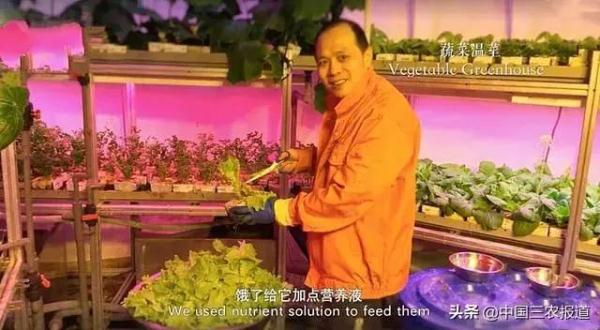
(Photo/China Media Group)
In order to grow plants in the Antarctic’s extreme conditions, Wang adopted soilless cultivation methods. A diary written by Wang recording his vegetable-planting efforts vividly depicted his daily routine of tending to the plants. “When I got up in the morning, I went to the greenhouse to check on the automated control system. After breakfast, I picked some vegetables and delivered them to the kitchen. I also checked regularly to see if there was a need to remove old, dead or diseased vegetable plants. I also sowed the seeds of vegetables if the conditions were favorable.”
The greenhouse mentioned by Wang is a 16-square-meter room that is installed with an automated control system to control irrigation, temperature, humidity, lighting facilities, and the supply of nutrients as needed. The greenhouse even provides light music for the vegetables to grow healthily.
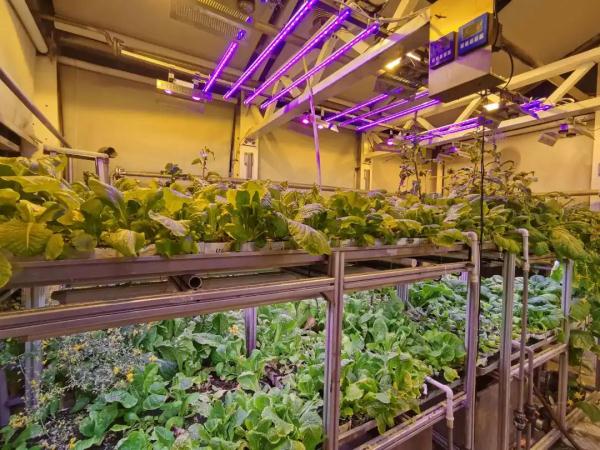
(Photo/China Media Group)
Tang Mingjun was a doctor on China’s 33rd Antarctic expedition team. During his service, Tang would hold a livestreaming show every weekend, sharing with viewers that after trying chilies, okra, tomatoes, and watermelons, he eventually decided to grow lettuce, Chinese cabbage, and cucumbers, because it takes a relatively shorter period of time for these vegetables to grow, and because they are easy to plant and can be grown at scale.
To avoid vegetable waste, there are strict standards regarding the picking of the vegetables. For instance, Chinese cabbage and lettuce can be picked only when they grow to a height of more than 15 centimeters, or else their growth will be affected, while cucumbers should be picked when they are just about 15 centimeters long, or else the cucumbers will incur some waste and the growth of smaller cucumbers would likely be affected.
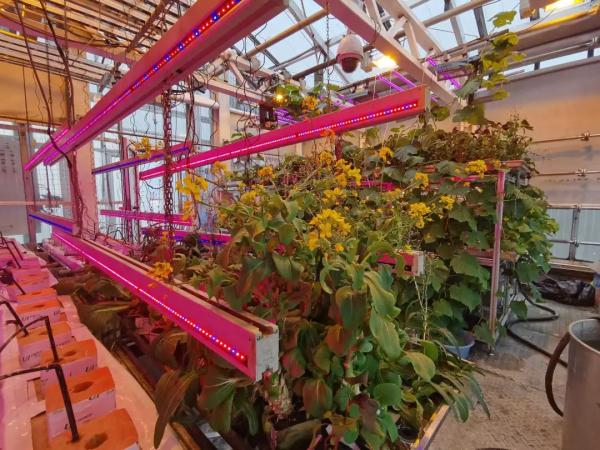
(Photo/China Media Group)
Hu Miao, a doctor on China’s 36th Antarctic expedition team, discovered that intense ultraviolet light in the Antarctic is not conducive to the growth of vegetables and that the vegetables grow better through the use of artificial lighting. Hu managed to increase the yields of the vegetables by readjusting the ventilation conditions, humidity, temperature, and artificial lighting inside the greenhouse.
Over the course of more than one year during his service, Hu harvested 323 kg of leafy vegetables, and 117 kg of fruits and other types of vegetables. These freshly-grown vegetables and fruits have made a significant contribution to prevent any occurrence of vitamin deficiency-related diseases that researchers might otherwise suffer from during prolonged stays, such as dental ulcers, beriberi, and excessive bleeding.
Photos
Related Stories
- China prepares to build 5th Antarctic research station
- China to build 5th Antarctic research station
- China's scientific exploration team completes research in Antarctica
- S.Korea opens 2nd Antarctic research station
- Unveiling Taishan station: smart LED lights and fixed-wing aircraft
- China's Antarctic explorations peacefully intended, cooperative
- China's 30 years of Antarctic research
- China opens 4th Antarctic research base
- Work completed of China's Taishan Antarctica station
- U.S. to suspend Antarctic research during shutdown
Copyright © 2022 People's Daily Online. All Rights Reserved.
