

MANILA, Nov. 16 (Xinhua) -- The Regional Comprehensive Economic Partnership (RCEP) agreement is expected to strengthen trade and investment in the region during the COVID-19 pandemic, Philippine Trade Secretary Ramon Lopez said Monday.
After almost eight years of negotiation, the RCEP was signed Sunday among its 15 participating countries.
The trade secretary said in a statement the much long-awaited mega free trade agreement is a good signal in this time of pandemic and global uncertainties, and will be a renewed vow in a rules-based system for trade and investment.
"While countries are severely affected by the pandemic and with trade measures focused towards recovery, it is important that we remain resolved in building a wider free trade area in the region that gives stability, predictability, and confidence to investors and businesses," Lopez said.
"This RCEP is a testament that the economy should keep going," he said.
Allan Gepty, the Philippine lead negotiator in the RCEP talks, also said in the statement that "the RCEP covers emerging areas in trade such as intellectual property, electronic commerce, government procurement, and competition, which are important in building a more conducive and stable economic environment not only for the Philippines but the whole region."
The RCEP participating countries include the 10 member countries of the Association of Southeast Asian Nations (ASEAN) and China, Japan, South Korea, Australia and New Zealand.
According to the Department of Trade and Industry (DTI) of the Philippines, the RCEP will improve export competitiveness of the Philippines' key products of interests, such as agricultural products, automotive parts, and garments. The free trade agreement provides a platform to encourage more investments and service providers in vital sectors in this Southeast Asian country.
Lopez said that the landmark agreement, which has improved levels of market access among each other, offers wider market opportunities for the Philippines' exporters and services providers, with RCEP participating countries accounting for more than 50 percent of Philippine export market.
The RCEP region covers a market of 2.2 billion people, or almost 30 percent of the world's population, with a combined gross domestic product (GDP) of 26.2 trillion U.S. dollars or about 30 percent of global GDP, and accounts for nearly 28 percent of global trade.
The signing of the RCEP deal came after more than 30 rounds of negotiations, which were launched in November 2012, as well as a number of specific leaders' and ministerial meetings between the participating countries.
 Fire brigade in Shanghai holds group wedding
 Tourists enjoy ice sculptures in Datan Town, north China
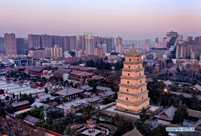 Sunset scenery of Dayan Pagoda in Xi'an
 Tourists have fun at scenic spot in Nanlong Town, NW China
 Harbin attracts tourists by making best use of ice in winter
 In pics: FIS Alpine Ski Women's World Cup Slalom
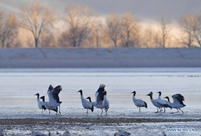 Black-necked cranes rest at reservoir in Lhunzhub County, Lhasa
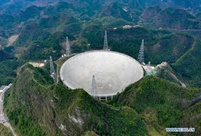 China's FAST telescope will be available to foreign scientists in April
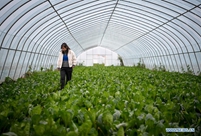 "She power" plays indispensable role in poverty alleviation
 Top 10 world news events of People's Daily in 2020
 Top 10 China news events of People's Daily in 2020
 Top 10 media buzzwords of 2020
 Year-ender:10 major tourism stories of 2020
 No interference in Venezuelan issues
 Biz prepares for trade spat
 Broadcasting Continent
 Australia wins Chinese CEOs as US loses