

HANOI, Nov. 15 (Xinhua) -- The Regional Comprehensive Economic Partnership (RCEP) agreement was signed among its 15 participating countries Sunday, launching the world's biggest free trade bloc.
Participating countries include the 10 member countries of the Association of Southeast Asian Nations and China, Japan, South Korea, Australia and New Zealand.
The RCEP agreement will accelerate the building of the ASEAN economic community and thereby allow ASEAN to become dynamic and strong partners in promoting cooperation for shared prosperity, Vietnamese Prime Minister Nguyen Xuan Phuc said at the signing ceremony held via video conference.
The 15 participating countries of the RCEP account for around 30 percent of the global population, global gross domestic product and global trade.
The signing came after more than 30 rounds of negotiation, which was launched in November 2012, as well as a number of specific leaders and ministerial meetings between the participating countries.
The ongoing 37th ASEAN Summit and related summits take place from Thursday to Sunday via video conferences.
Founded in 1967, ASEAN groups Brunei, Cambodia, Indonesia, Laos, Malaysia, Myanmar, the Philippines, Singapore, Thailand and Vietnam. Vietnam is the ASEAN chair for 2020.
 Fire brigade in Shanghai holds group wedding
 Tourists enjoy ice sculptures in Datan Town, north China
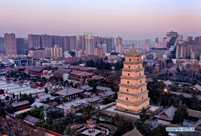 Sunset scenery of Dayan Pagoda in Xi'an
 Tourists have fun at scenic spot in Nanlong Town, NW China
 Harbin attracts tourists by making best use of ice in winter
 In pics: FIS Alpine Ski Women's World Cup Slalom
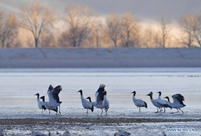 Black-necked cranes rest at reservoir in Lhunzhub County, Lhasa
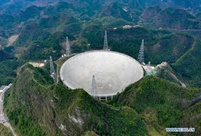 China's FAST telescope will be available to foreign scientists in April
 "She power" plays indispensable role in poverty alleviation
 Top 10 world news events of People's Daily in 2020
 Top 10 China news events of People's Daily in 2020
 Top 10 media buzzwords of 2020
 Year-ender:10 major tourism stories of 2020
 No interference in Venezuelan issues
 Biz prepares for trade spat
 Broadcasting Continent
 Australia wins Chinese CEOs as US loses