

The World Health Organization (WHO) said it's getting a clearer picture of the new coronavirus outbreak, how it's developing and where it could be headed, after China released a detailed paper on more than 44,000 confirmed COVID-19 cases on Monday. Based on previous evaluations, the COVID-19 is not a global pandemic, and the WHO will not further upgrade its risk level.
WHO Director-General Tedros Adhanom Ghebreyesus deemed the novel coronavirus outbreak a "public health emergency of international concern (PHEIC)" on January 30.
The WHO said the information gives it a better understanding about the age range of people affected, the severity of the disease and the mortality rate.
The data also appears to show a decline in new cases, but the WHO chief said this trend must be interpreted very cautiously.
"Trends can change as new populations are affected," he said from WHO headquarters in Geneva, Switzerland. "It's too early to tell if this reported decline will continue. Every scenario is still on the table."
Dr. Tedros said the data suggests that the COVID-19 is not as deadly as other coronaviruses including SARS and MERS. According to the WHO, more than 80 percent of the patients only showed mild symptoms of the disease and would recover. In 14 percent of cases, the virus caused serious problems, including pneumonia and shortness of breath, while about five percent of the patients developed critical complications, such as respiratory failure, septic shock and multi-organ failure. The virus is fatal in two percent of the reported cases and the risk of death increases with age.
A team of the WHO and Chinese experts have begun field inspections in China. They are expected to travel to Beijing and Guangdong and Sichuan provinces. Guangdong Province ranks second in the number of confirmed cases in China after Hubei, the epicenter of the COVID-19 outbreak.
The joint team of experts will observe the measures that have been put in place to contain and treat the epidemic and evaluate the effectiveness of the said measures. The 12-member team from the WHO, which includes experts from the U.S., arrived in Beijing on the weekend.
WHO Health Emergencies Programme Executive Director Dr. Michael Ryan said much of the work so far focused on coming to a consensus on what is and isn't known about the COVID-19.
"It's about agreeing what we know, agreeing what we don't know and agreeing what is the best way to access the information we don't know," he said. "The team will then be able to go and visit provinces and see things on the ground."
Once those knowledge gaps are filled, the chances of containing and better treating this disease become much more viable.
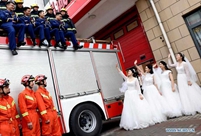 Fire brigade in Shanghai holds group wedding
 Tourists enjoy ice sculptures in Datan Town, north China
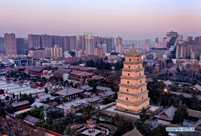 Sunset scenery of Dayan Pagoda in Xi'an
 Tourists have fun at scenic spot in Nanlong Town, NW China
 Harbin attracts tourists by making best use of ice in winter
 In pics: FIS Alpine Ski Women's World Cup Slalom
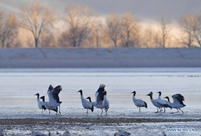 Black-necked cranes rest at reservoir in Lhunzhub County, Lhasa
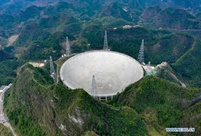 China's FAST telescope will be available to foreign scientists in April
 "She power" plays indispensable role in poverty alleviation
 Top 10 world news events of People's Daily in 2020
 Top 10 China news events of People's Daily in 2020
 Top 10 media buzzwords of 2020
 Year-ender:10 major tourism stories of 2020
 No interference in Venezuelan issues
 Biz prepares for trade spat
 Broadcasting Continent
 Australia wins Chinese CEOs as US loses