BEIJING, Sept. 1 -- China's crawfish sector posted rapid growth last year, with extended industrial chain and balanced supply and demand structure, the country's agriculture ministry said in a report.
The sector generated a total of 369 billion yuan (about 52 billion U.S. dollars) in 2018, soaring 37.5 percent year on year, according to a report released by the Ministry of Agriculture and Rural Affairs.
Crawfish output in the country amounted to 1.64 million tonnes last year, and the total farming area reached 1.12 million hectares, the report said.
The majority of crawfish farming took place in the country's central and southern regions. Central China's Hubei Province was the largest crawfish producing area, with its production accounting for half of the country's total, according to the report.
It also pointed out the fast expansion of the crawfish processing industry, as many leading e-commerce enterprises participated in crawfish logistics and catering last year, contributing to the construction of the sector's cold chain delivery and logistics system.
The sector also saw increasing sales channels both online and offline, with the number of crawfish stores surging nearly 70 percent year on year to more than 140,000, the report said.
 Fire brigade in Shanghai holds group wedding
 Tourists enjoy ice sculptures in Datan Town, north China
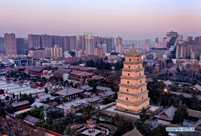 Sunset scenery of Dayan Pagoda in Xi'an
 Tourists have fun at scenic spot in Nanlong Town, NW China
 Harbin attracts tourists by making best use of ice in winter
 In pics: FIS Alpine Ski Women's World Cup Slalom
 Black-necked cranes rest at reservoir in Lhunzhub County, Lhasa
 China's FAST telescope will be available to foreign scientists in April
 "She power" plays indispensable role in poverty alleviation
 Top 10 world news events of People's Daily in 2020
 Top 10 China news events of People's Daily in 2020
 Top 10 media buzzwords of 2020
 Year-ender:10 major tourism stories of 2020
 No interference in Venezuelan issues
 Biz prepares for trade spat
 Broadcasting Continent
 Australia wins Chinese CEOs as US loses