

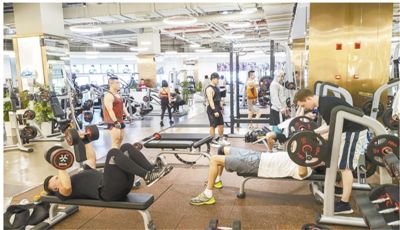
Photo via People's Daily
Say goodbye to “let’s go have a drink after work.” Now the new trend is “let’s go hit the gym.”
Hitting the gym is a major trend among university students and white-collar workers nowadays in China. Regular fitness activities and gym memberships are on the rise. Those previously overly-exhausted people now make time to exercise.
In major cities like Beijing, Shanghai, and Guangzhou, gyms far surpass that of bars and KTVs, according to Dianping.com, a local life information and trade platform. The total number of gyms within China has reached that in the US, with over 46,050 by 2018.
Behind the fervor is reportedly a change of lifestyle among younger generations, observers said. With a fast working pace and mounting pressure from modern life, people are in increasingly urgent need of an outlet and this is where gyms come in handy. Through exercise, heavy psychological loads can be at least temporarily unloaded and physical conditions improved.
In addition to traditional gyms, there is also a rising number of connected gyms and fitness studios, which feature flexible payment options and greater area-effectiveness, these new forms of fitness clubs move behind disturbing sales promotions and guarantee a more customized fitness experience, thus winning more followers.
 Fire brigade in Shanghai holds group wedding
 Tourists enjoy ice sculptures in Datan Town, north China
 Sunset scenery of Dayan Pagoda in Xi'an
 Tourists have fun at scenic spot in Nanlong Town, NW China
 Harbin attracts tourists by making best use of ice in winter
 In pics: FIS Alpine Ski Women's World Cup Slalom
 Black-necked cranes rest at reservoir in Lhunzhub County, Lhasa
 China's FAST telescope will be available to foreign scientists in April
 "She power" plays indispensable role in poverty alleviation
 Top 10 world news events of People's Daily in 2020
 Top 10 China news events of People's Daily in 2020
 Top 10 media buzzwords of 2020
 Year-ender:10 major tourism stories of 2020
 No interference in Venezuelan issues
 Biz prepares for trade spat
 Broadcasting Continent
 Australia wins Chinese CEOs as US loses