

Photo courtesy to People's Daily
Masters in The Forbidden City, a well-known Chinese documentary screened in 2016, kindled many people’s enthusiasm for the restoration of cultural relics and aroused public attention on museums and the preservation of cultural heritage.
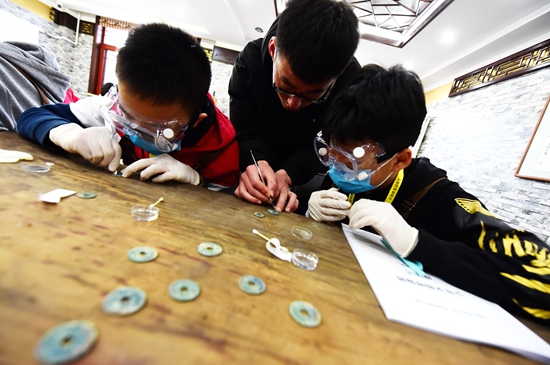
Earlier in February, some 30 Chinese teens were selected from across the country to learn restoration techniques of cultural relics in the Palace Museum under the guidance of true masters. Many antiques and cultural relics, which used to be covered with dust and buried in darkness for who knows how long, could be glowing again after restoration.
The zeal of museology among post-2000s is an expectation of many people and is also praised by many people.
“The excitement of restoration of cultural relics lies on the conversation you have with the broken pieces when you make them complete. Also, the process of discovering historical secrets and learning history when restoring cultural relics is another attractive moment,” said Guo Hanzhong, a bronze repair specialist who works at Sanxingdui Museum in Chengdu, southwest China’s Sichuan province.
“Cultural Relic Hospital” is how researchers describe their Cultural Relics Restoration Center in the Palace Museum. And being a “cultural relic doctor” is no easy task, as it requires specialty knowledge in materials science, chemistry, 3D technology, and so on.
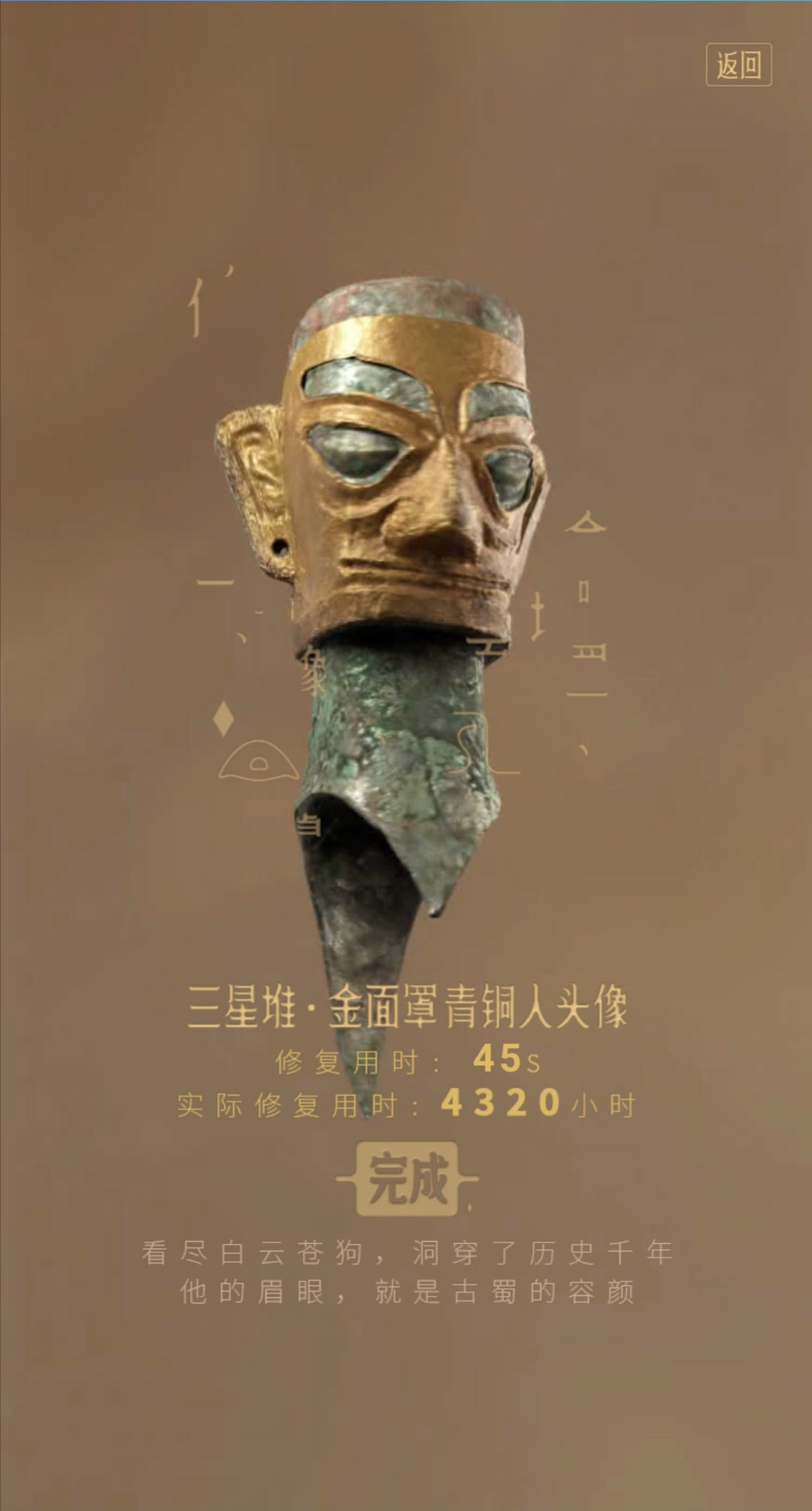
Photo courtesy to Tencent Video
Amid the rising enthusiasm, some companies have also rolled out their innovative ideas to inspire more of the public to participate in the protection of cultural relics.
For example, Tencent Video, a video platform of Chinese internet giant Tencent, created a mobile web page to let users restore cultural relics, such as a broken bronze head sculpture with a golden mask from 3,500 years ago, in just a few clicks.
The game-like experience was created to arouse people’s curiosity on the process of restoration and encourage them to visit museums in order to explore the charm of history.
In recent years, the number of museum-goers has surged, as rising public enthusiasm toward cultural relics reaches a record high. In 2017, Chinese museums received a total of 971 million visits, among which, the Palace Museum received 17 million visitors, setting a new world record.
 Fire brigade in Shanghai holds group wedding
 Tourists enjoy ice sculptures in Datan Town, north China
 Sunset scenery of Dayan Pagoda in Xi'an
 Tourists have fun at scenic spot in Nanlong Town, NW China
 Harbin attracts tourists by making best use of ice in winter
 In pics: FIS Alpine Ski Women's World Cup Slalom
 Black-necked cranes rest at reservoir in Lhunzhub County, Lhasa
 China's FAST telescope will be available to foreign scientists in April
 "She power" plays indispensable role in poverty alleviation
 Top 10 world news events of People's Daily in 2020
 Top 10 China news events of People's Daily in 2020
 Top 10 media buzzwords of 2020
 Year-ender:10 major tourism stories of 2020
 No interference in Venezuelan issues
 Biz prepares for trade spat
 Broadcasting Continent
 Australia wins Chinese CEOs as US loses