


(file pic)
“Time to get married!”
Such is a nightmare for many Chinese home-fear young people in their late 20s and early 30s when their parents urge them to prioritize their marriage plan.
Big data provides a novel approach to blind dating for some Chinese youngsters who have grown up with and relied on the Internet. The audacious algorithms applied by matchmaking services to “accurately and effectively” quickly match strangers has become a hot trend in the Chinese marriage market.
But, is it all too good to be true?
The old-fashioned way of dating is largely detested by China’s Internet generation, who prefer the results of big data rather than the repetitious, time-consuming way of the old way, which often starts with a simple self-introduction.
More and more people are setting boundaries on social-media-like matchmaking apps to narrow down the rightful groups, which speeds up the chance of developing a relationship.
Those requirements and keywords draw a clear picture for the data to finding Mr. or Mrs. Right as quickly as possible, and often includes such things as income, food preferences, financial status, and even favorite films.
Many Chinese dating apps rely on a quiz to collect personal information to quickly match people who share the same hobbies, values, and even zodiacs.
“The data doesn’t lie,” said Li Yi (pseudonym), an IT-engineer who recently downloaded an app to help him pinpoint the right partner and bring him true love from virtual reality to reality.
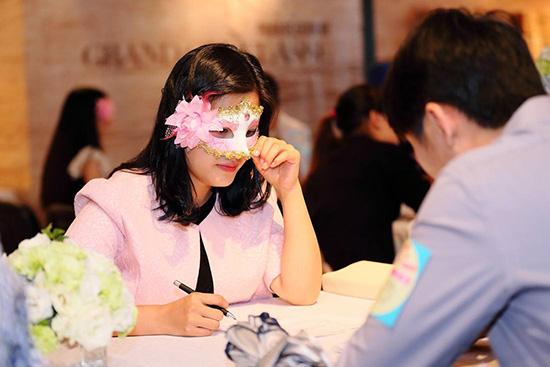
(file pic)
However, the “soulmates” selected by such matchmaking apps are not always perfect.
“A score of 93% on personalities and values in the quiz doesn’t mean that the person will happily eat street food with you in real life,” Li said with a shrug, recalling a dating experience he had with a big-data-selected partner.
Meanwhile, such services are not free. It costs money to join and to enhance exposure in groups for instance.
“Membership is a necessity, otherwise, the app would be useless. And VIPs can receive customized recommendations from the app,” said Liang Shan (pseudonym), a frequent customer of matchmaking apps.
As registration on the matchmaking apps requires verification, the process of collecting personal information has also come under question, as the collection of information without informing users how their information will be used enhances the risk of information leakage and malicious use.
“I was once cheated by a girl who I got matched with on a matchmaking app who turned out to be a financial products saleswoman. Though the app promises the authenticity of their users’ identities, they cannot avoid intentional cheating,” said Luo Hao (pseudonym), a matchmaking app user.
 Fire brigade in Shanghai holds group wedding
 Tourists enjoy ice sculptures in Datan Town, north China
 Sunset scenery of Dayan Pagoda in Xi'an
 Tourists have fun at scenic spot in Nanlong Town, NW China
 Harbin attracts tourists by making best use of ice in winter
 In pics: FIS Alpine Ski Women's World Cup Slalom
 Black-necked cranes rest at reservoir in Lhunzhub County, Lhasa
 China's FAST telescope will be available to foreign scientists in April
 "She power" plays indispensable role in poverty alleviation
 Top 10 world news events of People's Daily in 2020
 Top 10 China news events of People's Daily in 2020
 Top 10 media buzzwords of 2020
 Year-ender:10 major tourism stories of 2020
 No interference in Venezuelan issues
 Biz prepares for trade spat
 Broadcasting Continent
 Australia wins Chinese CEOs as US loses