

China's southern boomtown Shenzhen will build its port into a free trade port by the end of 2020 by further cutting red tape and streamlining customs clearance procedures, according to a local document.
![Containers are piled up at a container terminal at the Yantian Port Zone of Shenzhen Port in Shenzhen, Guangdong Province. [File photo: IC]](http://www.people.com.cn/mediafile/pic/20180626/0/6503449684374966900.jpg)
Containers are piled up at a container terminal at the Yantian Port Zone of Shenzhen Port in Shenzhen, Guangdong Province. [File photo: IC]
The Port of Shenzhen is a collective name for a number of ports along the coastline of Shenzhen. It docks the third largest number of containers in the world.
A guideline published by the municipal government last week showed the port plans to cut its customs clearance time of cargo shipment by one-third by 2020 through streamlining the procedures and lift some of the trade restrictions.
The guideline also put forward a goal to jointly develop the Port of Shenzhen and the Port of Hongkong into an international shipping center.
A free trade port features high-level trade and investment liberalization policies. China announced a plan to build the southern island province of Hainan into a free trade port in April.
 Fire brigade in Shanghai holds group wedding
 Tourists enjoy ice sculptures in Datan Town, north China
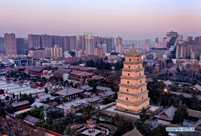 Sunset scenery of Dayan Pagoda in Xi'an
 Tourists have fun at scenic spot in Nanlong Town, NW China
 Harbin attracts tourists by making best use of ice in winter
 In pics: FIS Alpine Ski Women's World Cup Slalom
 Black-necked cranes rest at reservoir in Lhunzhub County, Lhasa
 China's FAST telescope will be available to foreign scientists in April
 "She power" plays indispensable role in poverty alleviation
 Top 10 world news events of People's Daily in 2020
 Top 10 China news events of People's Daily in 2020
 Top 10 media buzzwords of 2020
 Year-ender:10 major tourism stories of 2020
 No interference in Venezuelan issues
 Biz prepares for trade spat
 Broadcasting Continent
 Australia wins Chinese CEOs as US loses