

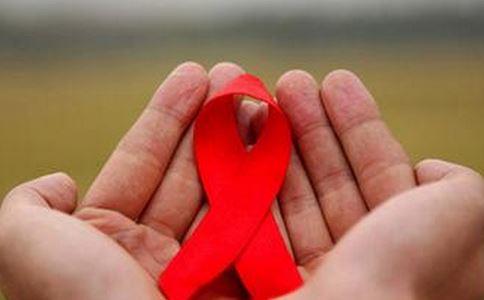
(File photo)
BEIJING, Sept. 26 (Xinhua) -- China's central government spent 4.6 billion yuan (694 million U.S. dollars) on HIV/AIDS control and treatment in 2016, a health official said Tuesday.
China has established an initial network of preventative services, in which government departments take the lead and the general public also participate, said Wang Guoqiang, deputy chief of the National Health and Family Planning Commission.
The network, covering both urban and rural areas, includes HIV testing, treatment and follow-up observations to prevent infected patients from transmitting the virus, Wang said at the 2017 National Conference on HIV/AIDS held in Guangzhou, Guangdong Province.
Wang, also director of the HIV/AIDS prevention and control commission of the State Council, said China has almost entirely prevented the transmission of HIV through illegal blood transfusions, the sharing of needles and mother-to-child transmissions.
"The rapid spread of the virus in some particular areas has been greatly contained, the quality of life of HIV carriers has been improved, and social discrimination against the group has been reduced," he said.
According to official data, China had nearly 420,000 people infected with HIV and 300,000 AIDS patients at the end of June. More than 221,000 people have died of the virus since records have been kept.
Han Mengjie, with the Chinese Center for Disease Control and Prevention, estimated up to another 20 to 30 percent of HIV/AIDS patients are either not aware of their infection status or have not reported it, warning that the control of HIV/AIDS remains a challenge.
He said unprotected sex has become the main means of transmission, with the virus spreading among the elderly, youth and male homosexual populations.
"Prostitution and sexual activities spurred by drug abuse and social networking apps have posed threats for HIV/AIDS control," he said.
"Health departments will ensure implementation of preventive measures, find and treat as many infected as possible, reduce the spread of HIV/AIDS to a low transmission rate," said Wang.
While the government puts emphasis on the HIV/AIDS prevention, scientists are seeking breakthroughs in treatment.
Wang Fusheng, an epidemic control specialist with the Chinese Academy of Sciences, is leading research on immunocyte therapy. Unlike conventional anti-virus treatments, Wang's team are studying immune deficiencies after CD4, a glycoprotein found on the surface of immune cells, becomes damaged.
Patients who have tested the therapy have found their symptoms alleviated or under control within two weeks, their CD4 cell count restored and their weight significantly increased, he said.
CD4 cell count is an index for the health of the immune system. The normal count of CD4 cells stands between 500 to 1,600 per cubic millimeter for a healthy adult. HIV weakens the immune system by damaging functioning CD4 cells.
"We have treated 25 patients, and the research is ongoing," he said.
 Fire brigade in Shanghai holds group wedding
 Tourists enjoy ice sculptures in Datan Town, north China
 Sunset scenery of Dayan Pagoda in Xi'an
 Tourists have fun at scenic spot in Nanlong Town, NW China
 Harbin attracts tourists by making best use of ice in winter
 In pics: FIS Alpine Ski Women's World Cup Slalom
 Black-necked cranes rest at reservoir in Lhunzhub County, Lhasa
 China's FAST telescope will be available to foreign scientists in April
 "She power" plays indispensable role in poverty alleviation
 Top 10 world news events of People's Daily in 2020
 Top 10 China news events of People's Daily in 2020
 Top 10 media buzzwords of 2020
 Year-ender:10 major tourism stories of 2020
 No interference in Venezuelan issues
 Biz prepares for trade spat
 Broadcasting Continent
 Australia wins Chinese CEOs as US loses