

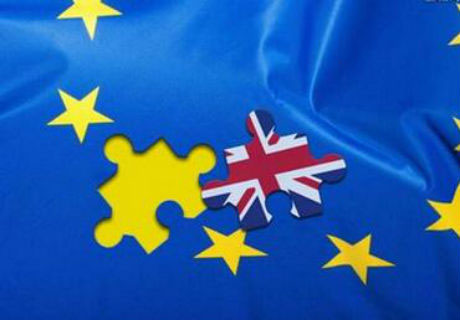
As the UK struggles in the aftermath of its vote to leave the European Union, the former chancellor of the exchequer has urged a “soft” Brexit that would enable the UK to remain within the European single market and continue to be a “jumping off point” for Chinese companies wishing to access the EU market. [Photo: ccstock.cn]
As the UK struggles in the aftermath of its vote to leave the European Union, the former chancellor of the exchequer has urged a “soft” Brexit that would enable the UK to remain within the European single market and continue to be a “jumping off point” for Chinese companies wishing to access the EU market.
In a recent survey, 53 per cent of Chinese respondents said that they were less confident about investing in the UK because of the uncertainty. Given that $5.1 billion of the $18 billion invested by China in Europe in 2014 went to the UK, it is easy to see why Mr Osborne should be keen to retain the relationship with the EU.
“We now need to do everything we can to avoid some of the dangers and difficulties that Brexit might offer up to our country. And one of those things is making sure it doesn’t deter foreign investment, including from China,” he said.
On Thursday last week, the High Court ruled that parliament must have a say in the deal that the UK does with Europe. Many have seen this as an opportunity for MPs to ensure that Britain and Europe remaining closely linked.
Financial markets welcomed the news as the pound jumped on foreign exchange markets after the judgment was announced.
Theresa May, the prime minister flew to New Delhi on Sunday with the stated aim of improving trade links with India, facing a quandary. Any countries with which the UK wishes to negotiate free trade agreements will inevitably also seek some freedom of movement for their people.
But concern over immigration was one of the biggest factors behind the 51.9 per cent majority for Leave in the referendum on June 23. And although Mrs May will want to sign new trade agreements to compensate for leaving the EU she must be wary of giving way to requests that would be unpopular in Britain.
Officials in India have already pointed out that the UK is clamping down on student visas, which has lead to a large reduction in the number of Indian students enrolled at British universities.
Mrs May has repeatedly said that Brexit means Brexit, but there is still little indication of what that really means - and Britain’s trade negotiators, keen to get some quick wins with non-EU countries, may find themselves under pressure on migration.
Chinese companies remain keen to invest in the UK but the details of exactly what trading relationship post-Brexit Britain will have with the EU will need to be crystalised soon if that investment is not to find a new focus.
Nissan, the Japanese car manufacturer, recently announced plans to build new models at its UK plant in Sunderland after receiving assurances from the UK government that it would not be disadvantaged by Brexit.
Other manufacturers and industries are looking for similar guarantees, and with the High Court ruling forcing a parliamentary debate on the terms of Brexit Mrs May’s government will find itself in an increasingly difficult position going into trade talks with all of its cards face-up on the table.
By Sarah Dickens for sino.uk
 Fire brigade in Shanghai holds group wedding
 Tourists enjoy ice sculptures in Datan Town, north China
 Sunset scenery of Dayan Pagoda in Xi'an
 Tourists have fun at scenic spot in Nanlong Town, NW China
 Harbin attracts tourists by making best use of ice in winter
 In pics: FIS Alpine Ski Women's World Cup Slalom
 Black-necked cranes rest at reservoir in Lhunzhub County, Lhasa
 China's FAST telescope will be available to foreign scientists in April
 "She power" plays indispensable role in poverty alleviation
 Top 10 world news events of People's Daily in 2020
 Top 10 China news events of People's Daily in 2020
 Top 10 media buzzwords of 2020
 Year-ender:10 major tourism stories of 2020
 No interference in Venezuelan issues
 Biz prepares for trade spat
 Broadcasting Continent
 Australia wins Chinese CEOs as US loses