
The global economy saw weak growth in 2015 with a marked economic slowdown in emerging markets and a commodity slump. SA has been heavily influenced by these conditions. The newly released IMF World Economic Outlook report sees this year’s South African economic growth at 0.6%, while a growth of 1.2% is projected for next year. “In SA, growth is expected to be halved to 0.6% in 2016 owing to lower export prices, elevated policy uncertainty and tighter monetary and fiscal policy,” the IMF said in its report this month. Globally, economy is expected to grow 3.2% from an earlier forecast of 3.4%, and in 2017 it is projected at 3.5% from 3.6%. The hope of prosperity lies in the emerging markets like SA and China. According to the IMF, China’s economic growth will rise to 6.5% for this year, and 6.2% next year. “The recovery is projected to strengthen in 2017 and beyond, driven primarily by emerging market and developing economies, as conditions in stressed economies start gradually to normalise,” the IMF said. People’s Daily Online has collected views and opinions from experts, scholars and professionals across sectors to explain what this mid-term forecast figure means to Sino-SA economic ties, and our wealth and future.
Bob Wekesa

Post Doctoral Fellow, University of the Witwatersrand
Steering Committee Member, Chinese in Africa, Africans in China Research Network
Tebogo Lefifi

Country Manager: China, Brand South Africa
Randall Rhategan

Deputy CEO, China Construction Bank Johannesburg Branch
Jeremy Stevens

International Economist based in Beijing, China, Standard Bank Group
Lisa Xie

Senior Business Development Manager: China, FNB
Kenny Chiu

Executive & Head of China Practice Group, ENSafrica
Christopher Torrens

Senior MD, Control Risks
Barnaby Fletcher

Analyst, Global Risk Analysis, Control Risks
Steven Kuo

Consultant, Control Risks
Eddie Mbalo
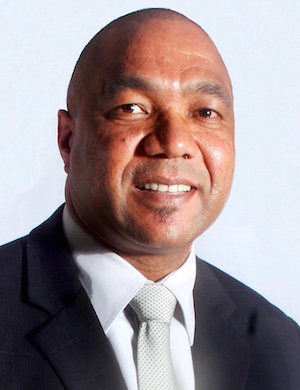
MD: Khalipha Film and Broadcast Media Advisors
Q People’s Daily Online:
What industry of the China-Africa economy do you think has greatest potential in the next five years? Could you elaborate more based on your observation?
A CHRISTOPHER TORRENS: Foreign investment into the African continent has traditionally been focused on natural resources. Yet low commodity prices in recent years have caused African governments to recognise the importance of economic diversification, and depreciating African currencies have highlighted the dangers of relying too heavily on imports for even basic manufactured goods.
China looks well placed to assist Africa in increasing its domestic manufacturing capacity; not only has China had more recent experience in building its own manufacturing base than Western investors, but it has also already invested more in African manufacturing than many other investors.
RANDALL RHATEGAN: In my opinion the two major drivers of trade and investment between China and Africa in the next few years will flow from new growth industries that emerge from the rebalancing of the Chinese economy, and commitments made recently in the Forum on China-Africa Cooperation (FOCAC).
We all know that Africa has a massive infrastructure deficit. China has the expertise and capital to assist Africa in addressing this deficit. The relationship between the two sides is strong, and there appears to be the political will to make this a success.
BOB WEKESA: Industrialisation. Because it has been primed at a major economic driver in the Africa-China relations at the policy level, namely the Johannesburg Summit of FOCAC, China’s Africa Policy. Also China is recalibrating its economic model away from heavy manufacturing towards innovation and services while Africa still needs an industrial base.
Thus, Africa would be receptive to the relocation of some of China’s manufacturing units seeking new a location.
LISA XIE: The greatest potential for the China-Africa economy in the next five years lies in increased domestic demand which is driving private consumption and public infrastructure, water, electricity, road, rail and ports related investments. The most significant investments have recently been seen in countries such as Mozambique and Namibia where more and more Chinese enterprises are participating in the country’s infrastructure construction projects, such as building the road, harbour, port and rail.
Over the next decade, we expect the Chinese to continue assisting in mega-infrastructure projects across sub-Saharan Africa, with the extension of the Kenyan Standard Gauge Railway as a prime example of “rail diplomacy” on the continent, as well as the Lagos-Calabar coastal railroad.
Given its extensive expertise and experience in industrialisation and infrastructure, one can expect many African countries to continue drawing on China for support in this arena, as they seek infrastructure development in an increasingly costly environment. These projects provide expansionary opportunities for many Chinese companies, and have future benefits of enhancing physical trade in goods from city centres to ports, for example.
At the same time, state-led cooperation in this arena will strengthen the diplomatic ties between sub-Saharan Africa and China.
KENNY CHIU: With its underdeveloped infrastructure in Africa means there is huge potential for foreign investment in infrastructure. If you are looking at countries in Africa which are having 3% to 7% GDP growth, even though from a low base, it is quite astonishing what can be achieved. We are witnessing Chinese State-Owned Enterprises (SOE) and private companies are becoming very active in infrastructure in all parts of Africa, many of which are supported by Chinese policy banks such as the China Development Bank and the Export and Import Bank of China. Some of these significant transactions we witnessed include CRRC (China Railway Rolling Stock Corporation) won the tender to manufacture and supply 1,064 locomotives to Transnet in SA, the construction of a standard gauge railway in Kenya by China Road and Bridge Corporation.
Chinese SOEs like Sinohydro, China Railway, State Grid, China Harbour are very active in the southern Africa region, ramping up a number of significant projects to the tune of billions of dollars of infrastructure projects.
Consumer-facing industries such as retail, technology, media and telecommunication are set to expand with rising domestic demand. Chinese companies such as Star Times (broadcasting), Huawei (telecom), ZTE (telecom) and Hisense (electronic appliances) are among those operating successfully across the continent.
Africa is also huge in terms of land size and every country has different geopolitical challenges. Overall I see that Africa is transforming at a steady pace and many countries in Africa remind me of China when Deng introduced radical economic reform in the early 1980s — challenging but full of opportunities.
JEREMY STEVENS: We expect some emerging Chinese corporates will be looking to find opportunities abroad. These companies are reshaping global trade and investment cords.
Many of them are armed with low cost structures, appealing products and, most importantly, very ambitious leaders. Already, Africa’s markets are mattering more to China every year. China’s total sales to Africa have more than doubled since 2009, from $47bn in 2009 to $108bn in 2015. So far swelling consumer demand in Africa is reflected in the growth of total imports.
But, this is changing. Already, just like China brought Africa into global trade flows, it has also done the same in terms of investment. First, it was from SOEs who were encouraged to “go out”, but now nearly half of China’s total outbound FDI that flows into Africa are by smaller private sector players.
China’s sales to Africa have also propagated by the inflow of Chinese individuals too. Many are pursuing their own enterprises in wholesale and retail trade, restaurants, hotels and manufacturing. Looking ahead, it is a logical progression that outbound investment will follow Chinese sales.
TEBOGO LEFIFI: Three areas that will see phenomenal growth in the China-Africa economy — ocean economies, intellectual property and technology and financial services. China-Africa economic relations will be driven by economic cooperation between them coupled with market development and global trends. During FOCAC China signed a $60bn financial package over a period of three years. China’s Premier Li Keqiang made a commitment of $100bn over five years during his visit in Africa in 2014.
The funding will be directed toward sectors of priority for China, which are outlined in the One Belt One Road (OBOR) strategy and underpinning that the 13th five-year plan. Chinese companies generally follow policy in the outbound investment strategy. Although China is showing a bit of economic slowdown domestically, hitting a lowest growth of GDP at 6,7% for the first quarter of the year since 2009, outbound investment grew by 55%. Despite the bad news there is a positive outlook with expectations, the economy will remain stable.
Two industries outperformed the market — tertiary industries and retails sales. China has been moving away from heavy industries to more service led industries and a consumption-driven economy. There will be more opportunities for African companies in service industries and tech start-ups to enter the Chinese market. Chinese companies in heavy industrial plants will start seeking for investment opportunities in Africa.
A shift of labour intensive industries will be welcomed by African governments looking to create jobs and working towards the Africa 2063 Agenda.
To realise is high profile OBOR strategy China has set up three financial institutions, to the distaste of the west — the Silk Road Infrastructure, Asian Infrastructure Bank and New Development Bank. SA is a member to the two banks and will serve as a gateway for the banks for finance projects in Africa, especially in infrastructure development. The OBOR encompasses two initiatives, The Silk Road Economic Belt (SREB) and The Maritime Silk (MSR) — commonly known as the 21st Century Silk Road. Previously the MSR included linking China with Europe through Central and Western Asia.
During FOCAC 2015 China included Africa as strategic partner. The MSR’s plan is to integrate China in the global economy through trade, investment, infrastructure and connectivity and other development projects. The Mombasa-Nairobi connectivity is a proverbial project and more similar projects can be expected in China-Africa economic activity.
China’s ambition in Africa is further enhanced by an MOU between China and the African Union focusing on infrastructure projects. In the next few years we can expect to see more new projects in transportation infrastructure, significantly in road, airport (refurbishment and new airport) and speed railways.
The fourth industrialisation brings its own set of opportunities in integrated economies, mechanisation and automation. This phase of industrialisation is characterised by availability of technologies, artificial intelligence and 3D printing revolutionising industries across the globe.
China can play a defining role in Africa’s growth in terms of technology transfer. New technological advances will impact on banking, health care, green technologies and education.
 |
 Beijing Style: ready for bare legs
 Century-old station sees railyway evolution
 Amazing scenery of Xisha Islands
 Enthusiasts perform Kung Fu at Wudang Mountain
 Stunning photos of China's fighter jets in drill
 Monk's mummified body to be made into a gold Buddha statue
 Asia's longest and highest suspension bridge to open to traffic
 China's first interactive robot looks like a beauty
 Vietnamese Su-30 fighters fly over Nanwei Island in South China Sea
 Top 20 hottest women in the world in 2014
 Top 10 hardest languages to learn
 10 Chinese female stars with most beautiful faces
 China’s Top 10 Unique Bridges, Highways and Roads
 Unpredictable Trump could swing either way on China
 Military institution scandal highlights shady Putianese private clinics
 How to maintain property in communist system looms large as land warrants expire
 Yiwu, China’s wholesale capital, switches its economic growth engine from manufacturing to design
Day|Week


