
Q People’s Daily Online:
China and SA have highlighted their collaboration on Special Economic Zones (SEZ), ocean economy, capacity building, energy, infrastructure and human resources development in the 10-year bilateral plan. Which sector do you think has made the most progress so far?
A TEBOGO LEFIFI: The SA-China Bilateral agreement was signed in 2014; in 2015 the two presidents reviewed progress made in the commitments. Part of the agreement’s objective was to promote trade cooperation and create sustainable investment opportunities between the two countries. Additionally, 26 agreements were signed during FOCAC 2015, valued at $94bn. The biggest agreement signed was between FAW and the Industrial Development Bank at $12bn.
I think in addition to FAW’s five-year plan to develop at automotive industry in SA, this sector can be expected to grow really quickly in the next five years.
In terms of infrastructure, Transnet secured $2.5bn from China Development Bank and plans to spend R350bn over the next 10 years. China won a significant share of Transnet’s contracts in locomotive procurement. If China Rail companies remains competitive there will be opportunities opening up in related industries for Chinese manufacturers suppliers and funding.
SA will prioritise industries that contribute to industrialisation and job creation and that is where you can expect the fastest growth.
JEREMY STEVENS: In recent years China’s policy banks have provided at least $50bn in concessional lending to Africa and the government committed more at FOCAC in SA last year. Much of this funding has gone into building Africa’s ports, roads, railways and so on. Importantly much of this secures export markets for China’s higher value added products at a time when unit labour costs are rising in China.
More will follow: Africa’s population is growing rapidly, the people are becoming wealthier, and Africa is urbanising rapidly. Of course, this will require large investments in infrastructure and utilities — at a time when Chinese firms are eager to explore new avenues.
STEVEN KUO: To date, the majority of major collaborative investments and initiatives announced by China and SA have focused on infrastructure development. This is an area in which Chinese companies have enjoyed success in Africa generally. While Chinese companies have not been able to enter the South African construction sector so easily because of stricter labour laws and dominant nature of local construction firms in the past, we think that they will steadily increase their share as the two countries forge closer ties in infrastructure and energy.
Nonetheless, as both countries seek to forge closer economic ties the range of sectors in which Chinese companies invest is likely to expand — for example around renewable energy.
KENNY CHIU: The World Bank already recognises the success of the SEZ initiatives in China and has recommended suitable SEZs as an effective instrument for African countries to achieve industrialisation.
With a little more time, dedication and effort, SEZs are potentially successful projects the government should invest in that could bring about unrivalled rewards for the country as a whole.
The concept of SEZs is still relatively new to SA. The approach that the government has adopted is to focus on the socioeconomic and development challenges unique to the region in which the specific SEZ is located. Although the implementation of the SEZ strategy appears to be flexible, it does bring about additional problems that will only be ironed out through time and experience.
The manufacturing sector stands to benefit the most with the promulgation Special Economic Zones Act, 2014. We provided a number of Chinese companies with the necessary information regarding industrial development zone, one of which is Chinese truck manufacturer FAW, whose assembly plant is already in production in Port Elizabeth.
LISA XIE: Chinese investors can bring their valuable experience, contribute, participate and collaborate in the development of SA’s SEZs. We have assisted and witnessed companies that have invested in SA succeed.
To assist Chinese investors with seamless financial solutions, we support Chinese companies from all aspects, making sure they understand SA and African countries’ banking rules and regulations, facilitating our client’s soft landing in these countries, bridging the cultural and languages barriers.
Sectors such as infrastructure, energy, and manufacturing have made the biggest progress so far.
RANDALL RHATEGAN: From my perspective the most noticeable progress appears to have been made in the financial, manufacturing, telecommunications and real estate sectors.
Having said that, I am also aware that a large number of Chinese enterprises have travelled to SA to explore and develop investment and trade opportunities in other sectors. The larger projects typically have long timelines, including intensive due diligence procedures, and hence progress may not be noticeable during the initial stages.
 |  |
 Beijing Style: ready for bare legs
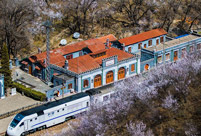 Century-old station sees railyway evolution
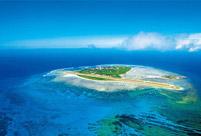 Amazing scenery of Xisha Islands
 Enthusiasts perform Kung Fu at Wudang Mountain
 Stunning photos of China's fighter jets in drill
 Monk's mummified body to be made into a gold Buddha statue
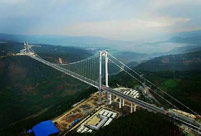 Asia's longest and highest suspension bridge to open to traffic
 China's first interactive robot looks like a beauty
 Vietnamese Su-30 fighters fly over Nanwei Island in South China Sea
 Top 20 hottest women in the world in 2014
 Top 10 hardest languages to learn
 10 Chinese female stars with most beautiful faces
 China’s Top 10 Unique Bridges, Highways and Roads
 Unpredictable Trump could swing either way on China
 Military institution scandal highlights shady Putianese private clinics
 How to maintain property in communist system looms large as land warrants expire
 Yiwu, China’s wholesale capital, switches its economic growth engine from manufacturing to design
Day|Week


