
Q People’s Daily Online:
Commodity plays an important role in the trade between China and SA and its price has been slumping for the last five years. We’ve seen some changes in the bilateral trade, not only Chinese exportation but also import. What is the most important change on the trade side according to your observation, and what is the reason behind the transformation?
A BARNABY FLETCHER: China is SA’s single-largest trading partner, a relationship that has traditionally been based on SA exporting primary commodities and importing manufactured goods. Yet reduced Chinese demand for primary commodities means that, at least from the South African side, this relationship is facing some challenges.
In light of a widening trade deficit, SA is looking shift its relationship with China from one based predominantly on trade of goods to one based more on Chinese direct investment into the country.
This coincides with the desire of Chinese companies to look for opportunities to “export” their expertise and capital as their domestic economy slows to a more sustainable level of growth and as the government steps up its “One Belt, One Road” international investment initiative.
RANDALL RHATEGAN: The relationship between China and SA is strong, and the two countries appear committed to ensuring the sustainability of, and growth in, the trade relationship.
More recently, we have seen substantial Chinese investment and commitment in manufacturing and infrastructure. I also expect to see China importing more value-added products from SA in the future.
BOB WEKESA: It would help if some thought was directed towards more value addition and processing of South African minerals rather than exportation of raw minerals. This would help SA climb the value chain globally. Chinese investments in value addition need not to benefit SA alone.
The Chinese investments should gain a return on investment in the value addition. This also fits in with the industrialisation plans under FOCAC.
TEBOGO LEFIFI: SA can expect demand for commodities to remain low even as the market stabilises. China is trying to transform itself from investment spending toward consumer spending economy. This shift is seen in last year’s Chinese steel production, which impacted directly iron ore demand. The much needed shift by SA to shift from resource exporting to more value added, beneficiated resources may eventually happen, but not without growing pains.
There’s also the commitment China made to SA in December. Investment momentum may come from its SOEs and private sector that take the lead from state policy. Some companies started to sniff around for opportunities during the state visit. SA is eyeing China’s investments in key sectors such as automotive manufacturing.
SA will also host the first Africa-China Investment Forum, which is expected to encourage deal flows in the tune of $250bn — this will most likely be in non-extractive businesses.
EDDIE MBALO: The change is in the fact that for China to stimulate its own economic growth, it has to focus on growing its consumer market. The price slump is caused by the oversupply of these commodity products, in particular to China as its economy grew in the way it has been doing for the last few years.
It becomes natural therefore that China encourage its own population to spend more in order to grow the other sectors of the economy, like its retail market.
JEREMY STEVENS: The manner in which China connects to the rest of the world is also undergoing its own evolution. Investment as a share of GDP will fall in coming years. This simply means that more and more firms attached to China’s last three decades of growth will be looking to diversify into new markets, such as Africa.
The new phase of development means that many Chinese corporates that have built up enormous capacities and competitiveness in recent decades — particularly those connected to the old growth model in the Mainland, such as construction companies, real estate developers, engineering firms and so on — will increasingly look to externalise.
KENNY CHIU: In the mining sector, we experienced some slowdown in sub-Sahara Africa not only due to the slumping price of commodity but Chinese companies (mainly Chinese state-owned enterprises) have acquired a number of significant mining companies in the past few years and much efforts have now been spent on developing those mines.
Having said the above, we are advising quite a number of Chinese private equity firms that are becoming very active in Africa. On other part of Africa, such as Democratic Republic of Congo, Tanzania, Ghana, Mali etc we are experiencing an increased flow of mining mergers and acquisition activities, this is especially true since the dying down of Ebola in West Africa.
LISA XIE: While commodities still dominate trade between China and SA in terms of value and volume, the fastest-growing imports to China since 2010 include vehicles, pharmaceutical products and agricultural products (cocoa, edible fruits, and textiles).
As China has sought more diversified manufacturing and services activities to drive growth, it no longer demands the high volumes of raw materials. At the same time, incomes and the demands of the Chinese consumers have become diversified as incomes have grown and consumers have become more sophisticated. Even product groups such as toys have grown by 39% and essential oils by 51% since 2010.
 |  |
 Beijing Style: ready for bare legs
 Century-old station sees railyway evolution
 Amazing scenery of Xisha Islands
 Enthusiasts perform Kung Fu at Wudang Mountain
 Stunning photos of China's fighter jets in drill
 Monk's mummified body to be made into a gold Buddha statue
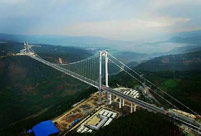 Asia's longest and highest suspension bridge to open to traffic
 China's first interactive robot looks like a beauty
 Vietnamese Su-30 fighters fly over Nanwei Island in South China Sea
 Top 20 hottest women in the world in 2014
 Top 10 hardest languages to learn
 10 Chinese female stars with most beautiful faces
 China’s Top 10 Unique Bridges, Highways and Roads
 Unpredictable Trump could swing either way on China
 Military institution scandal highlights shady Putianese private clinics
 How to maintain property in communist system looms large as land warrants expire
 Yiwu, China’s wholesale capital, switches its economic growth engine from manufacturing to design
Day|Week


