
Q People’s Daily Online:
Power shortages have affected the local economy in recent years. According to the 2030 Plan, SA is making great efforts in diversifying its energy resources, for example IPPs (Independent Power Producers), nuclear power etc. Some Chinese enterprises have also got involved. Do you think SA will further open its energy industry?
A RANDALL RHATEGAN: More than anything else, the South African economy needs economic growth. Economic growth will not be possible in an environment where power supply is constrained or unreliable.
Significant investment is required for SA to expand its power generation capacity, and diversify its power sources. This will be difficult to achieve without private sector involvement. I expect SA will cautiously and selectively open its energy industry in the future.
LISA XIE: Absolutely — SA’s energy needs will grow as economic growth begins to pick up. At the moment, it is a constraint to growth and much investment is going into ramping up generation capacity.
There are areas that have been untapped and we believe that SA’s natural gas reserves could be a game changer in terms of our oil dependence.
There has also been a large focus on investment in renewable energy which we are very encouraged by. Government is very aware that it needs the private sector’s participation to make this a success and we expect further collaboration between government, the private sector and investment partners as the energy industry is inevitably liberalised.
KENNY CHIU: At the moment a number of Chinese companies have already been awarded a number of IPP projects, mainly in the wind and solar domains. SA has been doing very well with the renewable energy sector but more can be done to expand this exciting sector.
Eskom currently owns and operates the national transmission grid. A radical reform in Eskom is imminent and a key driver will be to split the generation, transmission and distribution of electricity.
The ageing transmission grid is in dire condition and with limited resources (both finance and technology) it would be very difficult for Eskom to effect an overhaul upgrade of its national grid. There should be an open and transparent access to the national transmission grid and to ensure transparency as regards transmission costs. Split and privatise or semi-privatise its grid.
Given our current fiscal constraint, it is a matter of time due to lack of maintenance our existing grid is no longer capable to transmit efficiently and continue to sustain greater electricity loss related to transmission and distribution.
China has extended experience in the construction, optimisation and maintenance of a smart grid. Chinese companies such as State Grid Corporation of China, which is currently employing more than 1.5-million people in China, could share some valuable experience and assistance to South African and African governments in managing the ever-increasing demand for electricity.
BOB WEKESA: In the long term, I see SA opening up the energy sector to external investments. In the short term, political factors, the uncertain policy and regulatory environment, budgetary constraints and worries by external investors over returns on investment might prove to be challenges.
BARNABY FLETCHER: While power shortages have eased since mid-2015, SA still operates on a very thin reserve margin and is therefore keen to maintain investment into electricity generation.
One of the key changes in recent years has been the increasing involvement of IPPs in both the renewable and conventional energy sectors, and opportunities for IPPs are likely to expand further.
Nonetheless, plans to fully liberalise the sector have consistently been rejected by the government in the face of opposition from the ANC’s left-wing allies and state-owned utility Eskom will remain the dominant player for the foreseeable future.
EDDIE MBALO: SA is guided by the National Development Plan (NDP), which has the support of all main role players in the political and economic spheres and investment in the energy sector and in infrastructure development generally is central to the NDP.
 |  |
 Beijing Style: ready for bare legs
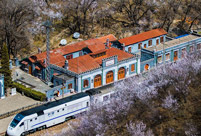 Century-old station sees railyway evolution
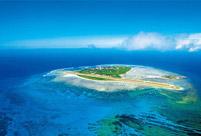 Amazing scenery of Xisha Islands
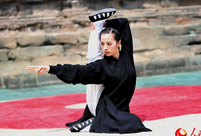 Enthusiasts perform Kung Fu at Wudang Mountain
 Stunning photos of China's fighter jets in drill
 Monk's mummified body to be made into a gold Buddha statue
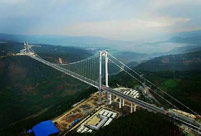 Asia's longest and highest suspension bridge to open to traffic
 China's first interactive robot looks like a beauty
 Vietnamese Su-30 fighters fly over Nanwei Island in South China Sea
 Top 20 hottest women in the world in 2014
 Top 10 hardest languages to learn
 10 Chinese female stars with most beautiful faces
 China’s Top 10 Unique Bridges, Highways and Roads
 Unpredictable Trump could swing either way on China
 Military institution scandal highlights shady Putianese private clinics
 How to maintain property in communist system looms large as land warrants expire
 Yiwu, China’s wholesale capital, switches its economic growth engine from manufacturing to design
Day|Week


