



A cup of coffee offers a glimpse into Chinese brands going global
Chinese brands are entering a new stage of overseas expansion. Some argue that companies going global must both carry over the systemic capabilities built at home and adapt to local market rules and needs.
On the one hand, digital operations, global supply chain integration and a continuously evolving product innovation system form the foundation for going global, and they determine how fast and how far a company can go in unfamiliar markets. On the other hand, localizing brand values, fostering cross-cultural understanding, and building local operations that meet regulatory requirements and standards and suit consumer habits decide whether a company can truly take root.
China's coffee brands going global offer a case in point. Luckin Coffee opened its 100th store in Singapore on Sept. 28. Over the past three years, the brand has served more than 1.9 million customers in total and launched more than 130 products, making it the second-largest coffee chain in Singapore by number of outlets.
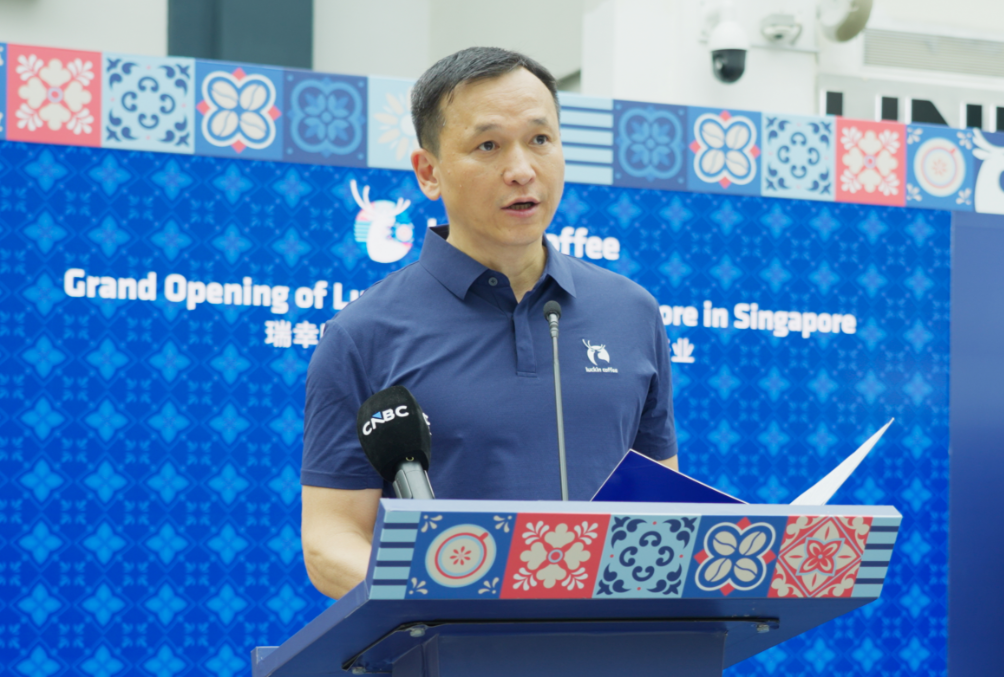
Photo shows Li Hui, chairman of the board of Luckin Coffee. (Photo courtesy of the interviewee)
At the opening ceremony, Li Hui, chairman of the board of Luckin Coffee, said the company has adapted the systematized digital capabilities, product innovation system and global supply chain strengths it developed in China to the Singapore market. In his view, the company's business model can be replicated overseas.
As a major economy in the Asia-Pacific, a key ASEAN member and a global hub for trade and investment, Singapore's economic development relies heavily on an open, stable and inclusive regional environment. It has therefore become an important testing ground for Chinese brands seeking to connect with regional and global markets.
"Chinese brands are not just 'going international.' More and more are becoming truly international brands," said Ng Ming Liang, vice president of the Global Enterprises Division at the Singapore Economic Development Board (EDB).
"Luckin is one example. A truly international brand not only enters overseas markets, but also serves local consumers, develops local talent and builds long-term capabilities locally."
On the supply chain side, Luckin taps its large customer base to link up with high-quality sourcing regions around the world. It sources premium coffee beans from Brazil, Colombia, Ethiopia and southwest China's Yunnan Province, as well as ingredients such as Indonesian coconut, and channels them to China's vast domestic consumer market. Through large-scale procurement and deeper engagement with producing regions, the company is helping promote coordinated development across the global coffee industrial chain.
In local operations, Luckin has delved into local consumer preferences and regulatory standards. It has implemented Singapore's Nutri-Grade beverage labeling system, developed flavors tailored to local tastes and built green stores, extending the Leadership in Energy and Environmental Design (LEED) green building standards to its overseas operations.
Data shows that as of the end of September, Luckin had more than 38,000 stores worldwide and had served more than 500 million customers in total, with a presence in China, Singapore, Malaysia and the United States.
Industry insiders say the figures reflect a change in the logic of going global: it is no longer merely about exporting products, but about exporting a combination of supply chains, business models, store standards and responsibilities to local communities. This means Chinese companies are moving beyond the era of simply selling goods overseas and into a new stage of deep-rooted brand globalization.
Photos

Related Stories
Copyright © 2026 People's Daily Online. All Rights Reserved.
