



Xinjiang Diary, Day 7: Xinjiang, where differences come together
Full disclosure, I'm cheating a little with this final entry. Technically, we're starting on the night of day six, after returning to Urumqi from Shihezi, because day seven itself was mostly a morning market, a frankly unreasonable amount of naan, and a flight back to Beijing. It felt wrong to give that night its own ending and then squeeze the actual ending into a few paragraphs the next morning.
The sky outside had gone that deep, held-open blue that skies do when they're not quite willing to turn to night. Six days in, I had stopped being surprised by how long the light lasted here. What surprised me instead was that I'd started counting down without meaning to. This was the last night.
There was still one stop left before it could really feel that way: the Grand Bazaar.
I'd heard about it before I ever landed in Xinjiang, the kind of place that shows up in every guidebook and every conversation about Urumqi, and I'll admit I walked in braced for something built mostly for people like me, camera out, hunting for a photo that looked like the Silk Road. What I found instead was a place still doing exactly what it has always done, trading, feeding people, drawing crowds, just with better lighting and a lot more phones out taking pictures of their own.
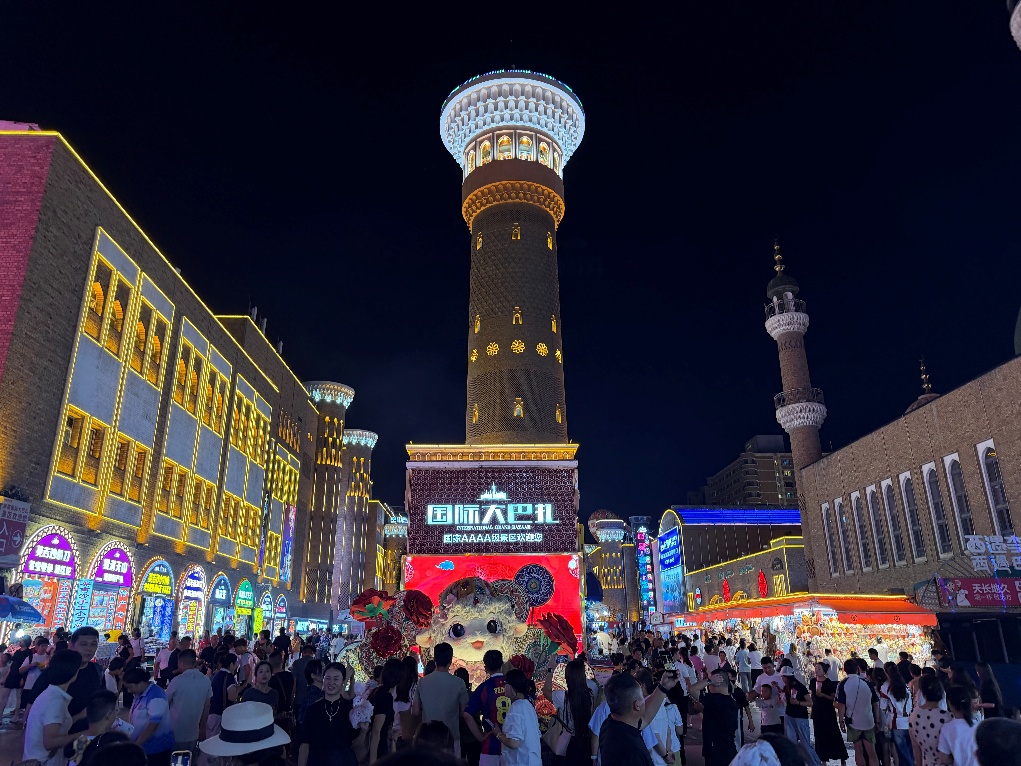
A view of the Grand Bazaar at night in Urumqi, northwest China's Xinjiang Uygur Autonomous Region. (People's Daily Online/Michael Kurtagh)
The lanes were packed, and the crowd was packed with something I'd been noticing all week without quite naming it. Han, Uygur, Kazakh, Hui, tourists from other provinces comparing notes on what to buy, a couple of backpackers speaking a language I couldn't place. Vendors switched between Uygur and Mandarin mid-sentence the same way the workers back in that Hami cafeteria had on day one, not performing it, just doing it. Someone called out prices in one language and took payment with a phone scan that didn't need any language at all.
At one point, we passed a little boy who couldn't stop laughing when he saw us. We couldn't resist laughing with him, which only seemed to make him laugh harder. His mother tried to explain what he found so funny, but whatever the explanation was, it only seemed to make the whole thing funnier. We never really figured out what had started it. We didn't need to.
I stopped at a stall with a mountain of ice cream, but it was another item being sold that really got our attention. The seller was making a kind of yogurt shaved ice dessert, and when he prepared it, he tossed the yogurt high into the air before catching it again, turning what should have been a simple dessert into a small performance. He talked to us about the yogurt, explaining how its sourness worked with the sweetness of the honey he poured over it. It was the sort of exchange that lasted only a few minutes but felt like exactly the kind of thing I'd come to appreciate by the end of the trip: a stranger explaining something ordinary to us simply because we'd stopped to ask.
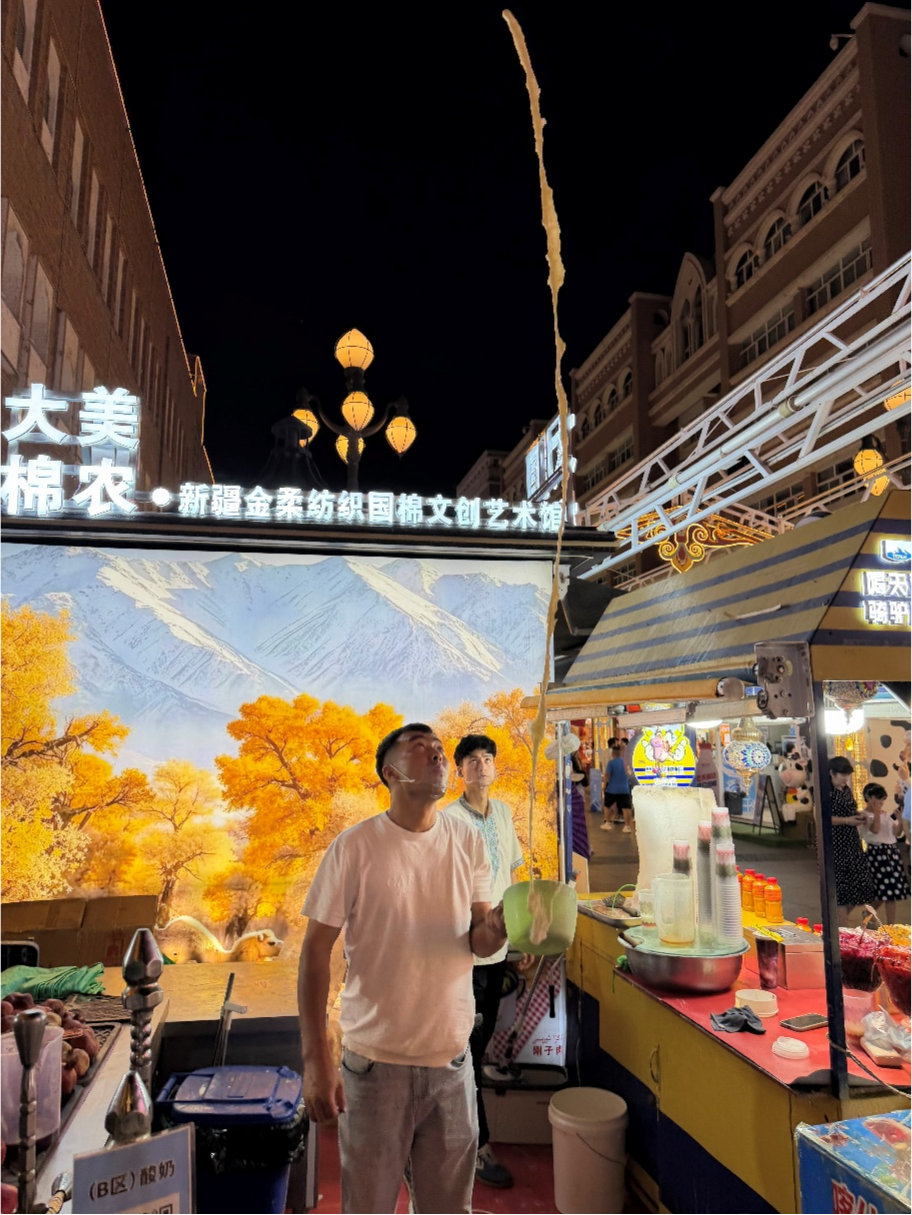
A vendor tosses a yogurt shaved iced dessert into the air at the Grand Bazaar in Urumqi, northwest China's Xinjiang Uygur Autonomous Region. (People's Daily Online/Michael Kurtagh)
What struck me most, walking through it, wasn't any single thing I saw so much as how little I was thinking about the fact that I was somewhere I'd never been before. Late at night, in a crowd that size, in a market that loud, I was mostly thinking about what to eat next. Families had young kids out well past what would be a reasonable bedtime, vendors were still calling out to passing customers, and people moved through the lanes with the unhurried familiarity of somewhere they had been many times before. It was an ordinary night, which was perhaps the most striking thing about it. You don't always notice how much you value that kind of ordinariness until you're far from home.
I thought about Aletun Ancient Street back in Hami, that first night market, and the word I'd landed on then. Mixed. Here it was again, just louder and later and with better lighting.
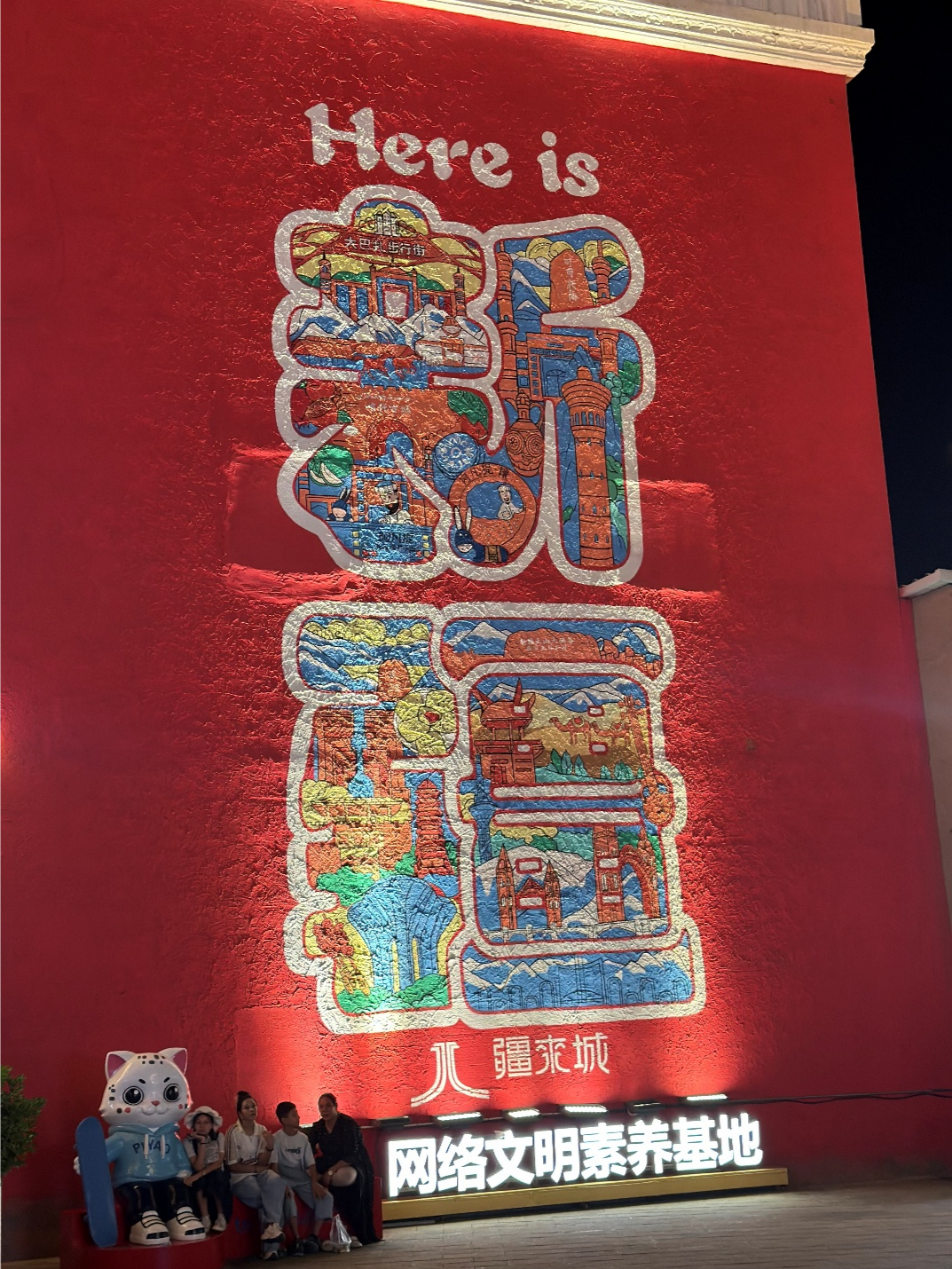
A giant wall mural says "Here is Xinjiang" at the Grand Bazaar in in Urumqi, northwest China's Xinjiang Uygur Autonomous Region. (People's Daily Online/Michael Kurtagh)
The next morning came fast. We were up early for a small street morning market, the kind of place that exists for the neighborhood first and visitors like me second, if at all.
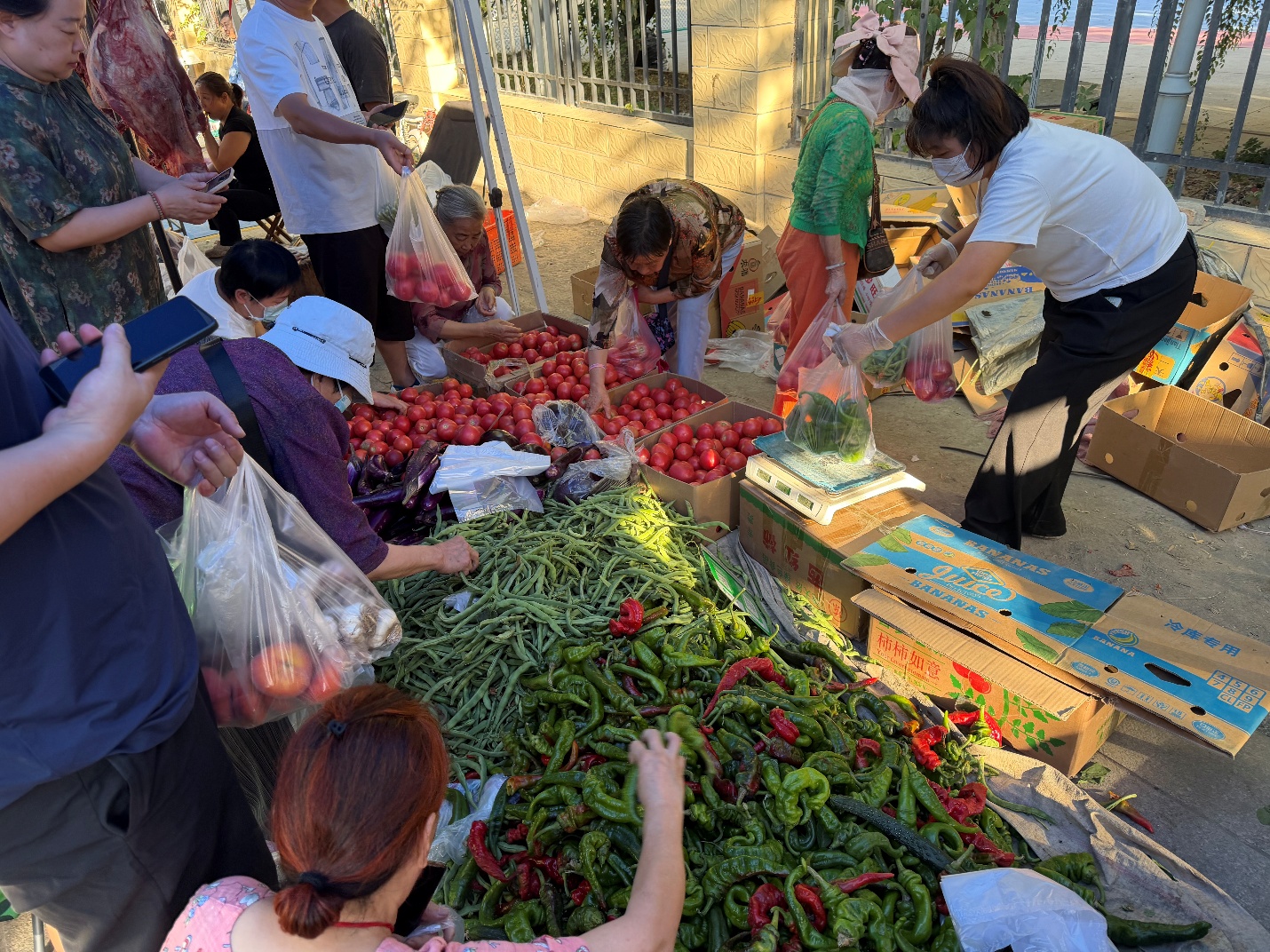
People buy vegetables at a morning market in Urumqi, northwest China's Xinjiang Uygur Autonomous Region. (People's Daily Online/Michael Kurtagh)
We had breakfast sitting at one of the small street food stalls and did some light shopping. Then we found a man selling naan, a Xinjiang baked bread, and decided we should bring some back to Beijing. We picked out a few. Then someone remembered a colleague back home who might like some. A few more went in the bag. Then someone remembered somebody else. A few more. Then we reconsidered the first number. More naan.
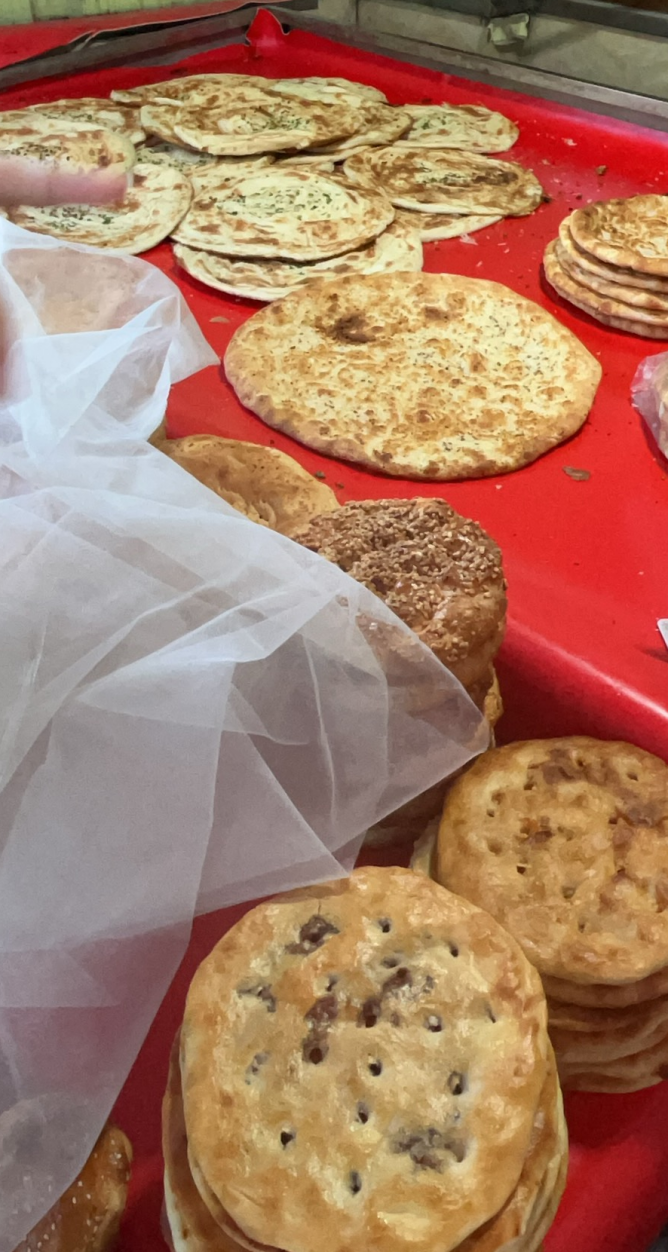
Freshly baked naan for sale at a morning market in Urumqi, northwest China's Xinjiang Uygur Autonomous Region. (People's Daily Online/Wang Xiaoping)
There was no bargaining involved. The price was fair, and that wasn't the problem. The problem was that we seemed completely incapable of agreeing on how much naan we wanted.
The seller found this hilarious. Every time we thought we'd finished, one of us would point at another stack and start the discussion again. He'd laugh, pick up another piece and toss it into our respective bags. By the end, the process had become almost mechanical: point, discuss, laugh, add another naan. We'd bought more than 50 pieces, and our bags were beginning to look less like something meant to carry bread and more like something that had accidentally swallowed a bakery.
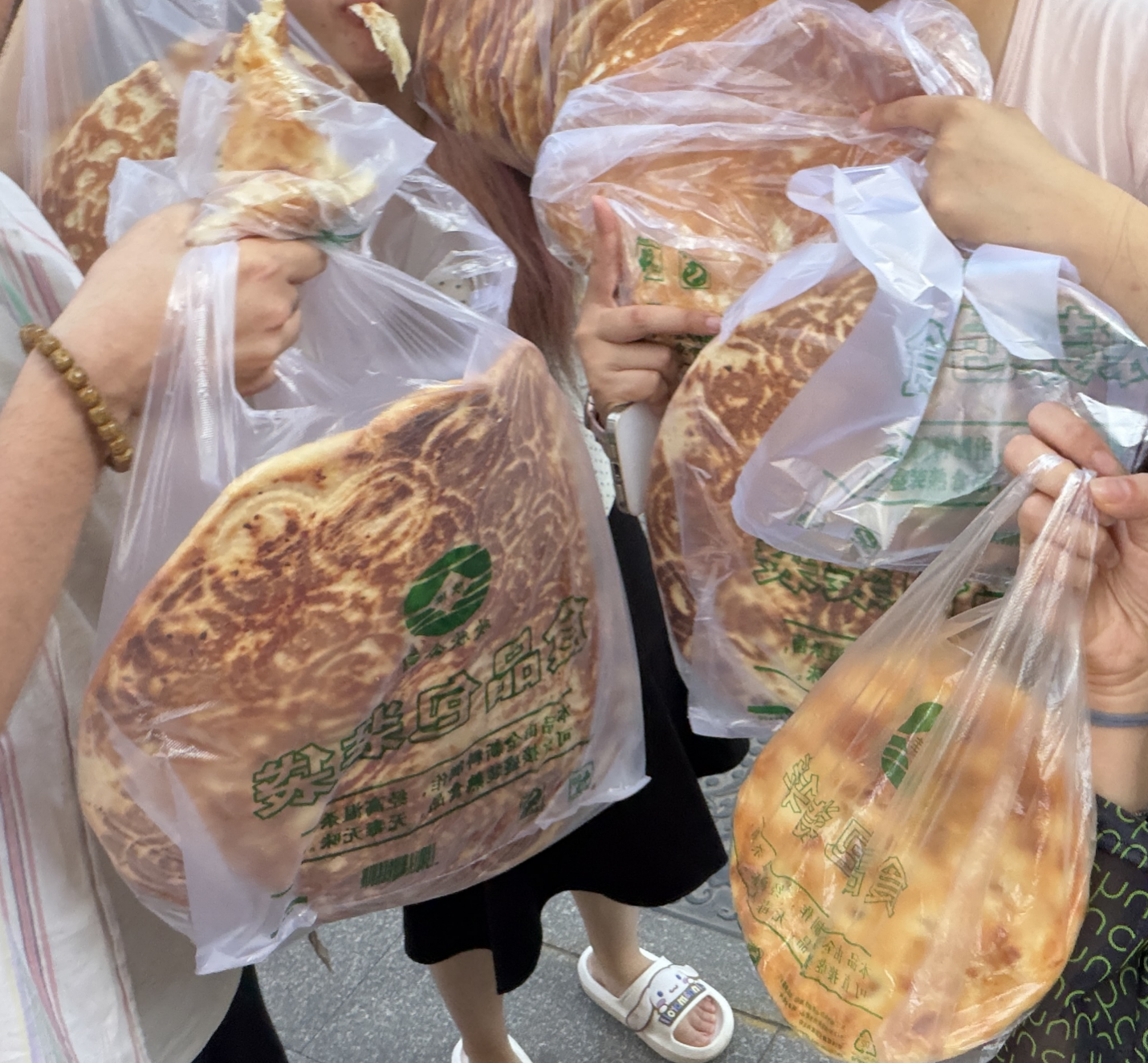
Showing off our haul of naan at a morning market in Urumqi, northwest China's Xinjiang Uygur Autonomous Region. (People's Daily Online/Wang Yuheng)
It was a small thing. People standing around a street stall, unable to make up their minds while the man selling the bread seemed increasingly entertained by us. But there was something nice about how uncomplicated it was. We wanted naan, he sold naan, and our indecisiveness had somehow become a joke we were all in on.
Looking back at the six days before this one, I keep landing on the same feeling. I came to Xinjiang expecting landscapes and stories, and I got plenty of both. Hami's melons, Turpan's heat, Changji's cotton, Zhundong's coal, Jiangbulake's wheat-covered hills, Beiting's ruins, Tianchi's blue water, Shihezi's ruler-straight poplars. Everywhere I went, the scenery changed.
But the more I think about the week, the more I realize that what I'll remember most isn't any one landscape. It's the people I met in them. Han, Uygur, Kazakh, Hui, Mongol, and people whose backgrounds I never thought to ask about, living next to each other, working next to each other, selling each other bread and yogurt and walnuts, sharing meals, switching languages, laughing with strangers, occasionally putting up with a foreign journalist who couldn't decide how many naan he wanted to buy. Maybe that's what ethnic unity looks like when you're actually living inside it: not a slogan or a ceremony, but a hundred ordinary interactions that don't feel remarkable until you stop and look back at them.
And maybe that's why, if the landscape is what first pulls people to Xinjiang, it's the people who stay with you longer.
We flew out of Urumqi a little after 1 p.m. As the plane lifted off, I watched the city fold itself back into that same flat, mountain-ringed geography I'd first noticed on day three. Somewhere beneath us were seven days of melons and grapes, cotton and wheat, coal and mountains, ruins and blue water, poplars and solar panels, markets and meals and people I'd only just met.
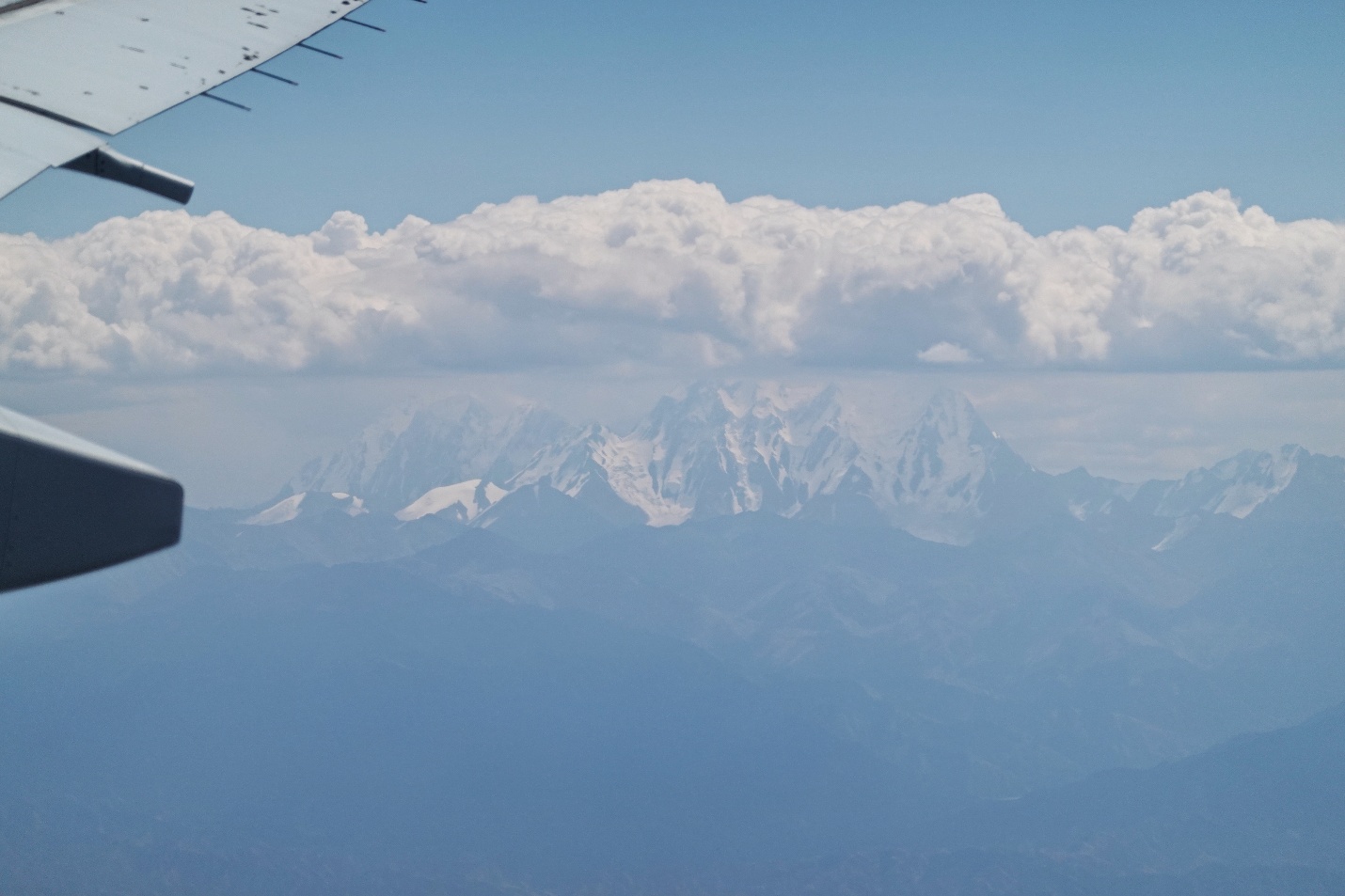
A view of the Tianshan Mountains from a plane leaving Urumqi, northwest China's Xinjiang Uygur Autonomous Region. (People's Daily Online/Wang Xiaoping)
We landed in Beijing around 5 p.m., and the city on the other side of the jet bridge felt, for a moment, like a different country from the one I'd left that morning. It wasn't. It was the same one, just a different corner of it, and that was sort of the whole point of the trip.
Heading home from the airport, tired, sunburned and carrying bags that were considerably heavier with naan than they had any right to be, I kept thinking about what I'd actually gone looking for when I boarded that first flight to Hami. I had expected landscapes. I had expected stories. I had expected to come home with photographs.
What I hadn't expected was how many small encounters would stay with me instead. A cafeteria worker switching languages without thinking. Children helping at a grape stall. A yogurt seller tossing sour yogurt into the air before covering it with sweet honey. A naan seller laughing as we somehow turned a simple bread purchase into a 50-piece operation. Colleagues becoming friends somewhere between one city and the next. None of these moments was particularly extraordinary while it was happening. Maybe that's what made them stick.
Seven days, one region, and more versions of the same country than I could have imagined finding in a single trip.
Photos


Related Stories
- Xinjiang Diary, Day 4: Zhundong and Jiangbulake, one gives and the other welcomes
- Xinjiang Diary, Day 5: Beiting and Tianshan, between ruins and mountains
- Xinjiang Diary, Day 2: Turpan, where the heat provides
- Xinjiang Diary, Day 1: Hami, the gateway
- Xinjiang Diary, Day 6: Shihezi, an oasis built generation by generation
- Xinjiang Diary, Day 3: Changji, where some fields tend themselves
Copyright © 2026 People's Daily Online. All Rights Reserved.
