



Xinjiang Diary, Day 5: Beiting and Tianshan, between ruins and mountains
Note: Over the next several days, I'll be traveling across northwest China's Xinjiang Uygur Autonomous Region as part of People's Daily Online's "China Momentum" program. I'll be writing daily about what I see and experience.
We left our hotel in Qitai early, under a sky the color of old paper. A light drizzle had settled over the road, just enough to bead on the windows, and the landscape outside seemed to have been reduced to shades of gray.
On the way to our first stop Beiting, we started passing banners and roadside markers for a marathon scheduled for the following morning, volunteers already out testing water stations and taping off stretches of road. It struck me as an odd kind of preview. Tomorrow, runners would follow this road in sneakers and race bibs. A thousand years ago, travelers passed through the same broad landscape by camel and cart.
By the time we reached Beiting Ancient City, about 12 kilometers north of Jimsar county, the drizzle was still coming down. There is something disorienting about arriving at an ancient city and finding so little of a city left.
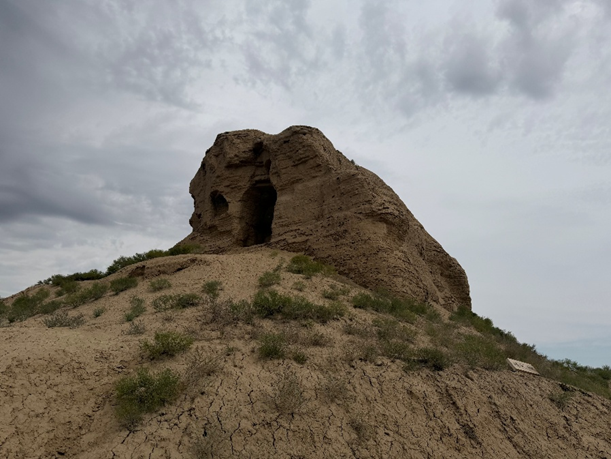
A ruin of the Beiting Ancient City in Jimsar county, Changji, northwest China's Xinjiang Uygur Autonomous Region. (People's Daily Online/Michael Kurtagh)
The walls of Beiting are mostly low now, great lengths of rammed earth reduced to ridges running toward the horizon. We drove slowly around the perimeter, following what had once been a substantial defensive wall, and I found myself trying to imagine it at full height, with someone standing above us looking out across the same plain for whatever might be approaching. That is the strange thing about ruins. They leave you with the outline and ask you to supply everything else.
Just beyond the main walls stood the remains of the Grand Western Temple, a Buddhist monastery from the Qocho Uygur period, preserved beneath a large protective structure, almost like an archaeological theater. Walking inside felt like stepping into an older, earthier version of the preservation hall at the Terracotta Warriors. The temple has been reduced to walls, foundations, niches and fragments, but enough remains to imagine its original scale, once a major monastery whose statues and murals have since been uncovered by archaeologists.
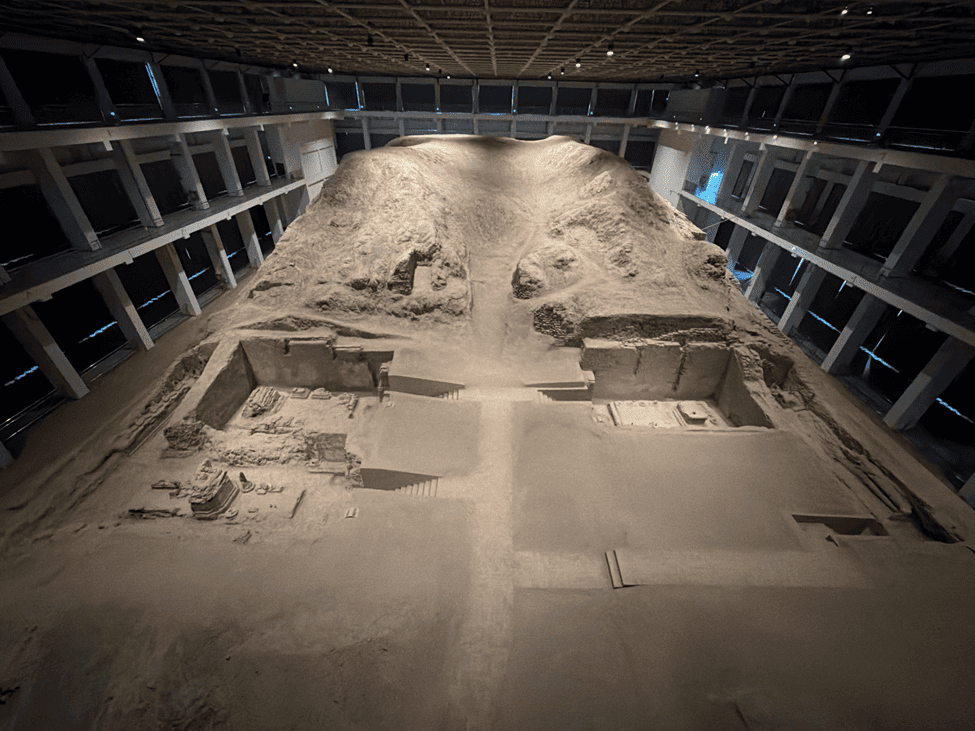
Ruins of the Grand Western Temple at the Beiting Ancient City in Jimsar county, Changji, northwest China's Xinjiang Uygur Autonomous Region. (People's Daily Online/Michael Kurtagh)
With the rain ticking against the roof, I found myself looking less at the individual ruins than at the space between them: a wall here, a foundation there, a fragment of painted plaster. Each one was only a piece, but together they suggested a building that had once been busy with people.
Then we went to the museum, and I walked through it slower than I expected to. There is something about seeing a piece of pottery, a coin or a fragment of a mural behind glass that collapses time in a strange way. You look at something made more than a thousand years ago, and your first thought is not that it is ancient. It is that somebody once held it.
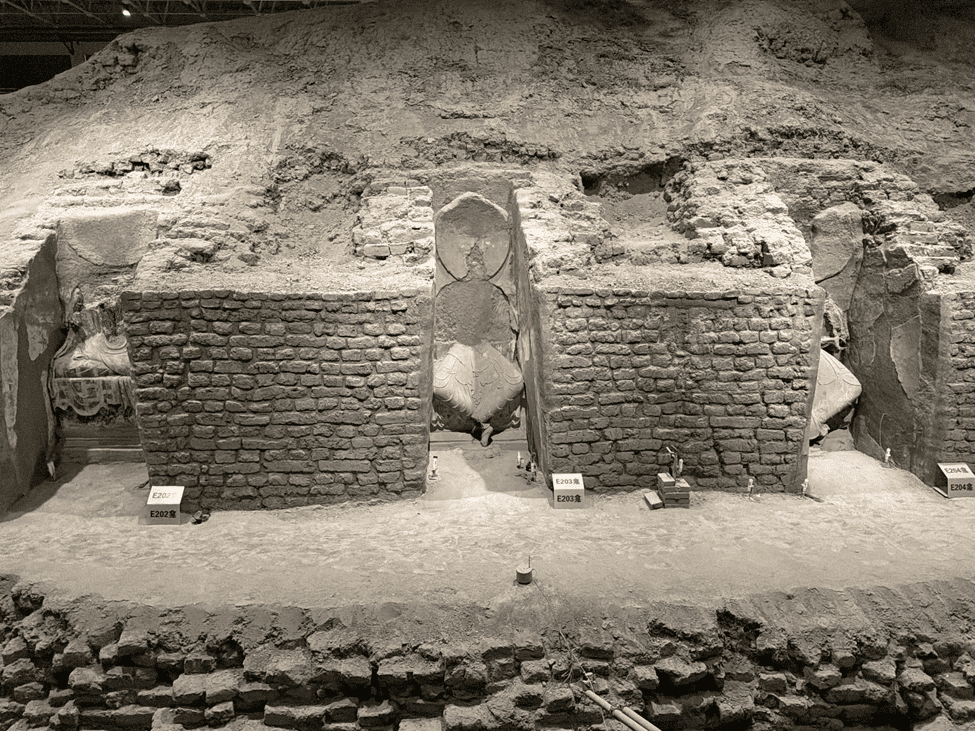
Ruins of the Grand Western Temple at the Beiting Ancient City in Jimsar county, Changji, northwest China's Xinjiang Uygur Autonomous Region. (People's Daily Online/Michael Kurtagh)
The history of Beiting is long enough to make the word "ancient" feel inadequate, developing from the Tang-era Tingzhou into the seat of the Beiting Protectorate, then a center of the Uygur Kingdom of Qocho. But standing there, I kept thinking less about the succession of dynasties than about what survived them.
Coins. Roof tiles. Pottery. Building fragments.
Things probably unremarkable to the people who used them, and therefore somehow more moving now.
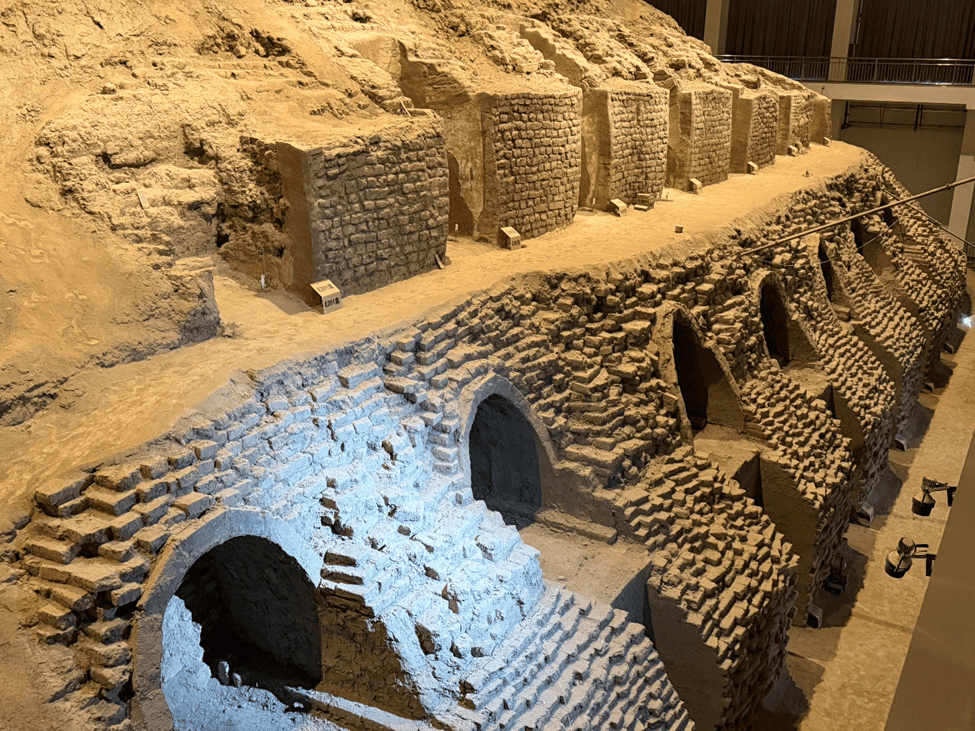
Ruins of the Grand Western Temple at the Beiting Ancient City in Jimsar county, Changji, northwest China's Xinjiang Uygur Autonomous Region. (People's Daily Online/Michael Kurtagh)
From Beiting, we drove toward Tianshan Tianchi, yet another 5A scenic area in Changji, and Xinjiang performed one of its favorite tricks. The landscape changed almost completely, dry openness giving way to foothills, then greener slopes, then forest. When we reached Tianchi, or "Heavenly Lake," the clouds had begun to lift.
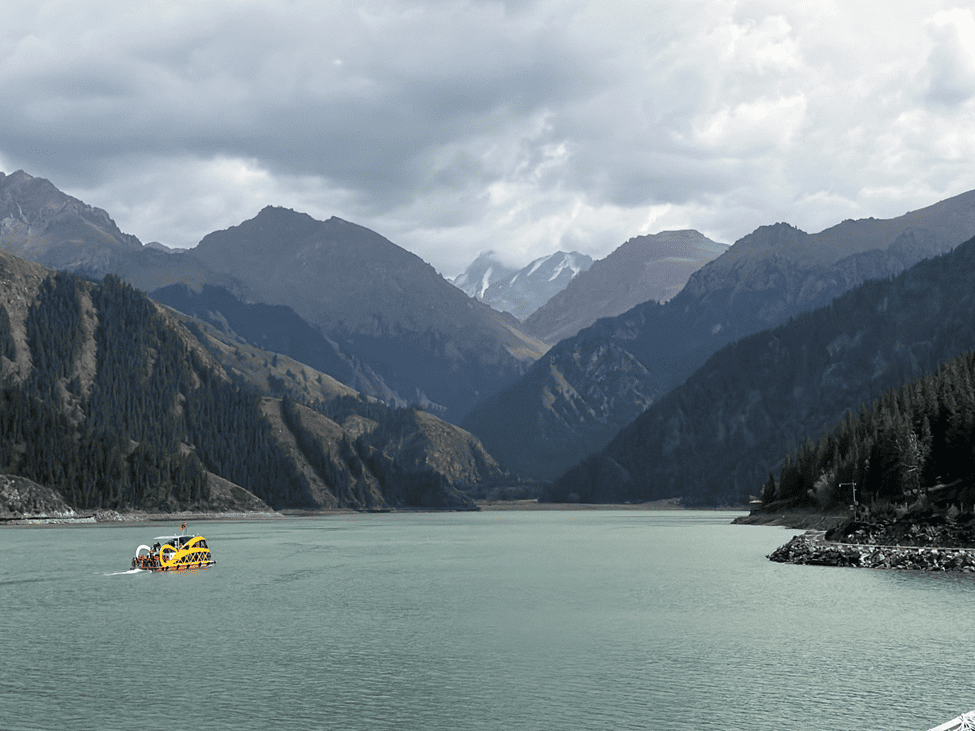
Tianchi, or "Heavenly Lake," at the Tianshan Mountains in Changji, northwest China's Xinjiang Uygur Autonomous Region. (People's Daily Online/Michael Kurtagh)
The water was that impossible turquoise blue photographs never quite capture, surrounded by spruce and backed by the snow-covered bulk of Bogda Peak. We continued upward by cable car toward a peak the locals call Mayashan, Horse Tooth Mountain, named for a jagged rock formation that, from a distance, really does resemble a row of broken teeth.
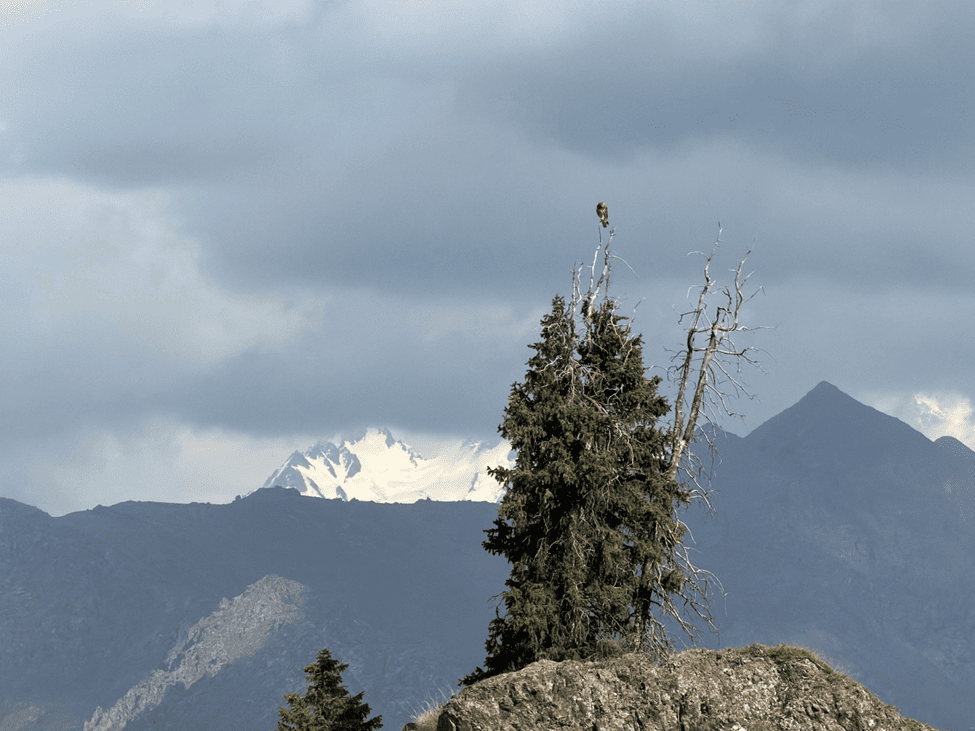
A bird sits on top of a tree in front of the snow covered Bogda Peak at the Tianshan Mountains in Changji, northwest China's Xinjiang Uygur Autonomous Region. (People's Daily Online/Michael Kurtagh)
At the top, we walked wooden platforms along the ridge. We were in a bit of a rush, but that didn't stop me from stopping after almost every flight of stairs. There was simply too much to look at. Bogda's snow caught the last of the afternoon light before disappearing behind clouds moving slowly across the slopes, opening and closing pieces of the landscape like a curtain.
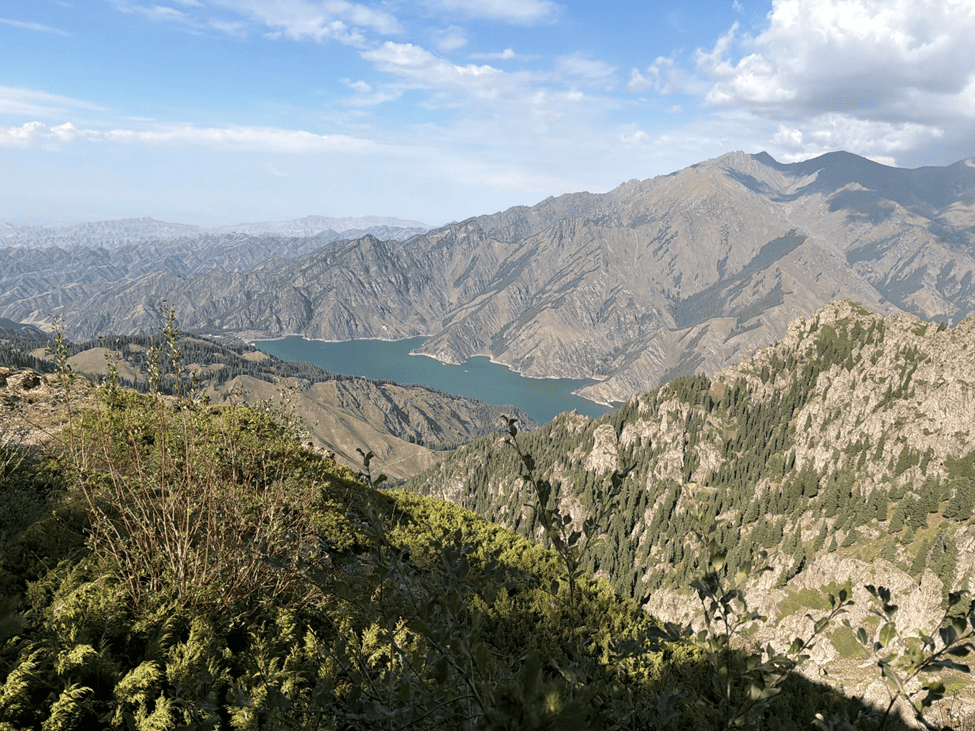
An aerial view of the Tianchi, or "Heavenly Lake," at the Tianshan Mountains in Changji, northwest China's Xinjiang Uygur Autonomous Region. (People's Daily Online/Michael Kurtagh)
Standing there, I thought again about Beiting. The people who had drawn the borders on the map the guide showed us that morning had divided this landscape into territories, jurisdictions and kingdoms. But the mountains and valleys continued underneath all of them.
A border is a line on a map. The mountain does not know where the line is. Neither does the wind.
The people who built Beiting are gone. The armies that guarded it are gone. The dynasties that claimed it are gone. But the landscape remains. Maybe that is one of the things that is easy to miss about China when you encounter it through dates and dynasties. Its history can look like a succession of things, one kingdom replacing another, one border moving, one city rising as another falls. But traveling through Xinjiang, it feels less like replacement than accumulation. The old does not always disappear. Sometimes it simply becomes another layer.
A city becomes a ruin. An old road becomes a modern highway. A route that once carried merchants and armies carries marathon runners instead. The mountains watch all of it.
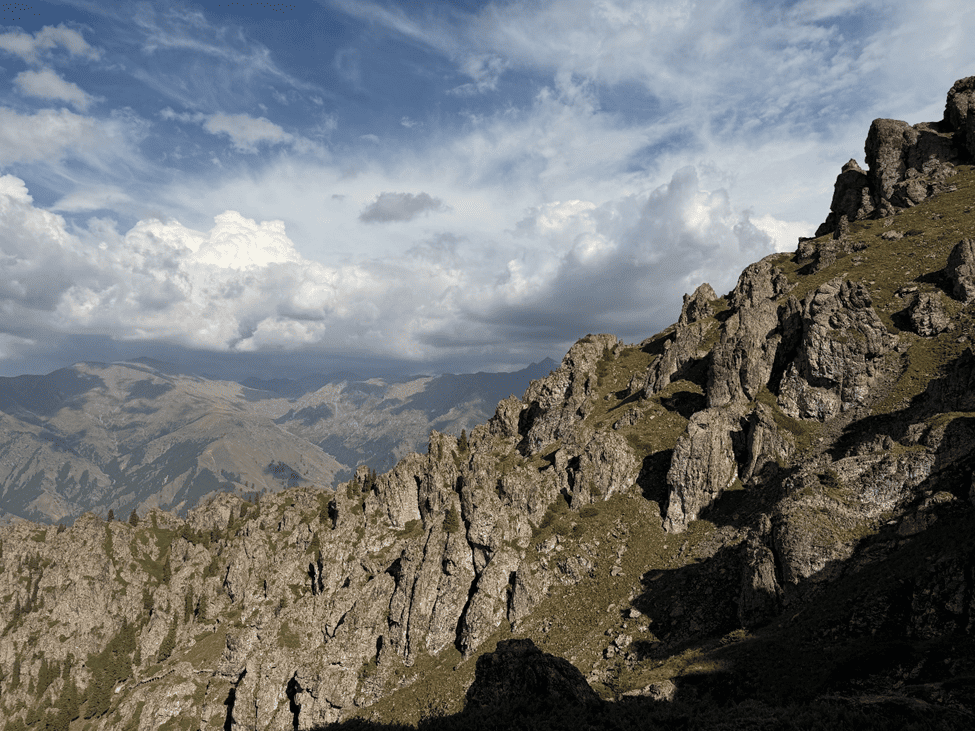
Mayashan, or Horse Tooth Mountain, at the Tianshan Mountains in Changji, northwest China's Xinjiang Uygur Autonomous Region. (People's Daily Online/Michael Kurtagh)
By the time we came down, evening had arrived. We returned to Urumqi for dinner with some colleagues from local media. There was a little awkwardness at first, the kind of quiet that comes when people who have only just met are trying to figure out where a conversation begins. By the end of the night, it had disappeared. We talked about work, Beijing, Urumqi, places we needed to visit, and by the time we left there were promises to keep in touch.
Walking out into the night, I found myself thinking about Beiting again, not the walls this time, but the people who had passed through them. They traded, governed, worshipped, fought, settled and moved on. The city changed hands and changed names, and different communities left different traces behind. What survived was never one single story, but layers of them.
Maybe that is what I am beginning to understand about China: not that the past stays unchanged, but that it rarely feels entirely gone. It gets built over, carried forward, given new names and new purposes. Sometimes all that remains is a wall in the rain. Sometimes it is a road filled with runners. Sometimes it is simply a story passed from one person to another over dinner.
Two days to go. Next stop: Shihezi.
Photos



Related Stories
Copyright © 2026 People's Daily Online. All Rights Reserved.
