



Hybrid rice: China-Africa agricultural cooperation sows prosperity on African soil

Fang Zhihui (left), a student of Yuan Longping, and Yuan's wife Deng Ze, holding a bag of hybrid rice grown in Guinea, pose for a picture. (Photo courtesy of Hunan Daily)
Recently, a bag of hybrid rice grown in the West African country Guinea was presented to Deng Ze, wife of Yuan Longping, the father of hybrid rice."
Printed on the front of the rice sack were national flags of China and Guinea, while its reverse side bears a handwritten message from the Guinean Prime Minister, who described the rice as "a symbol of cooperation between Guinea and China."
Light as the sack may be, it carries an immense weight of friendship. It embodies the simplest respect the African people hold for a Chinese scientist. It also stands as a vivid testament to how China-Africa agricultural cooperation benefits ordinary people.
According to the Food and Agriculture Organization of the United Nations, over one in five people in Africa still suffer from malnutrition. Africa is not short of arable land or hardworking farmers. Instead, the bottlenecks holding back higher grain yields are agricultural technology and industrial chains.
To this day, many farmers still rely on the weather when it comes to harvests; inadequate storage facilities leave crops prone to spoilage. Compounded by rising global fertilizer prices, extreme weather from climate change, and regional instability, Africa's grain production struggles to develop steadily.
Against this challenging backdrop, China-Africa agricultural cooperation has always played a vital role in addressing pressing needs such as agricultural training, seed improvement, and the promotion of modern farming equipment.
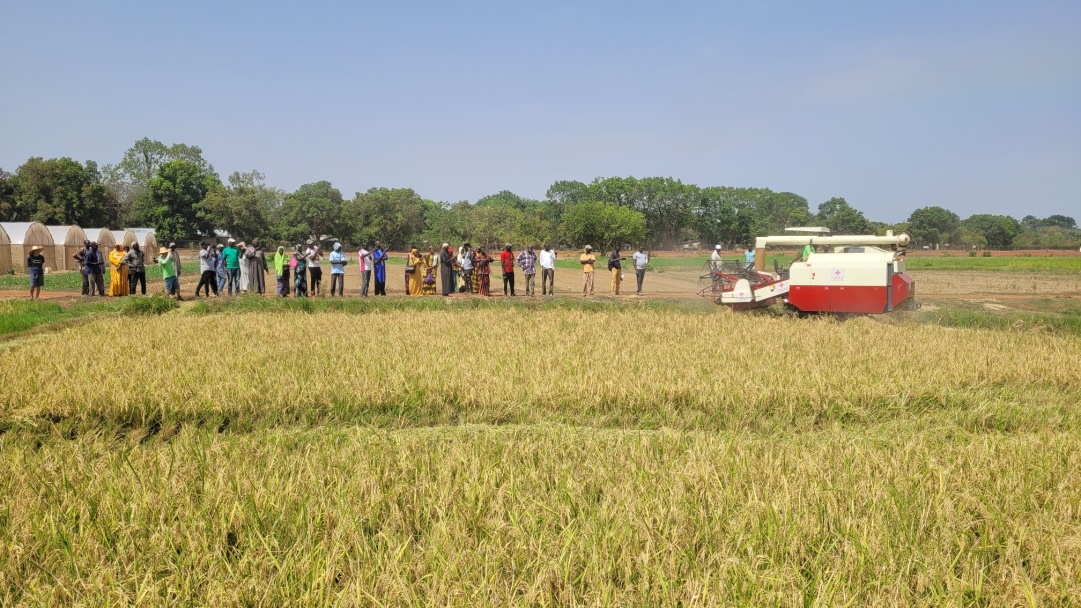
A Chinese agricultural technical cooperation team trains local farmers to operate rice combine harvesters in Gambia's Central River Region. (Photo courtesy of the Chinese agricultural technical cooperation team)
Chinese hybrid rice has now taken root in more than 20 African countries, including Madagascar, Nigeria, Sierra Leone, Mozambique, and Zambia. Many farmers, after planting hybrid rice for the first time, marvel at how the same plot of land can support multiple harvests a year and yield such abundant grain.
As rice shifts from an occasional "luxury" to a stable staple on African dinner tables, Yuan's name has become known to more and more African farmers.
As an African journalist working in China, I am often asked by Chinese friends: Is Yuan really that famous in Africa? My answer is always yes. In fact, in some rural African areas, Yuan is better known than many national leaders. Some call him the "father of hybrid rice"; others keep his photo at home. They may not understand complex international cooperation projects, but they remember the higher yields from hybrid rice, the extra grain in their granaries, and the peace of mind of knowing their children will not go hungry.
In 2025, Gambian farmer Musa Darboe traveled thousands of miles to place a bag of freshly harvested hybrid rice and a painting of the harvest scene at Yuan's tomb. He speaks barely any Chinese, yet every time he visits China, he makes a point to pay his respect to the revered scientist. To many Africans, Yuan is far more than a Chinese scientist -- he is a symbol of hope and harvest for farmers all across Africa.
As a Chinese saying goes, "give a man a fish, and you feed him for a day; teach a man to fish, and you feed him for a lifetime." Chinese agricultural experts live and work alongside African villagers, establishing demonstration farms and agricultural training centers. They promote mechanized farming, irrigation systems, improved seeds, and crop management techniques, while training local agricultural promotion workers. Through this "on-the-ground" technology transfer, local farmers gain a complete set of agricultural production expertise.
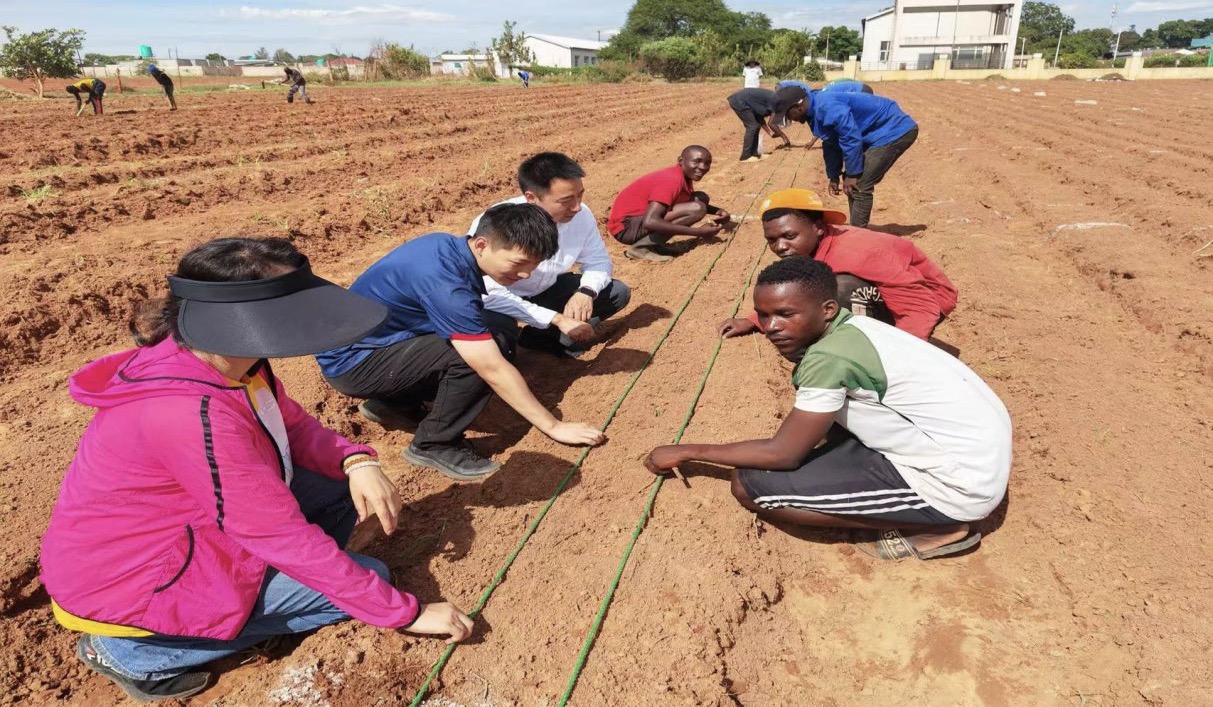
Chinese experts instruct local agricultural technicians to plant soybean in Zambia. (Photo/Huang Xiaodong)
In my view, what China brings is not just equipment and technology, but a viable path to boost food self-sufficiency and security. Technological cooperation empowers African farmers with the know-how to increase yields, mitigate risks, and expand production, strengthening the resilience of their food sovereignty and security.
China-Africa agricultural cooperation has delivered hope to farmlands and farming communities throughout Africa, turning the philosophy of "teaching people how to fish" into tangible progress on the continent. For Africans who have long suffered the pain of hunger, the most valuable gift is not short-term food aid -- it is the ability to reap bumper harvests with their own hands.
Photos



Related Stories
- China-Africa agri-tech forum opens in Kenya to boost agricultural cooperation
- Aid to Africa's epidemic fight demonstrates China's commitment to mutual assistance
- Interview: China-Cabo Verde ties enter new stage with broad prospects, says Chinese ambassador
- Feature: 50 years on, China and Cabo Verde shorten distance through health and education
- China ready to actively assist DRC, other African countries hit by Ebola: spokesperson
- 'Reel China' debuts in South Africa, strengthening cultural ties through cinema
- From trade relief to value-chain transformation: Apple and pear exports signal a deeper shift in agricultural cooperation
- Opinion: China-Africa friendship in a bag of rice
- China to grant market access to eligible coffee beans from 53 African countries starting July 20
- The seeds of soft power: What a bag of rice tells us about China-Africa cooperation
Copyright © 2026 People's Daily Online. All Rights Reserved.
