



European automakers deepen ties with Chinese innovation
China's rapidly advancing new energy vehicle (NEV) sector is spearheading the global automotive industry's green transition, creating significant opportunities for collaboration between Chinese and European companies.
According to statistics released by financial services firm UBS, since 2018, European automakers including Volkswagen, Stellantis, Mercedes-Benz, and BMW Group have established technology partnerships with at least 38 Chinese companies and research institutions, covering areas such as software, hardware, batteries, and vehicle connectivity.
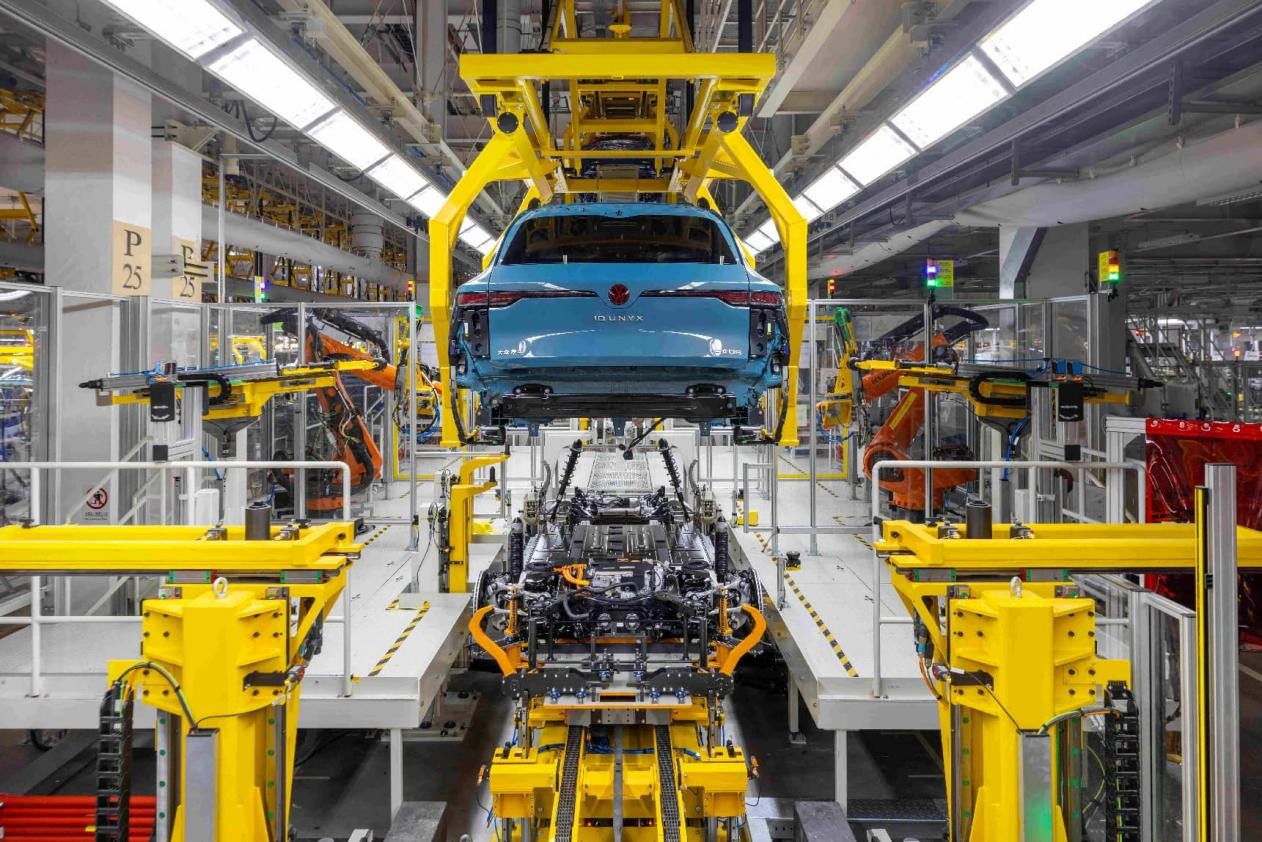
Photo shows an automated production line for electric vehicles in a manufacturing base of Volkswagen in east China's Anhui province. (Photo provided by Volkswagen)
This marks a strategic shift for European manufacturers. Moving beyond their initial focus on China's vast consumer market, they are now increasingly embedding themselves within the country's dynamic innovation ecosystem. Many are strengthening their presence in China and positioning it as a cornerstone of their global strategies.
On March 13 this year, the first model jointly developed by Volkswagen and Chinese electric car manufacturer XPeng, the ID. UNYX 08, officially rolled off the production line in Hefei, east China's Anhui province. It took just 24 months from the signing of the joint development agreement to mass production.
This pace contrasts with the joint ventures of the 1980s that spurred China's passenger car industry. Today, as the global auto industry accelerates towards electrification and intelligence, multinationals like Volkswagen are actively reshaping their roles to integrate more deeply into China's innovation landscape.
China is the world's most competitive and innovative automotive market, said Ralf Brandstatter, chairman and CEO of Volkswagen Group China. To date, Volkswagen has invested about 3.5 billion euro ($4.1 billion) in Hefei, building a complete NEV ecosystem encompassing research and development, manufacturing, and supply chains. The company expects to launch more than 20 NEV models this year.
Hildegard Mueller, president of the German Association of the Automotive Industry, noted that the automotive sectors of Germany and China are highly complementary. China is not only one of the largest and fastest-growing auto markets but also a key arena for testing new technologies and driving industrial innovation.
German automakers, she said, hold advantages in safety and engineering standards. Deeper cooperation will accelerate technological innovation, generate synergies, and promote industry upgrading.
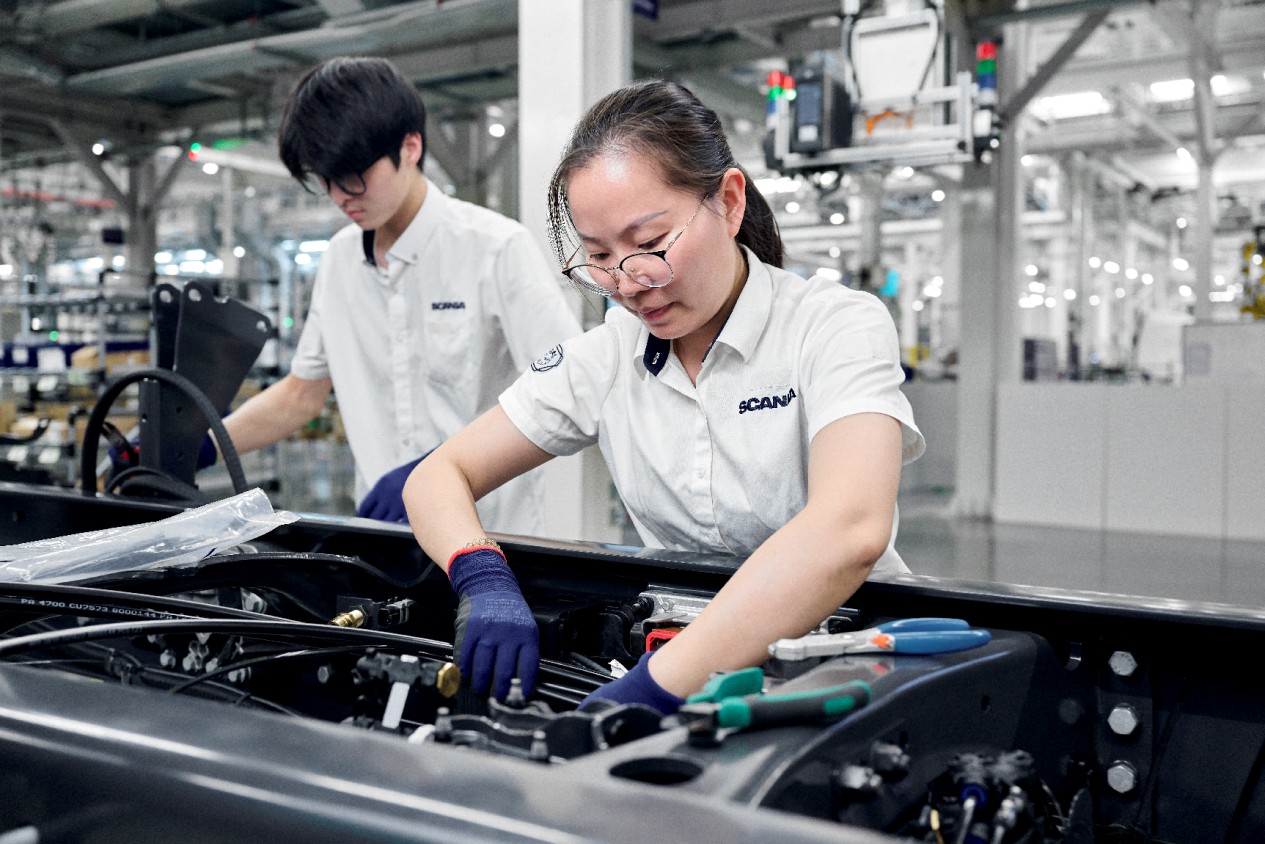
Technicians work in a workshop of Scania in Rugao, east China's Jiangsu province. (Photo provided by Scania)
In March this year, Swedish heavy truck manufacturer Scania delivered its first batch of NEXT ERA trucks produced at its industrial base in Rugao, east China's Jiangsu province, its third global production base. The facility, wholly owned and operated by Scania, began operations last October and is designed to produce 50,000 heavy-duty trucks annually.
A breakthrough in policy was key to this investment. In 2020, China released a negative list for foreign investment, lifting equity restrictions in the commercial vehicle manufacturing sector. Scania quickly finalized the Rugao project, becoming one of the first international commercial vehicle manufacturers to establish a wholly owned plant in China. It also marks Scania's largest overseas investment in nearly 70 years.
The Rugao base has obtained a wholly foreign-owned production license from the Chinese government, breaking the traditional joint venture model, said Camilla Dewoon, executive vice president of Scania Group and head of Scania Group China.
This allows the company to improve efficiency in product definition, technology introduction, and operational management, and it reflects China's steadily improving level of opening up and business environment in manufacturing, she added.
In Dewoon's view, the Rugao base is "a bridge to the future." She said much of the innovation shaping the industry today, including autonomous driving, electrification, and intelligent connectivity, originates in China, adding that the company aims to integrate more deeply into the Chinese market, continue learning, and work closely with outstanding Chinese partners.
In 2025, Chinese NEV maker Leapmotor sold more than 67,000 vehicles overseas, including over 20,000 in the European market. In 2024, it sold only 771 units in Europe. This sharp increase reflects strategic collaboration between Chinese and European automakers. In 2024, Stellantis, the world's fourth-largest automaker, formed a joint venture, Leapmotor International, with the Chinese NEV company.
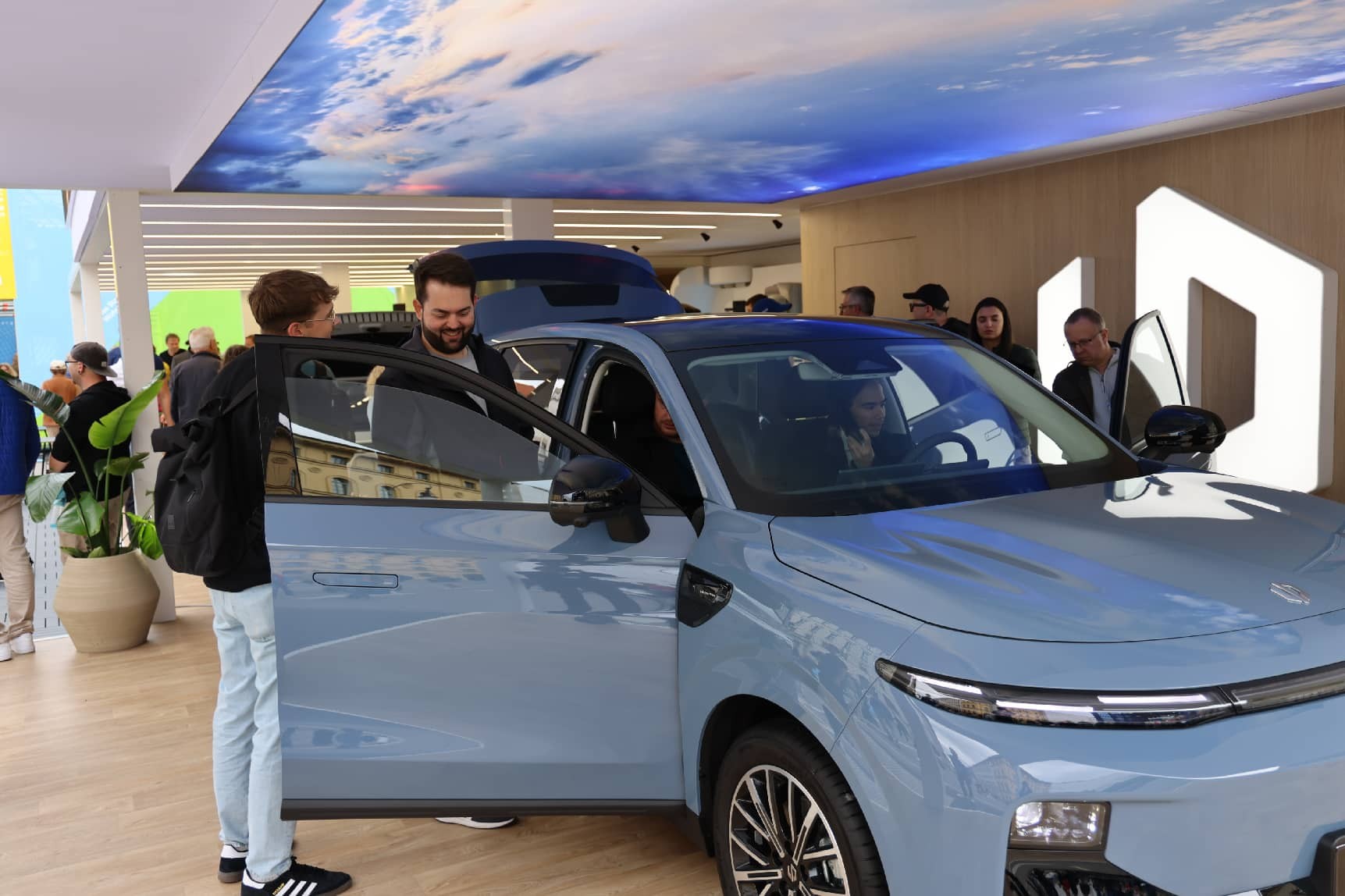
Photo shows the exhibition booth of Leapmotor International at the 2025 IAA Mobility in Munich, Germany. (People's Daily/Liu Zhonghua)
Headquartered in Amsterdam, the Netherlands, Stellantis has set ambitious goals amid the transition to new energy: to achieve 100 percent electrification of its passenger cars in Europe by 2030 and net-zero carbon emissions by 2038.
To this end, the group has shifted its China strategy from traditional joint ventures to a new model of ecosystem-based collaboration. Leapmotor International is a key outcome of this approach. With joint efforts from both sides, Leapmotor had expanded into more than 30 overseas markets across Europe, Asia-Pacific and Africa as of June last year.
Cooperation now goes beyond vehicle manufacturing. In November last year, Stellantis and Chinese power battery enterprise CATL jointly broke ground on a lithium iron phosphate battery plant in Aragon, Spain. With a total investment of 4.1 billion euro, the facility will run entirely on renewable energy and adopt Industry 4.0 standards, with production scheduled to begin by the end of 2026.
Amid this growing "look East" trend among European automakers, China is fostering a new blueprint for automotive cooperation with an open and inclusive approach.
Ferdinand Dudenhoeffer, director of the Center for Automotive Research in Bochum, western Germany, noted that China's vast market and well-developed supply chains are generating increasing economies of scale. Combined with rapid innovation in cutting-edge fields such as power batteries, NEVs, and autonomous driving, China has become a key force driving the global automotive industry's transition toward electrification and intelligentization.
Photos



Related Stories
Copyright © 2026 People's Daily Online. All Rights Reserved.
