



Smart devices revolutionize chronic disease management in China
In Changxin township of Helan county in northwest China's Ningxia Hui autonomous region, a quiet shift is underway in how chronic diseases are managed.
For Jiang Baoguo, a villager living with hypertension who previously had to visit a local clinic weekly after a cardiac stent procedure, monitoring his condition has become much easier.
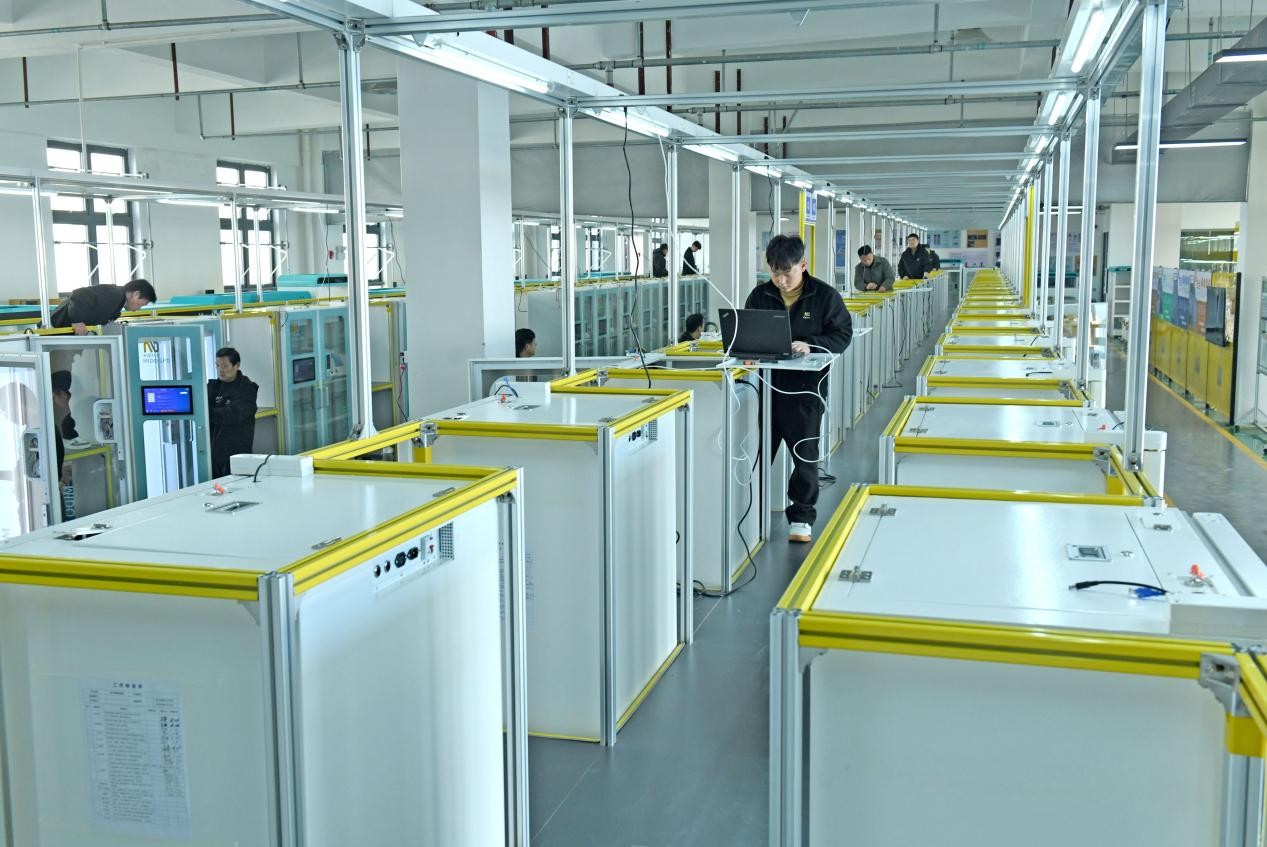
Smart health care products are manufactured in an intelligent workshop of a tech firm in Huainan, east China's Anhui province. (Photo/Chen Bin)
With a smart blood pressure monitor at home, his readings are now sent in real time to an AI-powered health management platform, enabling village doctors and family physicians to track trends and adjust treatment plans accordingly. Tasks that once required repeated clinic visits can now be handled with greater precision and convenience.
This innovation reflects China's broader shift toward technology-driven chronic disease prevention. Artificial intelligence and smart medical devices are making health care more accessible, supporting a move from reactive treatment to proactive early warning, and from fragmented services to integrated, full-cycle care.
In Dongtai of east China's Jiangsu province, 64-year-old villager Yu Fengzhu, who suffers from hypertension and heart disease, used to travel to urban hospitals each month for prescriptions. Today, Yu can complete examinations and obtain medication at her local village clinic in just half an hour.
This progress is supported by the city's "digital health cockpit" platform designed to optimize the allocation and management of medical resources at the county level. This platform links data from 437 medical institutions, allowing a centralized prescription review center to handle over 20,000 prescriptions daily.
Issues such as drug interactions and incorrect dosage are flagged in real time, raising prescription compliance rate to 96 percent.
Meanwhile, drone-based delivery services provide rapid transport of medicines and samples between urban hospitals and village clinics, further enhancing convenience.
Technological solutions are addressing unique regional challenges. In Mangya of northwest China's Qinghai province, the province's first AI-assisted chronic disease management system was launched in 2025.
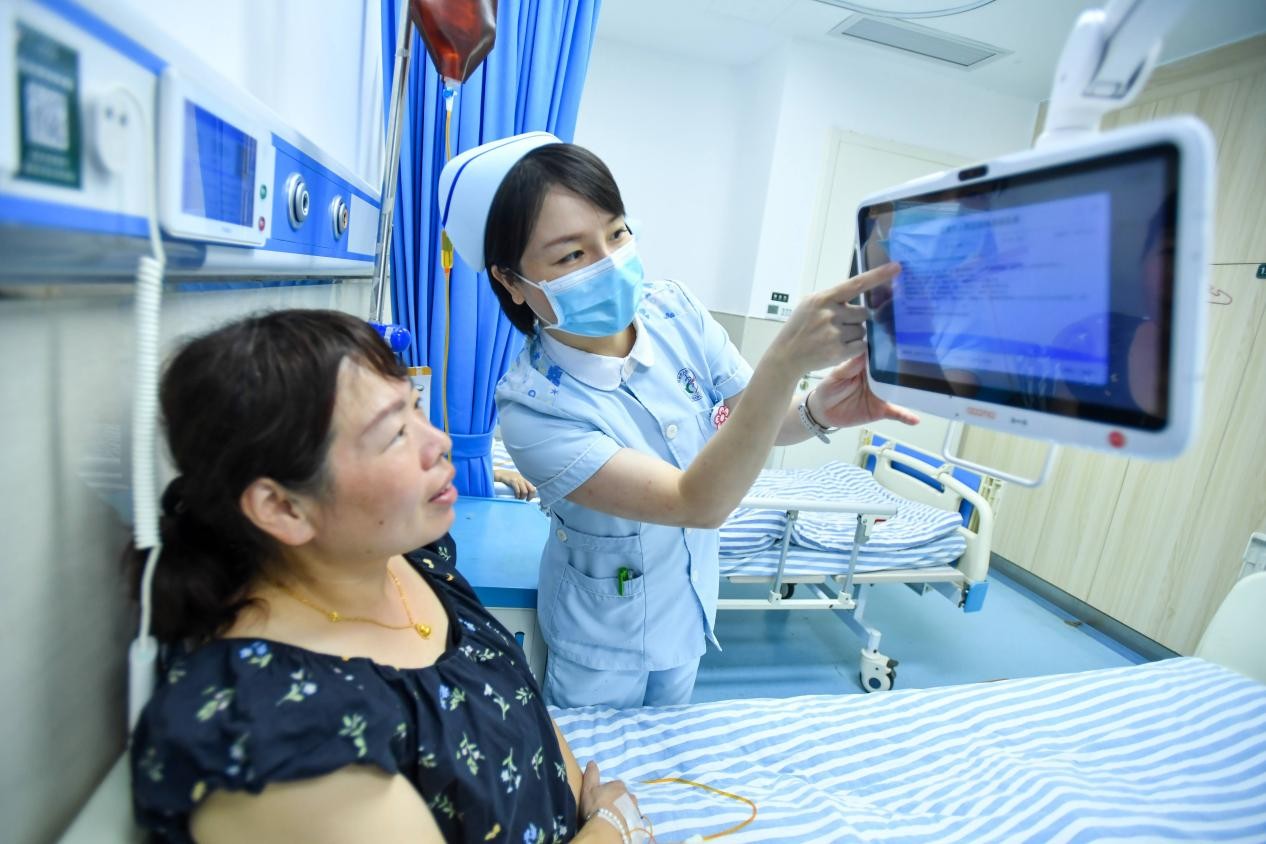
A nurse of Yichun People's Hospital in east China's Jiangxi province reviews a patient's checkup results using a bedside intelligent medical platform. (Photo/Zhou Liang)
Equipped with multidisciplinary diagnostic support, the system allows residents to access health data via mobile devices and connect with family doctors, enabling a closed-loop service covering screening, assessment, intervention, and ongoing management.
This "smart health care model for plateau regions" offers a replicable solution for areas with harsh climates and limited medical resources.
China's medical technology sector has transformed device accessibility. Where blood glucose monitoring was once dominated by costly imports, Hunan-based Sinocare introduced its first affordable glucometer in 2004. In 2023 and 2025, the company introduced a continuous glucose monitoring system and its upgraded version. The latest model, roughly the size of a coin, can continuously measure glucose levels in interstitial fluid for up to 15 days. Data is synced via Bluetooth to a mobile app, enabling more efficient daily blood glucose management.
The intelligent transformation of chronic disease prevention and control is further supported by coordinated efforts in policy, industry, and cross-sector collaboration.
Helan county, for instance, has incorporated AI applications and big data analysis into continuing education for medical personnel, strengthening the talent pool for smart health care. The National Disease Control and Prevention Administration and the China Meteorological Administration have jointly issued a "National High-Temperature Health Risk Warning," effectively linking weather alerts with public health interventions and promoting the implementation of proactive prevention.
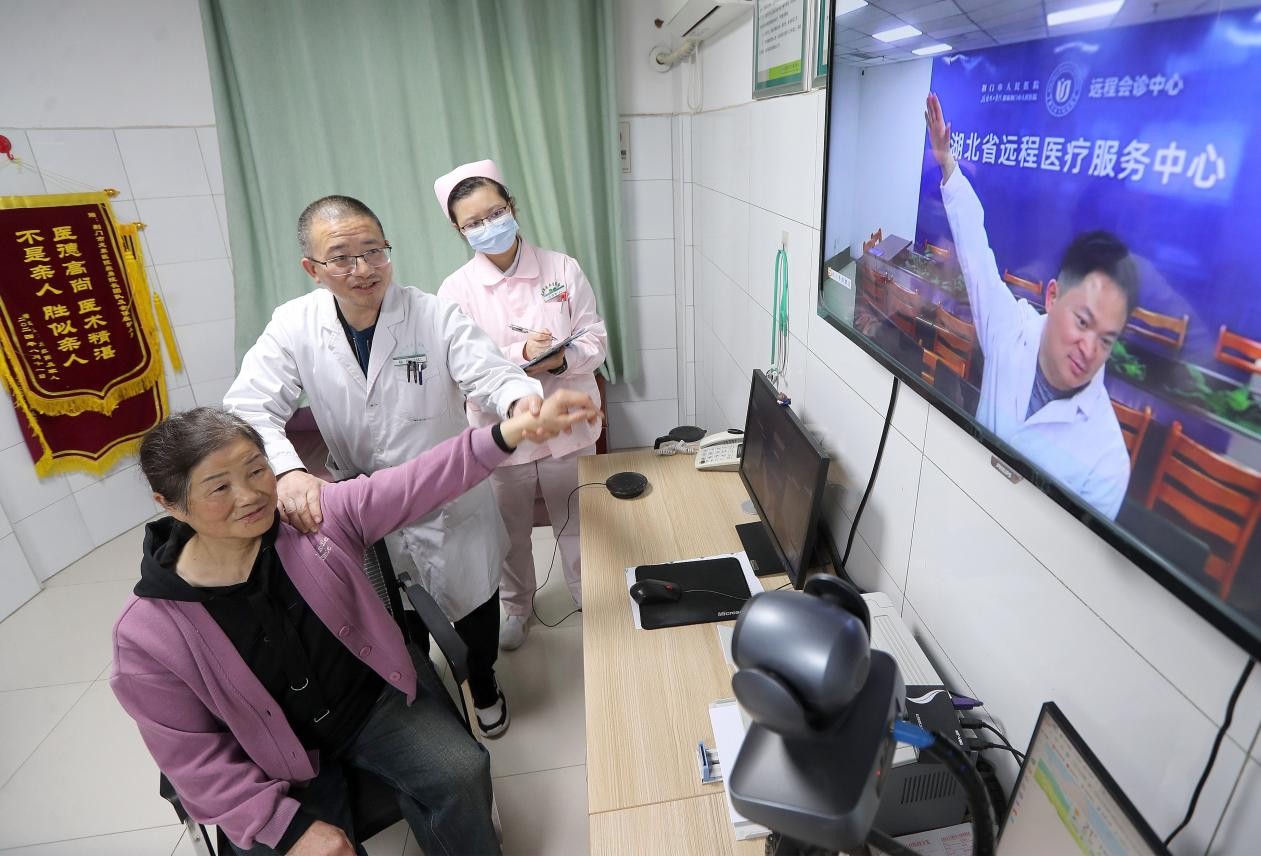
Medical staff conduct remote video consultations and joint diagnoses for a patient at a community health service center in Jingmen, central China's Hubei province. (Photo/Zhao Ping)
Meanwhile, Shanghai University of Sport has partnered with tech giant Baidu to develop an AI model for traditional fitness practices such as Baduanjin and Tai Chi, combining cultural heritage with intelligent guidance to provide scientifically grounded exercise programs for people with chronic conditions.
With ongoing technological innovation and systemic improvements, China's chronic disease prevention and control is moving from fragmented management toward full life-cycle care. Smart devices are increasingly enabling patients to monitor their health at home, receive precise management, and access medical services more conveniently.
Photos




Related Stories
- China's hospitals pilot companion-free care services
- China emerges as global healthcare destination
- China's first licensed airplane hospital takes healthcare to new heights
- China boosts access to quality healthcare with online initial consultations
- China pilots online first-time consultations to expand quality healthcare access
Copyright © 2026 People's Daily Online. All Rights Reserved.
