



China keeps upgrading world's largest EV charging network
By the end of December 2025, China had built 20.092 million electric vehicle (EV) charging facilities, forming the world's largest EV charging network. This infrastructure supports over 43 million new energy vehicles nationwide.
Recently, China announced a three-year action plan (2025-2027) to upgrade its EV charging infrastructure. The plan targets establishing 28 million charging facilities by 2027, providing more than 300 million kilowatts of public charging capacity and to serve over 80 million electric vehicles.
China is accelerating the expansion of public charging infrastructure nationwide. Key initiatives include deploying. ultra-fast and fast chargers at highway service areas, installing fast chargers in townships, ensuring charging access in central villages, and introducing professional operators in urban communities. These measures are steadily improving charging conditions and rapidly enhancing overall service capacity.
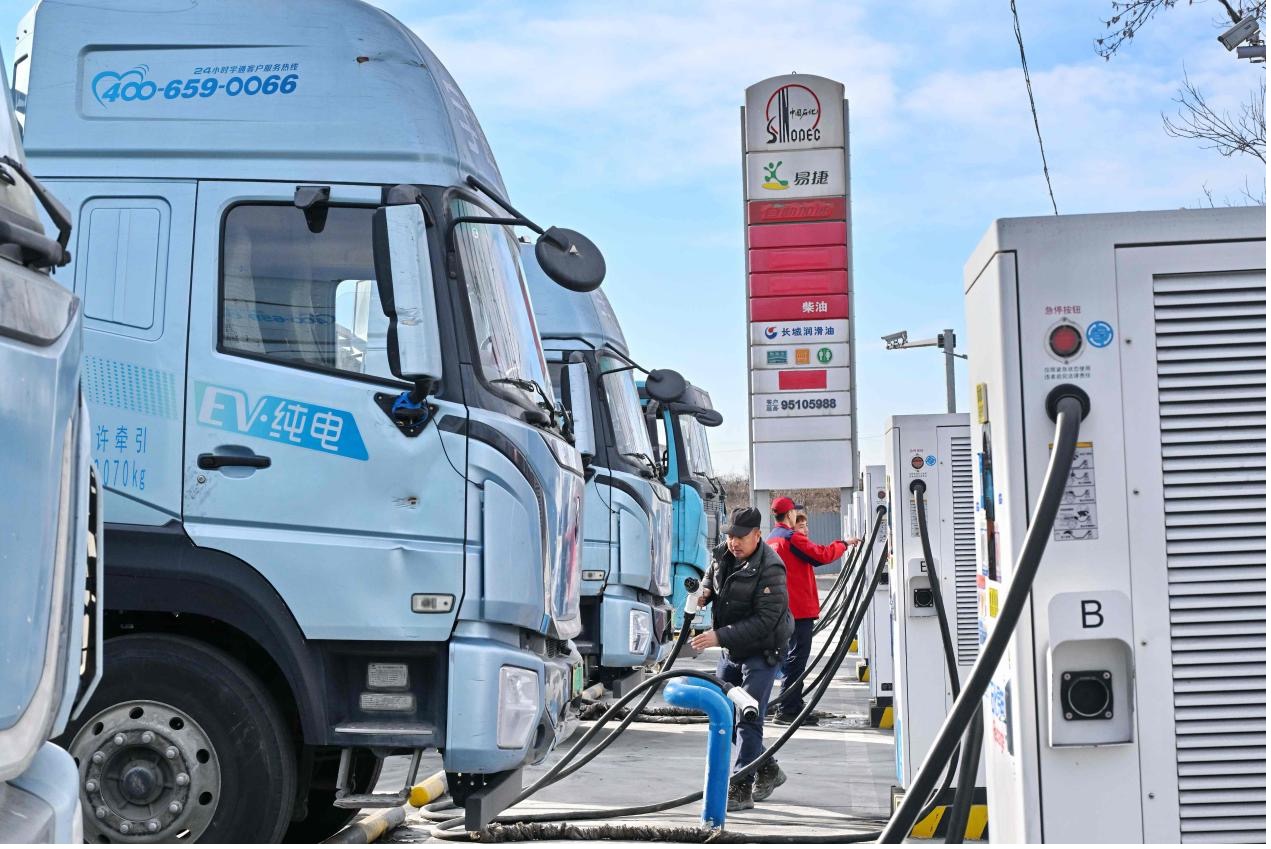
A heavy-duty truck is charged at a charging station in Miyun district, Beijing. (Photo/Hu Qingming)
"Heavy trucks require significant charging capacity, but many highway service areas lacked sufficient power," explained Wang, a truck driver from Henan province. During a recent stop at Taihu service area on Suzhou Ring Expressway, he experienced remarkable efficiency: "Using the dual-gun charging system, I added 63 kWh in just 15 minutes – that's incredibly fast!"
Chu Zhili, manager of the Taihu service area charging facilities, noted: "We've installed four dedicated charging stations for heavy-duty EVs. The dual-gun system delivers up to 480 kilowatts -- nearly four times conventional charging speeds."
Operational since September 2025, the Taihu station is Jiangsu province's first demonstration site combining megawatt-level flexible ultra-fast charging with intelligent operations. The AI-driven system monitors safety hazards and equipment status in real-time, integrates multiple data streams, and supports maintenance decisions to ensure charging and travel safety.
At noon in Dongguo village, north China's Shanxi province, resident Wang Baoqin charged her new energy vehicle at a local station paying just 0.68 yuan (about $0.1) per kWh. "Village charging is incredibly convenient," she noted. "This is actually the most economical time to charge."
In July 2024, Changzi county was included in China's first batch of pilot counties aimed at strengthening county-level charging and battery-swapping infrastructure.
"We carried out a county-wide survey and selected charging sites based on 12 indicators, such as population density, tourism resources, traffic flow, and agricultural production layouts," said Liu Jing, director of the county's energy bureau.
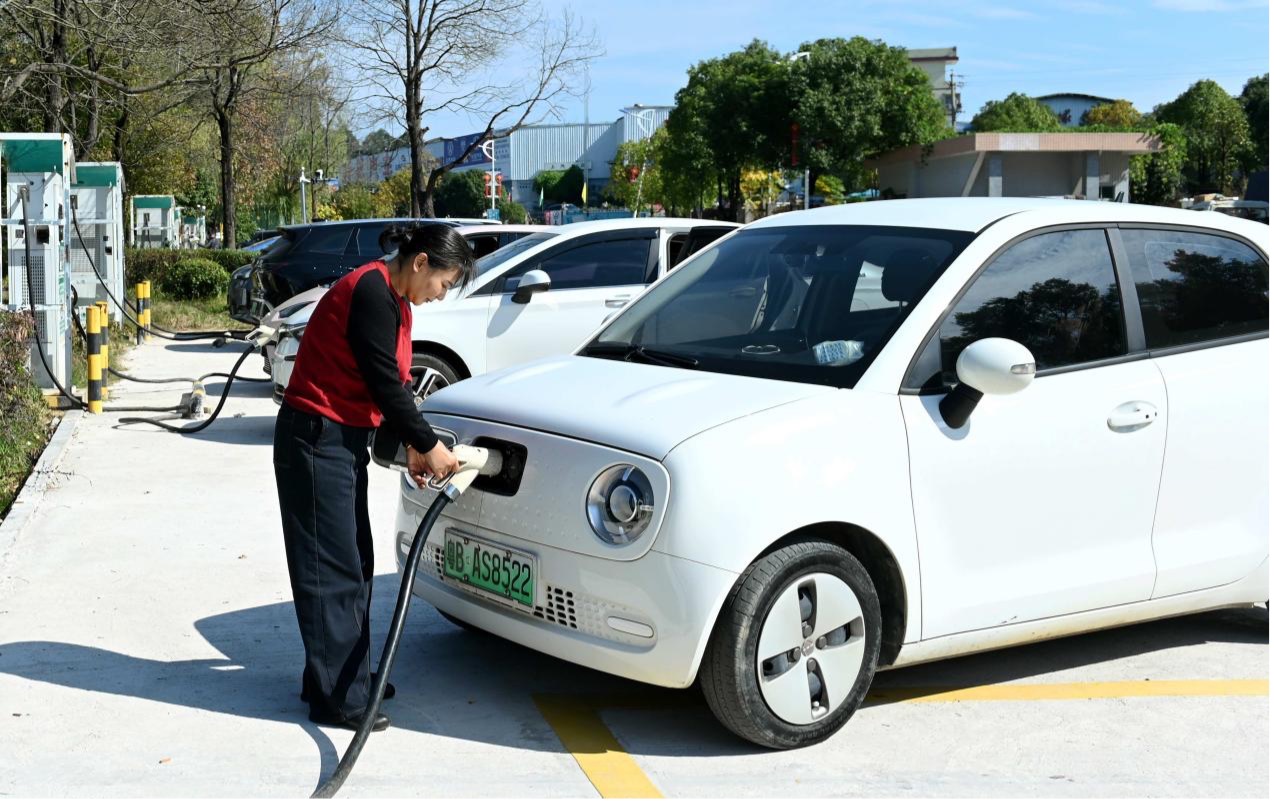
A woman charges her car at a charging station in Dongkou county, Shaoyang, central China's Hunan province. (Photo/Teng Zhizhong)
Through government-enterprise cooperation, charging facilities have been installed in 68 villages. The county's charging infrastructure plan is based on a projected average annual growth of 25 percent in local new energy vehicle ownership over the next three to five years. Construction is underway across 96 villages and along key rural roads.
"Upon completion, over 65 percent of the county will have charging access, with townships offering fast charging and major villages providing basic facilities," Liu added.
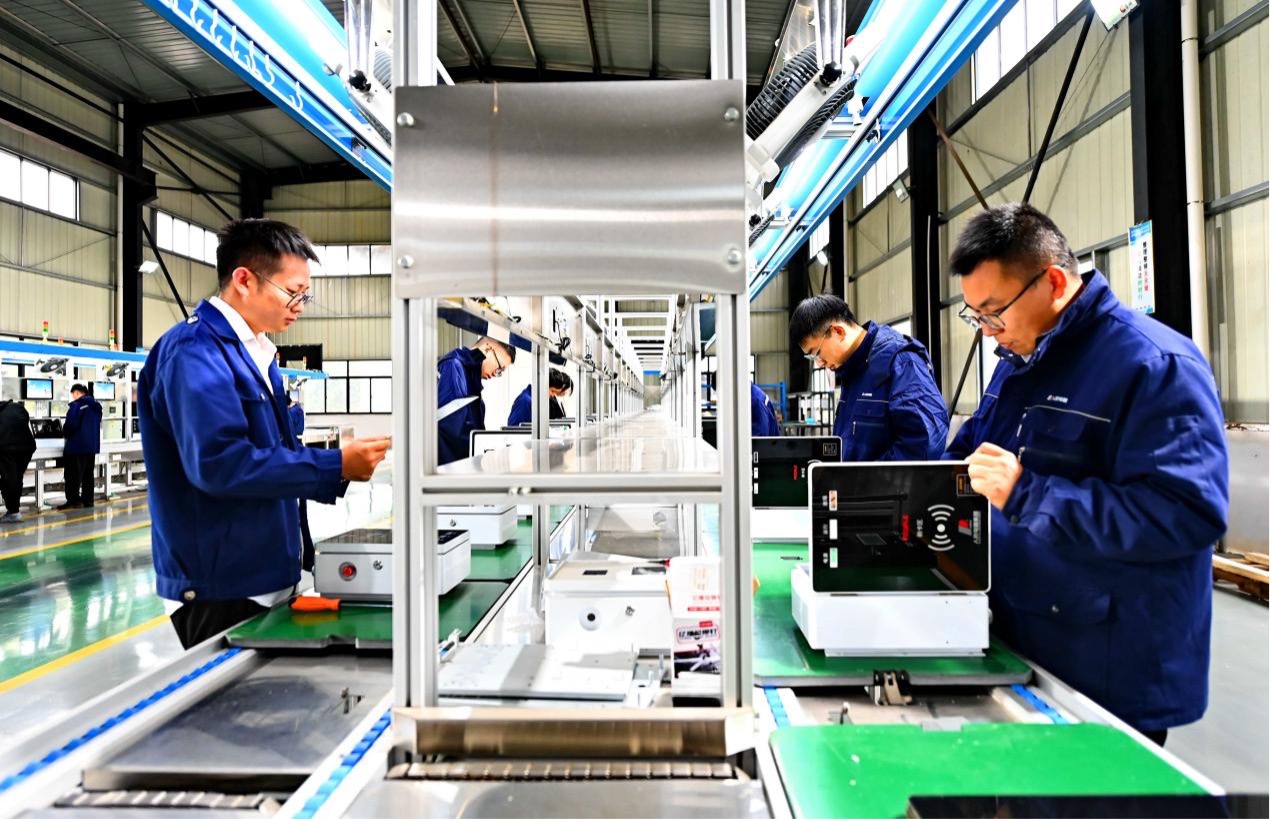
Workers test charging facilities at a workshop of a power transformation equipment manufacturer in Fuzhou, east China's Jiangxi province. (Photo/Zhu Haipeng)
In the eastern section of the Linjiangyuan residential community in Chengdu, southwest China's Sichuan province, resident Yang Jing pulled into the underground garage. After scanning a QR code and plugging in, the charging indicator lit up, and she simply headed off.
In Chengdu, Sichuan province, resident Yang Jing now charges effortlessly in her residential garage. Previously, residents of Linjiangyuan community faced significant challenges: public parking spaces prohibited private charger installation, forcing them to make 20-minute trips to nearby parks for charging.
After persistent resident appeals, community officials discovered a provincial initiative encouraging professional operators to manage residential charging. Through competitive bidding, two companies were selected to install approximately 40 charging piles per community section, strategically planned according to EV density and local power capacity. This solution has effectively resolved the community's longstanding charging difficulties.
Photos



Related Stories
Copyright © 2026 People's Daily Online. All Rights Reserved.
