



China's rise as the world's first "electrostate": a model for the global energy transition
Recent international discourse has highlighted China's transformative achievements in the power sector, with foreign media suggesting the nation is poised to become the world's first major "electrostate."
As electricity becomes central to the global clean energy transition, experts suggest future economic value may increasingly be measured in wattage.
China's science-based energy planning has not only strengthened domestic development but also accelerated worldwide decarbonization efforts.
"Electrostate," a new term gaining traction in global energy and climate policy discussions, refers to the proportion of electricity within a country's total energy structure.
Latest figures show that by the end of 2025, China's cumulative grid-connected wind and solar capacity surpassed 1.8 billion kilowatts for the first time, equivalent to the total installed capacity of about 82 Three Gorges projects.
On the consumption side, China's total electricity use in 2025 exceeded 10 trillion kilowatt-hours, setting a new world record for annual power consumption.
This achievement stands in contrast to challenges faced elsewhere. Some developed economies grapple with persistent issues like power shortages, fragmented grids, and soaring electricity prices. In contrast, China's electricity consumption nearly doubled over a decade, from about 5.5 trillion kilowatt-hours in 2015 to more than 10 trillion kilowatt-hours in 2025, and is now more than twice that of the United States, exceeding the combined total of the European Union, Russia, India, and Japan.
China's recognition as the world's first "electrostate" is well-deserved. This recognition stems from science-based planning and the steady progress in high-quality development within the energy sector.
Achievements include constructing 46 ultra-high-voltage transmission projects enabling long-distance power transfer (west-to-east and north-to-south), accelerating a unified national electricity market, and aligning initiatives like "East Data, West Computing" with optimized energy distribution. China's planning-driven governance has vividly demonstrated both remarkable efficiency and tangible achievements in green development.
China's emergence as the world's first "electrostate" offers a model for the global green energy transition.
The International Energy Agency noted that the age of electricity has arrived. Electricity is the primary option for replacing fossil fuels in end-use consumption and the main pathway for harnessing new energy sources.
In China, more than one-third of the electricity consumed is generated from renewable sources. By 2025, China's combined installed capacity of wind and solar power had surpassed that of thermal power for the first time. More than 95 percent of China's coal-fired power units have achieved ultra-low emissions, and over half are capable of deep peak regulation, forming the world's largest clean coal power supply system.
On the demand side, sectors like transportation, industry, and construction are actively advancing electrification, steadily substituting coal, oil, and gas with electricity. Looking ahead, China's electrification rate is projected to rise steadily, reaching around 35 percent by 2030.
As the world's largest developing nation and second-largest economy, China continues to pursue its energy transition with unwavering commitment, injecting robust momentum into global green development.
International observers note that Chinese enterprises are helping pave the way toward a world powered by electricity rather than internal combustion engines -- truly "a 21st-century vision of progress."
The empowering role of Chinese technology, Chinese manufacturing capacity, and Chinese solutions in the global energy transition is becoming increasingly evident.
China supplies about 70 percent of the world's wind power equipment and 80 percent of photovoltaic panels. Exports of wind turbines, solar components, and new energy vehicles reach more than 200 countries and regions.
For instance, in sub-Saharan Africa, Chinese off-grid solar systems account for more than half of new electricity connections. In Pakistan, Chinese-made solar panels have become a popular investment choice. In Laos, construction of the China-Laos 500-kilovolt power interconnection project is accelerating and, once completed, will transmit about 3 billion kilowatt-hours of clean electricity annually.
From taking the lead in formulating the world's first international standard for photovoltaic direct current technologies, to facilitating agreements covering projects with a total installed capacity of 12 million kilowatts at the Energy Ministers Meeting of the Shanghai Cooperation Organization last year, China has actively promoted technology sharing, joint standard-setting, and cooperative rule-making.
Through a "shared supply" model, China contributes to solving global energy challenges and offers accessible, affordable transition pathways for developing nations worldwide. China's emergence as the world's first "electrostate" epitomizes the country's high-quality development and mirrors a new global energy landscape, one powered by electricity and built on a green foundation, now rapidly taking shape.
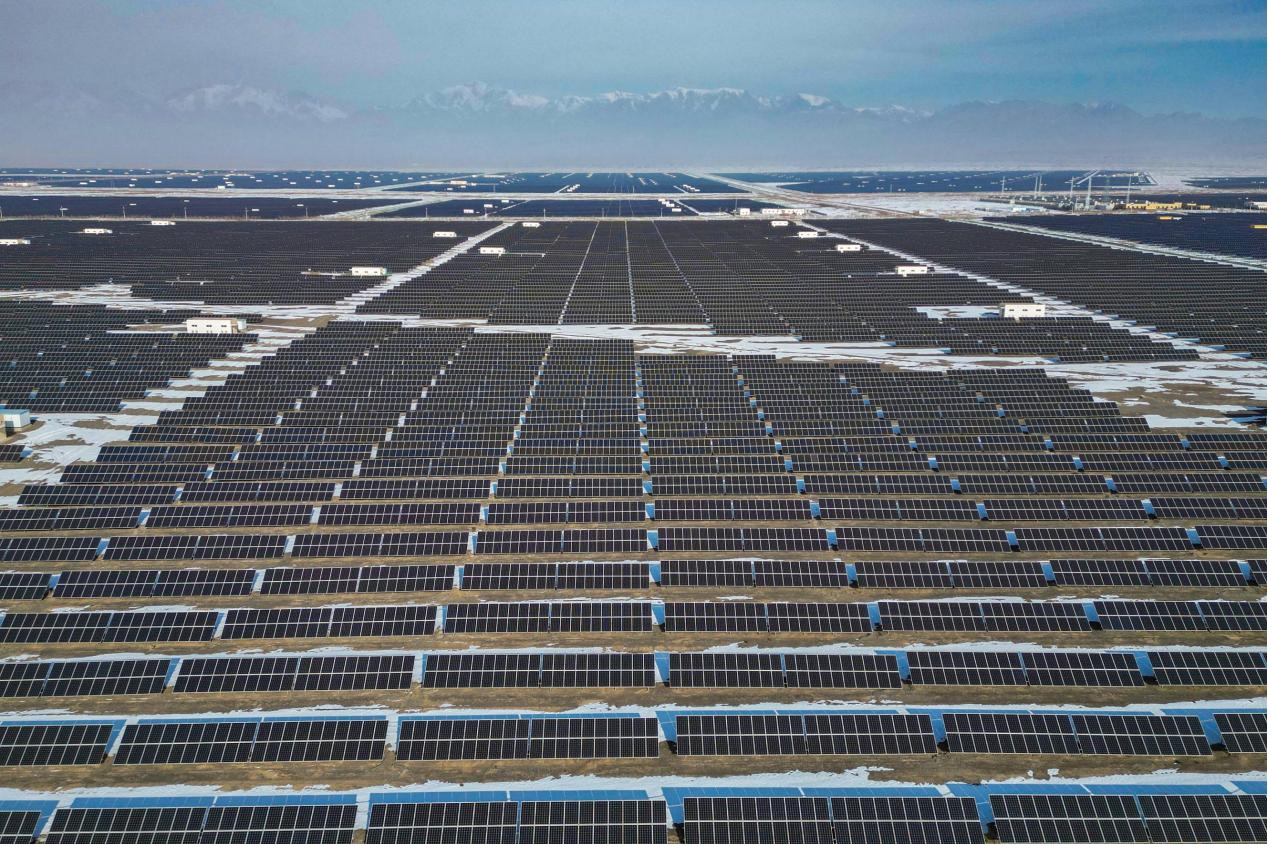
Photo shows expansive solar panels in a solar industrial park in Hami, northwest China's Xinjiang Uygur autonomous region. (Photo/Cai Zengle)
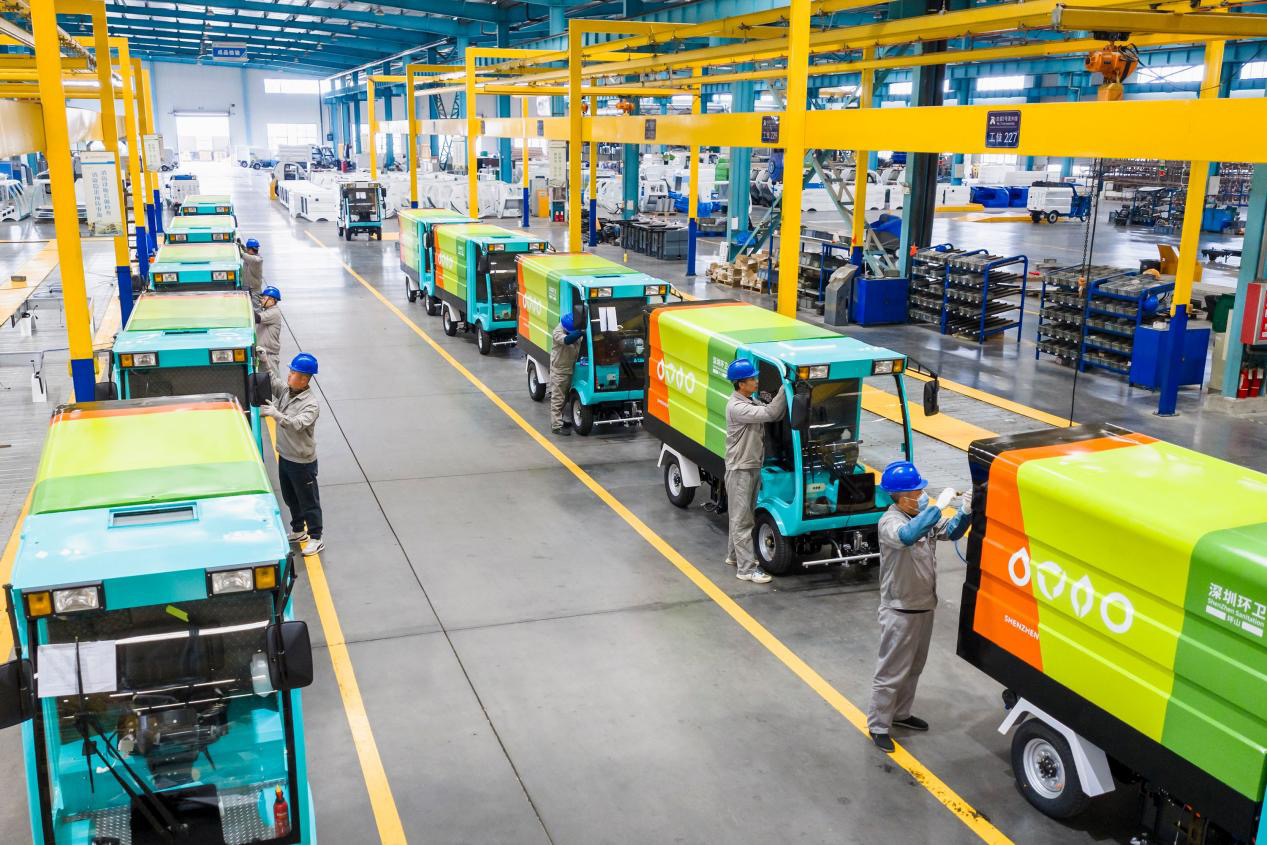
New energy sanitation vehicles are assembled in a workshop of a new energy vehicle manufacturer in Wuhu, east China's Anhui province. (Photo/Xiao Benxiang)
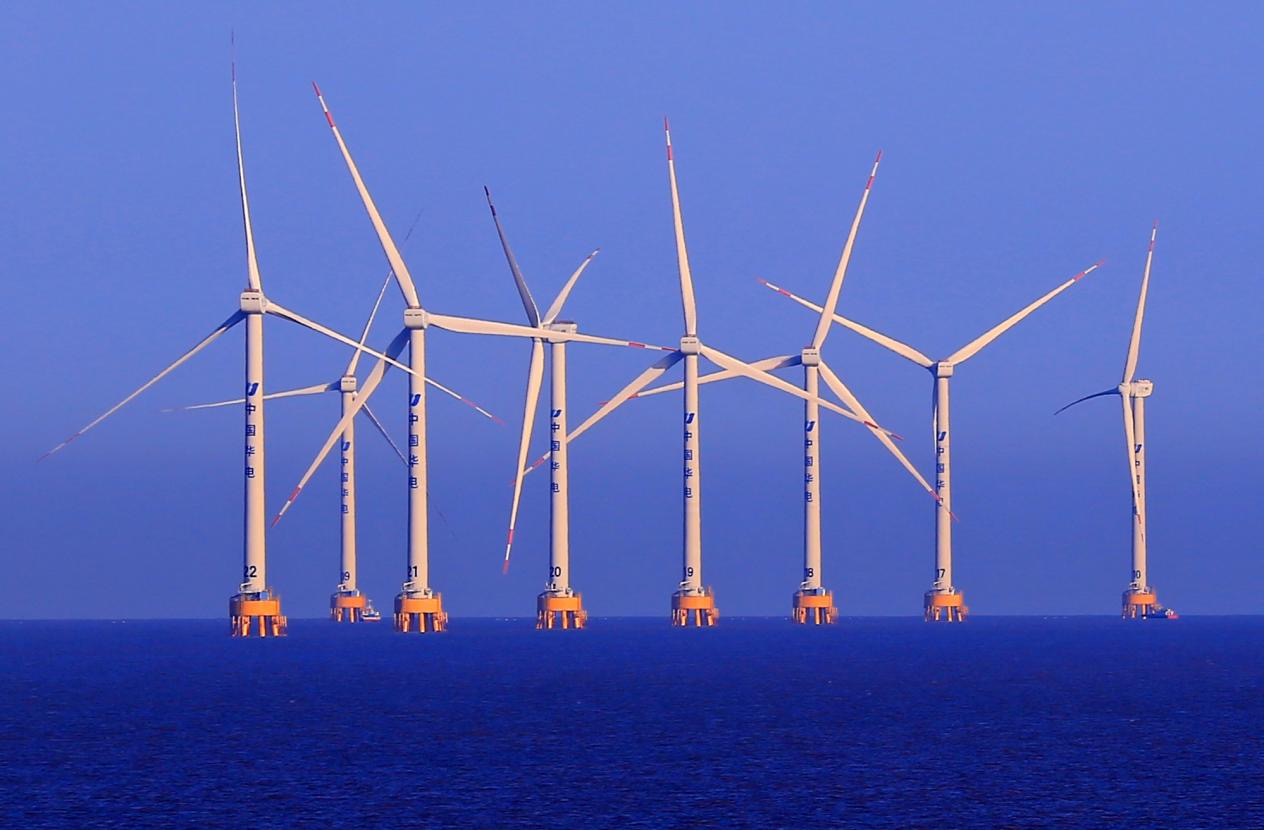
Photo shows an offshore wind farm in the waters near Yuhuan, east China's Zhejiang province. (Photo/Duan Junli)
Photos



Related Stories
- China achieves breakthrough in compressed air energy storage technology
- Chinese energy companies showcase wind farms after Trump denies their existence
- China's completed investment in key energy projects tops 3.5 trln yuan in 2025
- China's total power use exceeds 10 trillion kWh in 2025
- Fusion Energy Technology and Industry Conference 2026 held in Hefei, China's Anhui
Copyright © 2026 People's Daily Online. All Rights Reserved.
