



Chinese young people optimistic about growth of offline shopping
As shopping malls and streets evolve, they are transforming from mere shopping destinations into social hubs for interaction and engagement. A survey of 1,334 young participants shows that 79.1 percent are optimistic about the future of offline shopping, while 84.3 percent prioritize interactivity and immersion when they shop.
Huang Yu (pseudonym), a 25-year-old working in Beijing, is a fan of anime culture. He has noticed a rise in stores offering hands-on activities in many anime-themed locations. These areas offer more than just shopping; they feature performances, events and pop-up activities that engage shoppers in new ways.
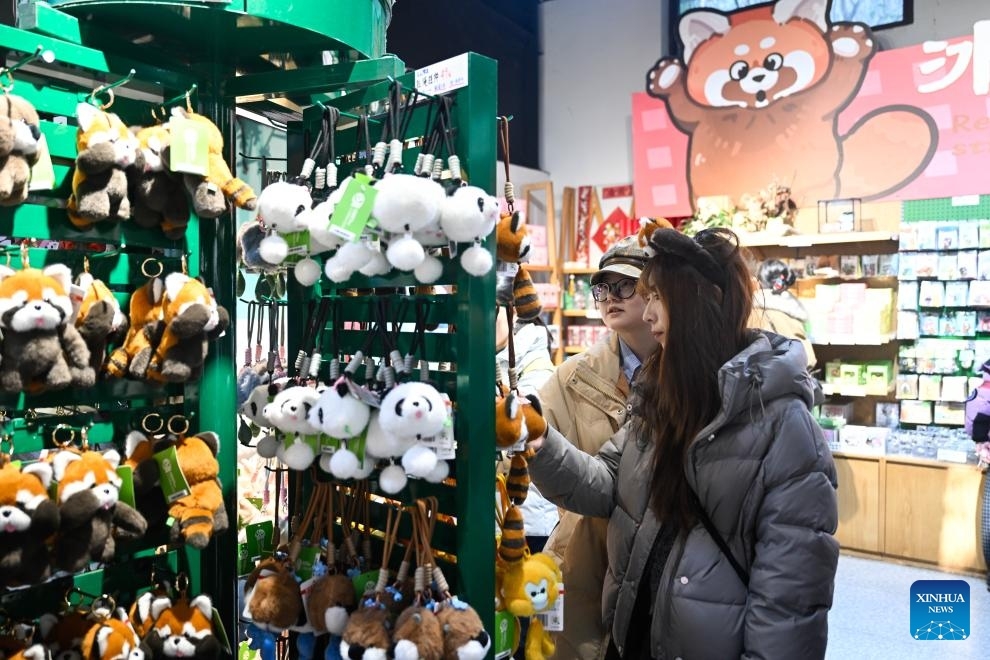
Tourists select souvenirs at Hongshan Forest Zoo in Nanjing, east China's Jiangsu Province, Jan. 3, 2026. (Xinhua/Ji Chunpeng)
"Some malls even set up stages in public spaces and play familiar songs. If you feel like dancing, you can just jump on stage!" Huang said.
Xu Xin (pseudonym), born after 1995 in east China's Anhui Province, feels that online shopping is often too impersonal and mechanical. Offline shopping spaces, Xu noted, give young people a dedicated environment for more meaningful social interactions.
The revival of offline shopping has had several positive effects on cities and social connections. According to the survey, 63.9 percent of respondents feel that it allows them to reconnect with the real world, while 59.2 percent believe it adds more vibrancy to urban areas.
Xu believes that offline shopping feels completely different from online shopping. When online shopping first took off, many young people preferred it for its convenience and speed. But these days, spending too much time on smartphones can feel empty, and online shopping has become increasingly mundane.
"Offline shopping is a whole different vibe," said Xu. "You actually get to handle the items and really immerse yourself in the experience, especially with stuff like capsule toys or blind boxes, where the thrill is all about the in-person buzz."
"I think in the future, offline shopping spaces will become more multifunctional. They won't just be places to shop, but will also be hubs for entertainment and immersive experiences," Xu said, adding that large malls in residential areas will likely continue to evolve, giving residents easy access to a wide range of services right in their neighborhoods.
The survey also reveals the features young people want in future offline shopping experiences: 62.7 percent hope for more community-based shopping spaces close to home.
Among the respondents, 44.2 percent are male and 55.8 percent are female; 24.4 percent were born after 2000. The majority are from first- and second-tier cities, with a smaller proportion from third- and fourth-tier cities and rural areas.
Photos



Related Stories
- 'Double 11' shopping festival unlocks consumer potential with new products, scenarios
- Beyond discounts, China's "Double 11" shopping spree redefined by new consumption trends
- 2025 "Double 11" shopping festival sees China handling record-high parcel volume
- Pilot to build top-tier shopping hubs
- Shopping in China gains rising popularity among foreign visitors in Sept: MOFCOM
- Inbound tourists indulged with shopping spree in Shanghai
- China's 618 shopping festival posts strong sales growth, highlighting consumption vitality
- Midyear shopping festival shows robust purchasing power
- China's 618 shopping festival goes global with expanded free shipping
- 618 shopping festival starts early amid trade-in boost
Copyright © 2026 People's Daily Online. All Rights Reserved.
