



Border county in Guangxi turns ecological assets into tourism goldmine
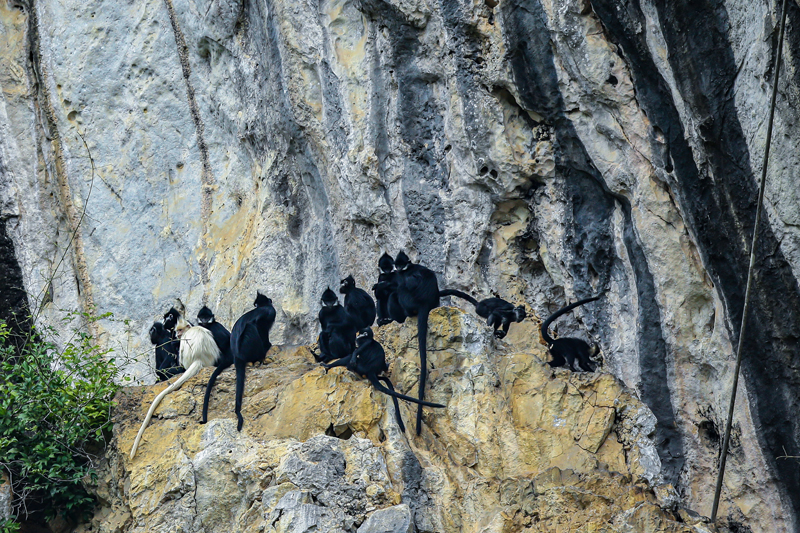
Photo shows Francois' leaf monkeys in Daxin county, south China's Guangxi Zhuang Autonomous Region. (Photo/Zhao Jiaxin)
Daxin county, located along the China-Vietnam border in south China's Guangxi Zhuang Autonomous Region, has capitalized on its rich ecological resources to cultivate a distinctive tourism brand centered on monkey and bird watching. By embracing eco-tourism, the county has shifted from being a brief stopover to becoming a sought-after destination, charting a path toward high-quality development.
Defined by typical karst landscapes, Daxin county is a vital habitat for several species under first-class state protection in China, including Francois' leaf monkeys and lesser pied hornbills. To protect these ecological assets, the county has drawn an ecological protection red line covering 18.3 million mu (1.22 million hectares) and established six protected areas, including the Guangxi Encheng National Nature Reserve. Ecological patrol teams made up of forest rangers and village volunteers conduct regular monitoring across key areas.
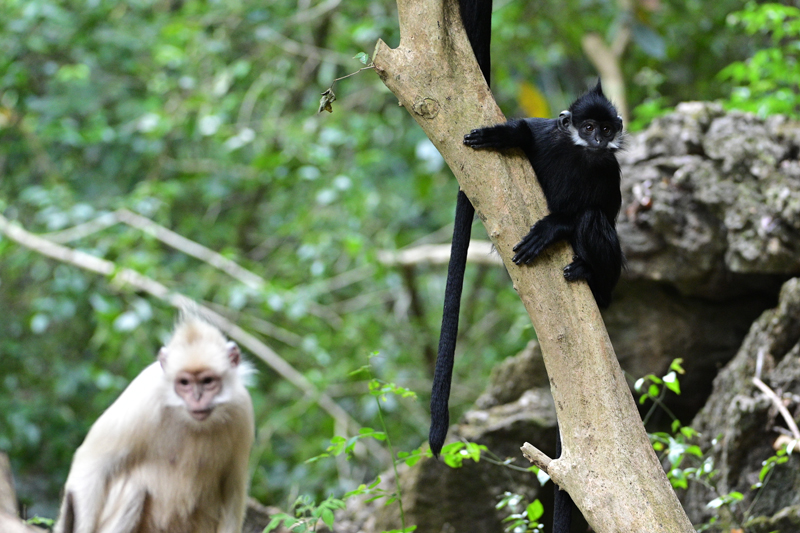
Photo shows Francois' leaf monkeys in Daxin county, south China's Guangxi Zhuang Autonomous Region. (Photo/Huang Wenqiang)
Targeted measures have also been taken to safeguard lesser pied hornbill habitats. Villagers are encouraged to reduce forest logging and adopt eco-friendly farming practices to lessen agricultural impacts on bird habitats. 14 video monitoring stations have been established in areas frequented by nationally protected species. A joint protection mechanism involving research institutions, nature reserves and local residents enables real-time monitoring of population dynamics.
These conservation efforts have delivered tangible results. In Tuoya village, the lesser pied hornbill population has increased from just two in 2019 to 13, with successful breeding recorded for seven consecutive years. Francois' leaf monkeys have expanded their range to 10 townships and towns across the county, with their numbers steadily rising. Improved ecological conditions now support more than 130 bird species, including silver pheasants, laying a solid foundation for eco-tourism development.
Daxin county has promoted the integrated development of ecology, culture, tourism and industry. Carefully designed tourism routes now feature bird-watching study tours, monkey observation trips and cross-border ecological experiences. Villagers have been guided to renovate idle houses into B&Bs, leading to the establishment of 12 boutique B&Bs in Tuoya village and the training of six nature guides. Cultural and creative products have also emerged, with local carpenter Huang Cheng earning more than 10,000 yuan (about $1,417.54) annually from hornbill-themed woodcarvings.
To enhance visitor experiences, the county has launched a smart tourism platform that provides services such as B&B bookings and route navigation, while offering real-time guidance on species identification and observation techniques at major bird-watching and monkey observation sites.
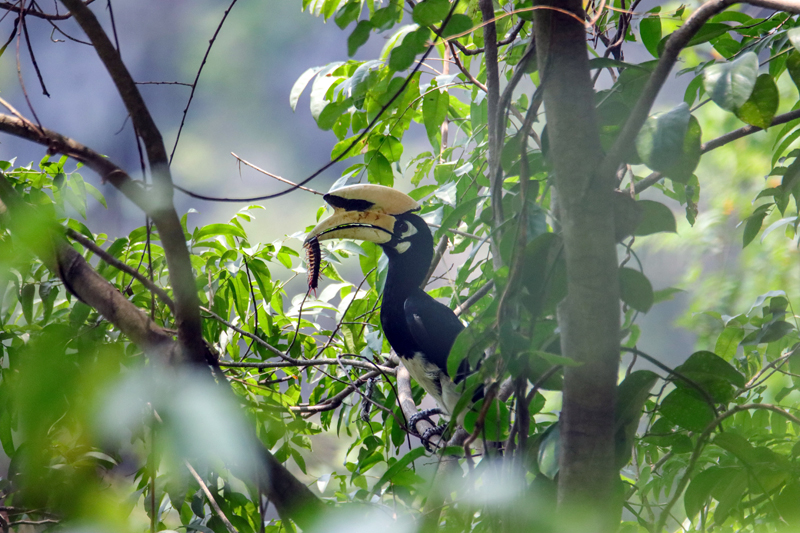
Photo shows a lesser pied hornbill in Daxin county, south China's Guangxi Zhuang Autonomous Region. (Photo/Nong Wei)
In 2025, the county rolled out nature education programs that have attracted 21,000 study tour participants. Eco-tourism centered on the Guangxi Encheng National Nature Reserve generated more than 1 million yuan in revenue for the first time, helping increase the number of local B&Bs from zero to 12 and raising average household income to over 10,000 yuan a year.
In the past, most tourists traveled directly to the Detian Waterfall in the county and left immediately afterward, making the county seat little more than a transit point, said an official from the county's bureau of culture, tourism, sports, radio and television. Now, monkey and bird watching encourage visitors to slow down and stay longer, boosting spending on dining and accommodation in the county seat thanks to the county's push for all-for-one tourism, the official added.
The all-for-one tourism model has not only revitalized consumption in urban areas but also contributed to rural revitalization. Currently, 32 villages across the county provide eco-tourism services, directly creating jobs for more than 800 villagers. Meanwhile, various townships and towns have increased incomes by selling local specialties such as honey, dried longan and nuts.
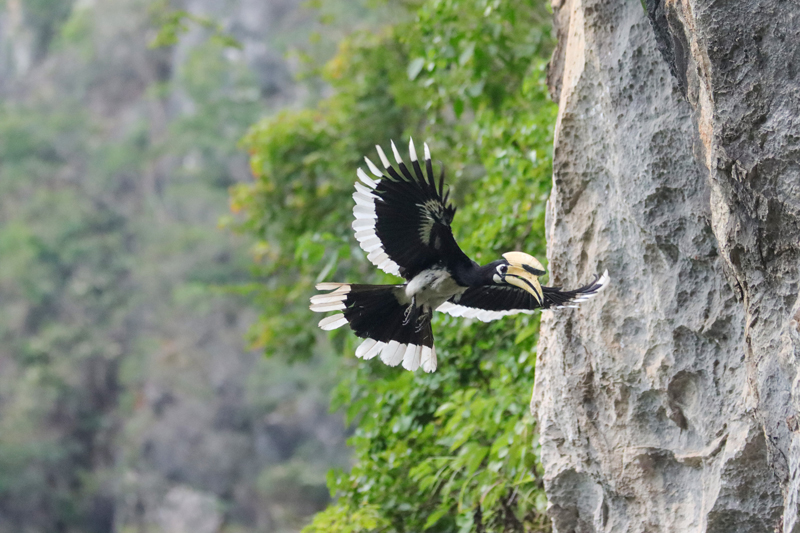
Photo shows a lesser pied hornbill in Daxin county, south China's Guangxi Zhuang Autonomous Region. (Photo/Nong Wei)
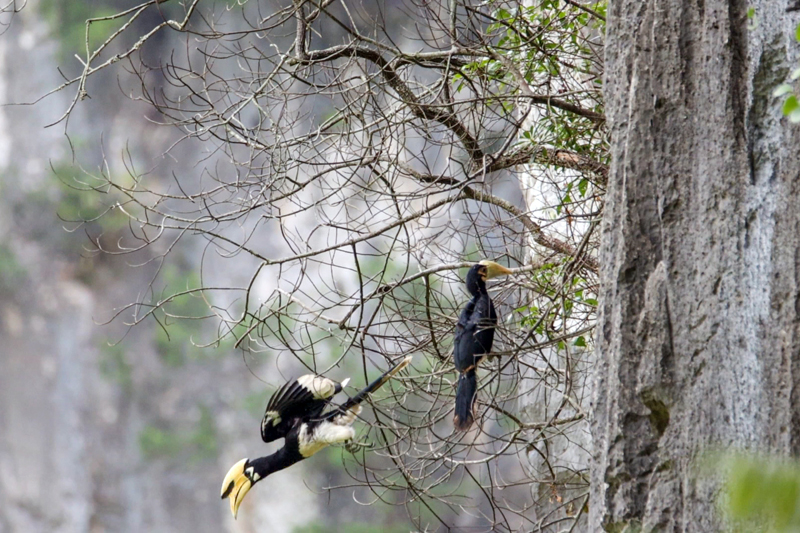
Photo shows lesser pied hornbills in Daxin county, south China's Guangxi Zhuang Autonomous Region. (Photo/Nong Wei)
Photos




Related Stories
- 2025 Maritime Silk Road International Cultural Tourism Festival opens in Quanzhou, SE China's Fujian
- China's school snow breaks boost winter tourism, consumption
- China to enhance convenience for inbound tourism: minister
- How children's vacations are redefining off-season tourism in China
- In China's "ice city," ice harvest sets stage for winter tourism season
- Heping Town in China's Zhejiang strives to develop rural tourism industry
- Red leaves spark tourism boom across China
- Spain sees increase in winter visits by Chinese tourists
- Local culture drives tourism boom in China as youth seek authentic experiences
- From heritage to hi-tech, China unlocks opportunities for Scottish tourism
Copyright © 2026 People's Daily Online. All Rights Reserved.
