Fishing and fish stew culture at Jingpo Lake
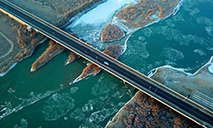
Located in Mudanjiang city, northeast China’s Heilongjiang Province, Jingpo Lake is the largest alpine lava barrier lake in China, and the second largest in the world.
"Jingpo" literally means a vast mirror. It is a natural wonder formed when magmatic rocks blocked the flow of the Mudanjiang River during volcanic eruptions 12,000 years ago. Its rich aquatic products provide nourishment to the local people.
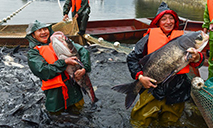
When the lake is not frozen over, local fishermen will usually go drift-net fishing. Before dawn, the lake is shrouded in fog, but fishermen have already started their day. The most thrilling moment is when they bring the net back in.
Bountiful fish can be found thriving in Jingpo Lake, where the water quality is excellent. People in northeast China often cook fish in many different ways, including fish stew in a clear soup, braised fish, and simmered fish, among which, fish stew in an iron pot is the most distinctive method.
Nestled along Jingpo Lake, Xiaozhujia Village is widely known for its fish stew in iron pots. Cheng Liankun, a local villager, explained that people from northeast China have a simple cooking style: "Just set up an iron pot, light the firewood, and throw all the ingredients in, including the fresh fish that the fishermen just caught. Using this method, we were able to preserve the flavor of the food."
"There's nothing that can't be stewed in an iron pot," Cheng laughed. "Apart from fish, we also stew ribs or goose. During the frigid winters of northeast China, it is an incredibly warm feeling for everyone to sit around an iron pot and share the stew together."
(Web editor: Zhang Wenjie, Liang Jun)