



Young Chinese researcher “plants” corals on seabed (5)
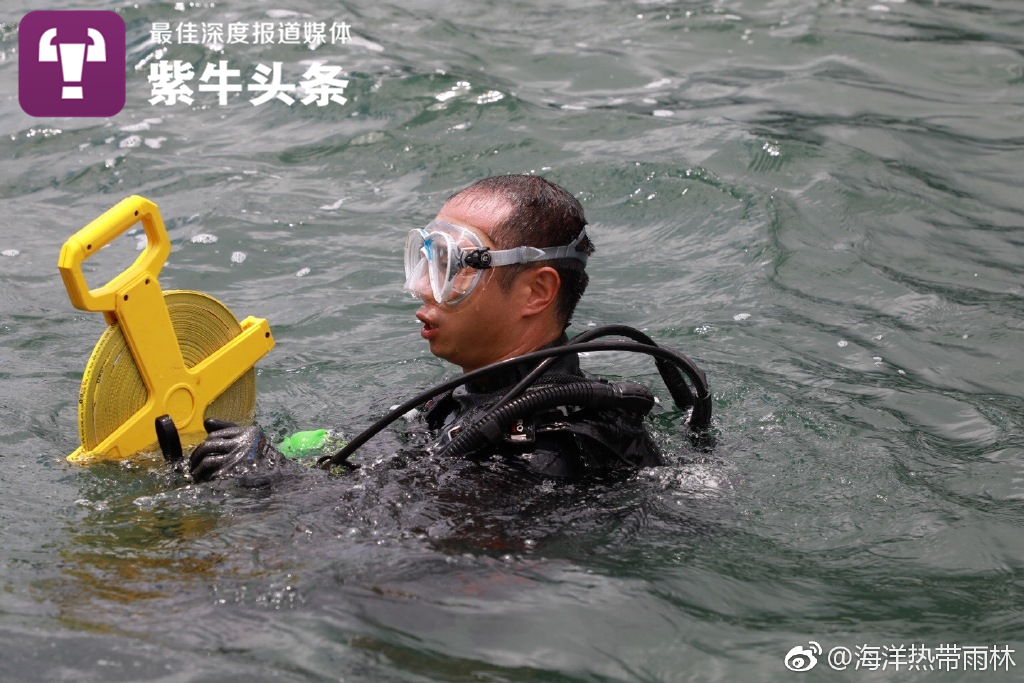 |
| Photo shows Liao Baolin in a diving suit. (Photo/yangtse.com) |
Liao Baolin, a 37-year-old researcher, has devoted himself to “planting” corals on the seafloor in the surrounding waters of Shenzhen, south China's Guangdong province for years.
Through his relentless efforts, Liao and his colleagues have cultivated more than 60,000 corals over the past twelve years, making Shenzhen the only first-tier city in China with a favorable coral ecological environment.
After graduating from university in 2016, Liao worked at the management bureau of the Xuwen Coral Reef National Nature Reserve in Guangdong. During his first underwater investigation of corals, the young man was astounded by the damage they had sustained, which included bleaching and death due to pollutant discharge and the aquaculture industry.
Liao also found out that the rise in suspended solids and silts resulting from coastal engineering had led to many coral polyps suffocating.
To rectify the alarming situation, Liao resigned from his job at the management bureau in 2015. Ever since then, he has thrown himself into this work at the coral rehabilitation center affiliated with the Shenzhen Institute of Guangdong Ocean University. He is now the deputy director of the center.
Liao explained that they placed coral pots on reefs or shelves, which are similar to nurseries and can provide a fixing point for the coral pots. “This is a common method for us to cultivate corals,” he noted.
Liao added that they would then transplant corals onto the seabed using various methods, depending on the seafloor conditions of each specific area.
The university team started to carry out research on corals in 2006 and began planting corals in the Xuwen Coral Reef National Nature Reserve and Shenzhen in 2009 and 2014 respectively.
However, for Liao and his colleagues, the job has been far from easy. During the process of coral cultivation, Liao and his colleagues had to rise to multiple challenges, including unforeseeable dangers that come with deep-sea diving and underwater operations.
"It's easy for us to drill a hole on land, but the situation is totally different in deep waters. When the sea conditions are bad, our staff may be washed away by the current in a matter of seconds, and it can take half a day for them to swim back," Liao explained, adding that sometimes it takes over half an hour to simply turn a screw under the sea.
Liao hoped that in the future, he will be able to come up with more efficient methods of restoring the ecological environment in coral coastal marine areas, so that later generations can enjoy a better marine environment.
"This is our original intention as well as our final goal. Even if it isn’t completed by our generation, I firmly believe that our descendants will achieve the goal," he said.
 |  |
Photos




Copyright © 2021 People's Daily Online. All Rights Reserved.
