
■ We should make progress in new urbanization and agricultural modernization as well as in balancing development between urban and rural areas and between regions.
Narrowing the gap between urban and rural areas and between regions is not only a key part of economic structural adjustment; it is also crucial for unleashing developmental potential. We should advance the new, people-centered urbanization. This will mean granting urban residency to around 100 million people with rural household registration living in urban areas and other permanent urban residents, completing the rebuilding of both rundown areas and “villages” in cities involving about 100 million people, and enabling around 100 million rural residents to live in local towns and cities in the central and western regions. By 2020, permanent urban residents should account for 60% of China’s population, and 45% of the Chinese people should be registered as permanent urban residents.
We should launch initiatives to develop water conservancy in agriculture, farming machinery, and the modern seed industry, encourage appropriately scaled-up agricultural operations, and promote regional distribution, standardized production, and commercial agricultural services. By 2020, the supply, quality, and safety of food crops and other major agricultural products should be better ensured, notable headway should have been made in modernizing agriculture, and fresh progress should have been made in developing the new countryside.
Guided by the general strategy for regional development, we should pursue the Three Initiatives to form north-south and east-west intersecting economic belts along the coastline, the Yangtze River, and major transportation routes, and foster new growth poles and city clusters that facilitate the development of surrounding areas. We should also expand major infrastructure projects, with the aim of increasing the length of high-speed railways in service to 30,000 kilometers and linking more than 80% of big cities in China with high-speed railways, building or upgrading around 30,000 kilometers of expressways, and achieving full coverage of access to broadband networks in both urban and rural areas.
 |  |
 Thai most beautiful transgender Nong Poy release new photos
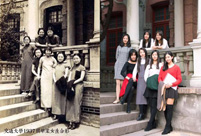 Now and then photos of Shanghai Jiaotong University
 Is this what air travel will look like in 2050?
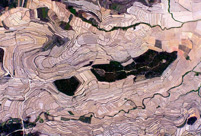 Aerial view of watermelon terraces in S China's Baise
 Traditional wedding of a post-80s Tibetan couple
 Models in cheongsams present classical oriental beauty
 Second commissioned C28A corvette made by China enters Algerian Navy
 Intoxicating Wuyuan in spring
 Gold and silver wares of Qing Dynasty exhibited in Shenyang Imperial Palace
 Top 20 hottest women in the world in 2014
 Top 10 hardest languages to learn
 10 Chinese female stars with most beautiful faces
 China’s Top 10 Unique Bridges, Highways and Roads
 Meet Beijing’s hottest new trend: vaping
 Govt to increase scrutiny of online retail: report
 China’s logistic hub in Djibouti to stabilize region, protect interests
 Myanmar won’t distance itself from China
Day|Week


