Rania Katavouta: From teaching Greek in Shanghai to studying China
When Dr. Rania Katavouta arrived in Shanghai in 2014 to teach Greek, she never imagined that China would become the focus of the next 12 years of her life. What began as an unexpected teaching opportunity gradually developed into a deeper engagement with Chinese language, culture, and everyday life. Having recently returned to Greece, Katavouta now hopes to continue studying and writing about China while building educational connections between the two countries.
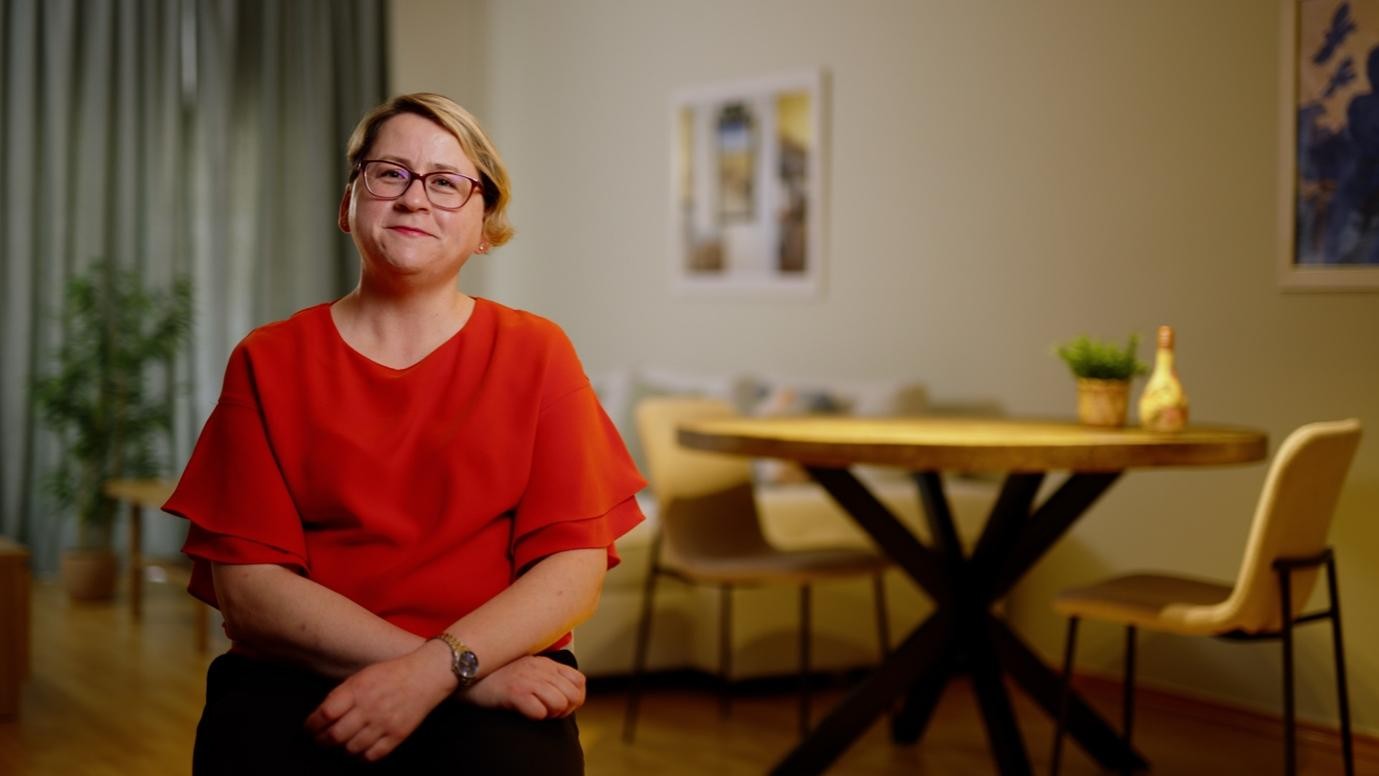
Dr. Rania Katavouta (Photo/Patrick Shead-Simmonds)
In 2013, Aristotle University of Thessaloniki (AUTH) and Shanghai International Studies University (SISU) signed an agreement to strengthen cooperation in education. SISU was the first university in China to establish a Greek-language major and academic department, and Katavouta, then a first-year PhD student in Modern Greek Literature at AUTH, learned about an opportunity to teach there and decided to give it a try. "Before this, I never thought in my life that I would go to China, but it proved to be a very good decision," she said.
As a teacher at SISU, Katavouta encouraged students to speak only Greek from the second semester onwards. "I tried to speak only Greek with them, starting with small phrases when doing a review of basic grammar from the first semester," she shared. "Gradually, by listening to me speak, they became more accustomed to the Greek language." She believes that creating an immersive environment is central to language learning, especially for Greek, with its complex grammar and syntax.
At SISU, students had the opportunity to go on exchange to Greece, and for many of them it was their first time abroad. Katavouta considers this an opportunity not only for students to experience the Greek way of life, but also to mature and become more independent. "Many times, I see them leave China as children, and come back as adults," she remarked.
Once, while preparing her students for their exchange in Greece, she took them to a supermarket to practice Greek. She taught them the vocabulary for everyday goods. She found this a particularly good way to bond with her students while bringing language learning into everyday life.
Besides teaching Greek at university level, Katavouta has also taught primary and junior high school students in Shanghai under a government program promoting less commonly taught languages. She looks back fondly on playing games with the children and introducing them to Greek mythology.
While living in China, Katavouta also started learning Chinese herself. At first, this was a practical decision that allowed her to live more independently in China. Gradually, she fell in love with the language and found that it also helped her communicate more effectively with her students, especially when explaining difficult concepts. "When they heard me speaking Chinese, they were surprised at first," she shared, "but they were also happy that I could speak their language."
In 2017, in recognition of her contribution to Shanghai's development through teaching and strengthening China-Greece ties, Katavouta was awarded the Shanghai Magnolia Silver Award. She looks back on this moment as one of the proudest in her teaching career, alongside being chosen by students at SISU for the Best Teacher Award in 2025.
Today, many of Katavouta's former students have become Greek-language teachers in China, with some even serving as directors of Greek departments at their universities. Many others have become diplomats working at Chinese embassies. She emphasizes that, going forward, Greek-language education in China should expand beyond language and culture to include the study of Greek geography, economics, and politics.
In 2019, she published her first poetry collection, which explores her experiences of living and travelling in China. Her life in Shanghai, a large, cosmopolitan city, was a major influence on her writing, as was the form and structure of the Chinese language itself. In 2022, she also participated in the 7th Shanghai International Poetry Festival.
In an age of AI and rapid technological advancement, Katavouta believes it is still important to study a foreign language. "You don't study a language only as a tool. There is something deeper," she said. "Through the language, you can learn about the culture, the people, and their values in life." Having arrived in China as a teacher of Greek, Katavouta returned to Greece 12 years later with a new ambition: to continue studying, writing, and researching China to become part of a new generation of sinologists.
(Web editor: Hongyu, Du Mingming)