



Sharing the benefits of openness to promote common prosperity

Visitors view an exhibit at the Cadillac booth at the ninth China International Import Expo (CIIE), held in east China's Shanghai. (People's Daily/Han Shuo)
As a major engine of global economic growth, the Asia-Pacific region is characterized by deep economic integration and closely interconnected industrial sectors.
Through business matchmaking and industrial cooperation, the China International Import Expo (CIIE) has provided a broad platform for the Asia-Pacific Economic Cooperation (APEC) economies to share opportunities and promote development, contributing to deeper and more substantive progress in building an Asia-Pacific community.
The ninth CIIE, held in east China's Shanghai from Nov. 5 to 10, coincided with the 2026 APEC China Year.
Exhibits from APEC economies traveled far and wide to the expo, where displays, discussions, and business matchmaking turned exhibition booths into starting points for cooperation and products into bridges to new markets.
U.S. exhibitors secured more than 50,000 square meters of exhibition space, the largest area among participating economies for the eighth consecutive year, up 1,500 square meters from the previous year.
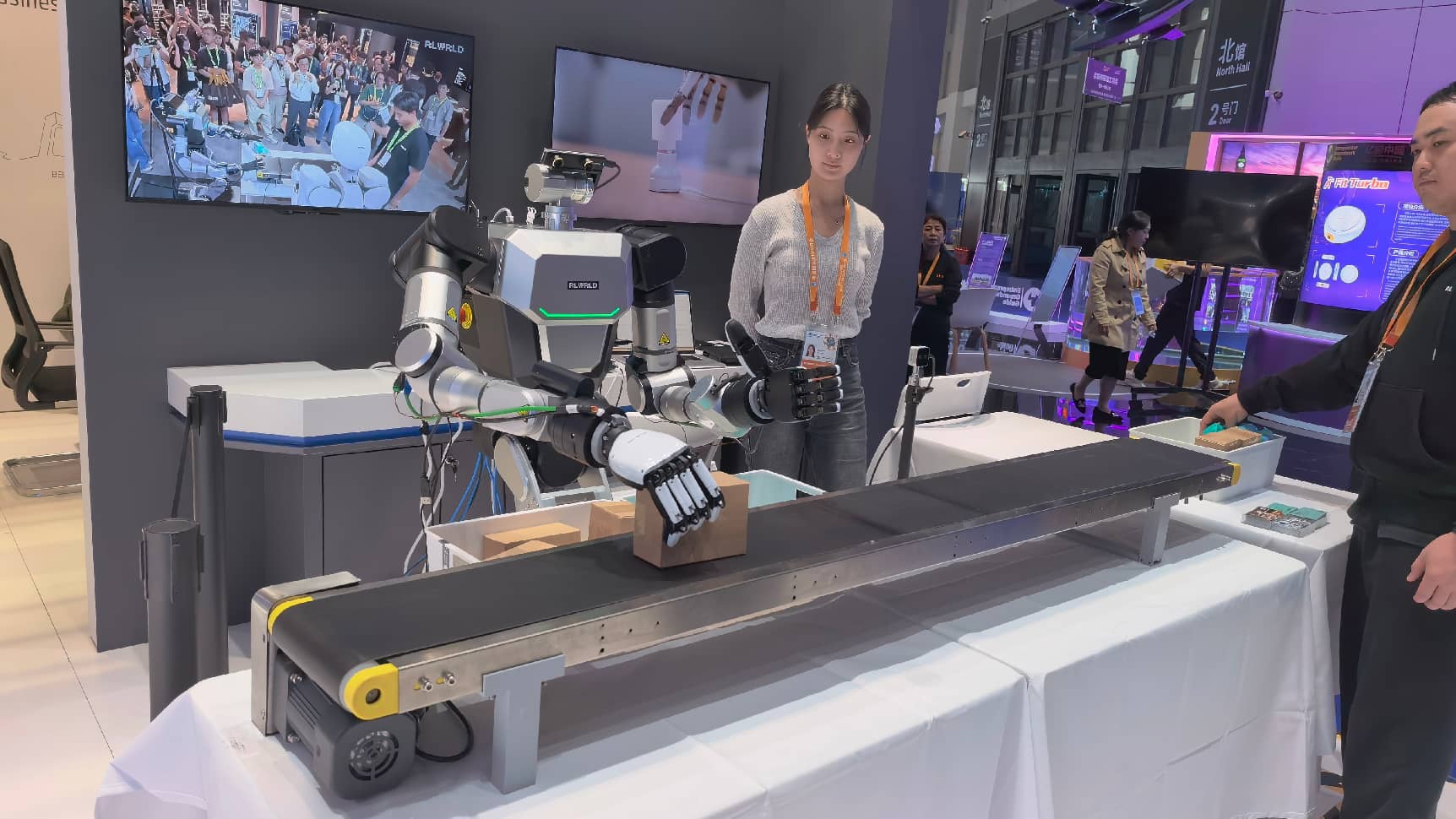
A robot performs a picking task at the booth of a South Korean company at the ninth China International Import Expo (CIIE), held in east China's Shanghai. (People's Daily/Cao Pengcheng)
Canadian and New Zealand exhibitors recorded their largest exhibition areas to date, while Australian exhibitors expanded their space by 25 percent year on year.
These figures reflect strong participation by APEC economies, with both exhibition scale and product diversity continuing to grow.
Marriott International, which has participated in the CIIE for nine consecutive years, has witnessed the continued expansion of China's consumer services market.
Mao Yibing, a member of Marriott International's global executive committee and president of the company's China operations, said China's continued efforts to promote high-standard opening-up, its thriving tourism market, and evolving consumer demand have created broad opportunities for international hotel groups.
In 2021, New Zealand-based Pacific Alpacas brought more than 100 alpaca duvets to the CIIE. The products quickly sold out at its 9-square-meter booth.
A year later, the company shipped 3.3 metric tonnes of New Zealand alpaca fiber to China and partnered with Chinese companies to process the material using China's advanced fiber-combing techniques. In 2025, it established long-term partnerships with Chinese e-commerce platforms.
Hu Tao, chairman of Pacific Alpacas, said the CIIE provided the company with not only access to a vast market but also opportunities to work with various partners to improve its products and upgrade its industrial and value chains.
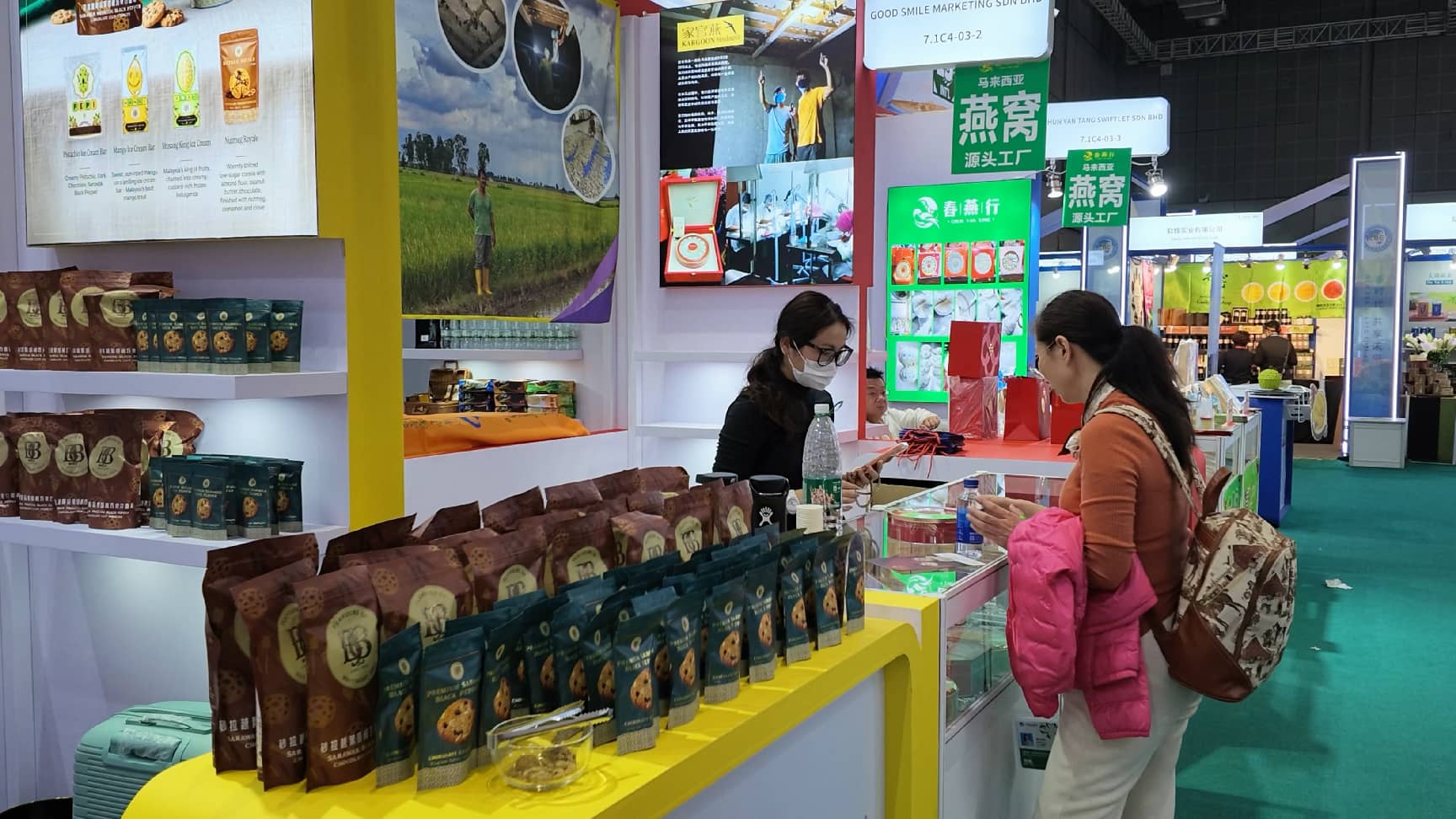
A visitor learns about specialty products from a Malaysian exhibitor at the ninth China International Import Expo (CIIE), held in east China's Shanghai. (People's Daily/Li Anqi)
For many small and medium-sized enterprises from APEC economies, the CIIE has opened up valuable opportunities to expand their markets and reach global consumers.
Australian Natural Biotechnology Pty. Ltd (ANB) has participated in every edition of the expo, with its main product, Karibee Eucalyptus Pure Honey, continuing to gain popularity in the Chinese market.
Alpaca wool toys from Peru have also used the CIIE as a springboard into China, with orders generated at the expo helping more than 200 local artisan families improve their livelihoods.
APEC helps economies across the Asia-Pacific build consensus through dialogue and consultation and promote free trade and open cooperation, while the CIIE provides an important platform for translating these shared goals into tangible outcomes, said Datuk Ng Yih Pyng, president of the Associated Chinese Chambers of Commerce and Industry of Malaysia.
The expo not only facilitates access to the Chinese market for products from participating economies, but also strengthens trade ties among APEC members, he noted.
This year's CIIE focused on cutting-edge industries and innovation, showcasing new technologies, products, and services from participating economies and helping APEC economies tap into opportunities arising from China's high-quality development through innovative offerings.
During the expo, many visitors tried out Singaporean company OSIM's flagship massage chair, which made its China debut at the event, at Hall 5 of the National Exhibition and Convention Center (Shanghai), the main venue for the expo.
Deserine Lim, general manager of headquarters management at OSIM China, said the CIIE served as a launchpad for cutting-edge technologies from around the world to enter the Chinese market and as an important hub connecting China's innovation needs with markets across the Asia-Pacific region and beyond.
She added that the expo had enabled the company to create a virtuous cycle of "rooted in China, empowering the Asia-Pacific," allowing innovative products that integrate global technologies with local Chinese needs to benefit consumers across the Asia-Pacific region more effectively and quickly.
The development of the Asia-Pacific region has shown that openness and cooperation create mutual benefits. This year's CIIE brought together leading companies from across regional industrial chains, fostering partnerships to strengthen the stability of regional industrial and supply chains.
The Canada International Trade Promotion Society (CITPS) has brought Canadian companies to the expo for nine consecutive years.
Jeannie Cheng, president of the CITPS, said the CIIE serves as a trade and economic bridge connecting businesses and markets, and that behind a product's journey into Chinese households lies a cooperation network spanning multiple APEC economies.
She cited Canadian seafood and fresh fruit as examples, explaining that Canadian companies handle production and quality control, while Chinese partners are responsible for imports, distribution, and sales and economies such as Singapore and South Korea provide financial, logistics and testing services.
By leveraging their respective strengths at different stages, economies across the region are strengthening economic ties and deepening cooperation, she said.
Zhang Daijun, executive vice president of Samsung China, said the CIIE offers a vivid illustration of China's commitment to expanding high-standard opening-up, and that the expo is underpinned by China's vast domestic market, well-developed industrial chain support system, and vibrant innovation ecosystem.
China has become a global manufacturing hub, a major center for research and development, and a key hub in global supply chains, he said.
The 33rd APEC Economic Leaders' Meeting is scheduled to take place in Shenzhen, south China's Guangdong province, from November 18 to 19.
Business negotiations, technology launches, and investment projects at the CIIE have offered concrete examples of Asia-Pacific cooperation.
Under the summit's theme "Building an Asia-Pacific Community to Prosper Together," the shared vision of openness, innovation, and cooperation is being translated into practical action across the region, injecting fresh momentum into common development.
Photos

Related Stories
- Interview: Jordanian products eye wider access to Chinese market through import expo
- CIIE highlights China's long-term commitment to opening-up and development
- Highlights of cultural events at 9th CIIE
- Commentary: The enduring power of market
- Embracing the Asia-Pacific, connecting the world
- China's import expo wraps up with record intended deals, global debuts
- China's import expo tells a larger story of openness, shared opportunities
- China's import expo reports over 85 bln USD in intended deals
- Five-time CIIE participant: CIIE connects Iranian firms with wider Chinese market
- Global goods meet opportunity at CIIE
Copyright © 2026 People's Daily Online. All Rights Reserved.
