



Stories behind bridge demolished for Pinglu Canal
Qinzhou city in south China's Guangxi Zhuang Autonomous Region is where the Pinglu Canal meets the sea. Local photographer Li Jinglin aims his lens at the Qinjiang No. 1 Bridge and presses the shutter — white arches soar into the sky, tracing an elegant arc across the river.
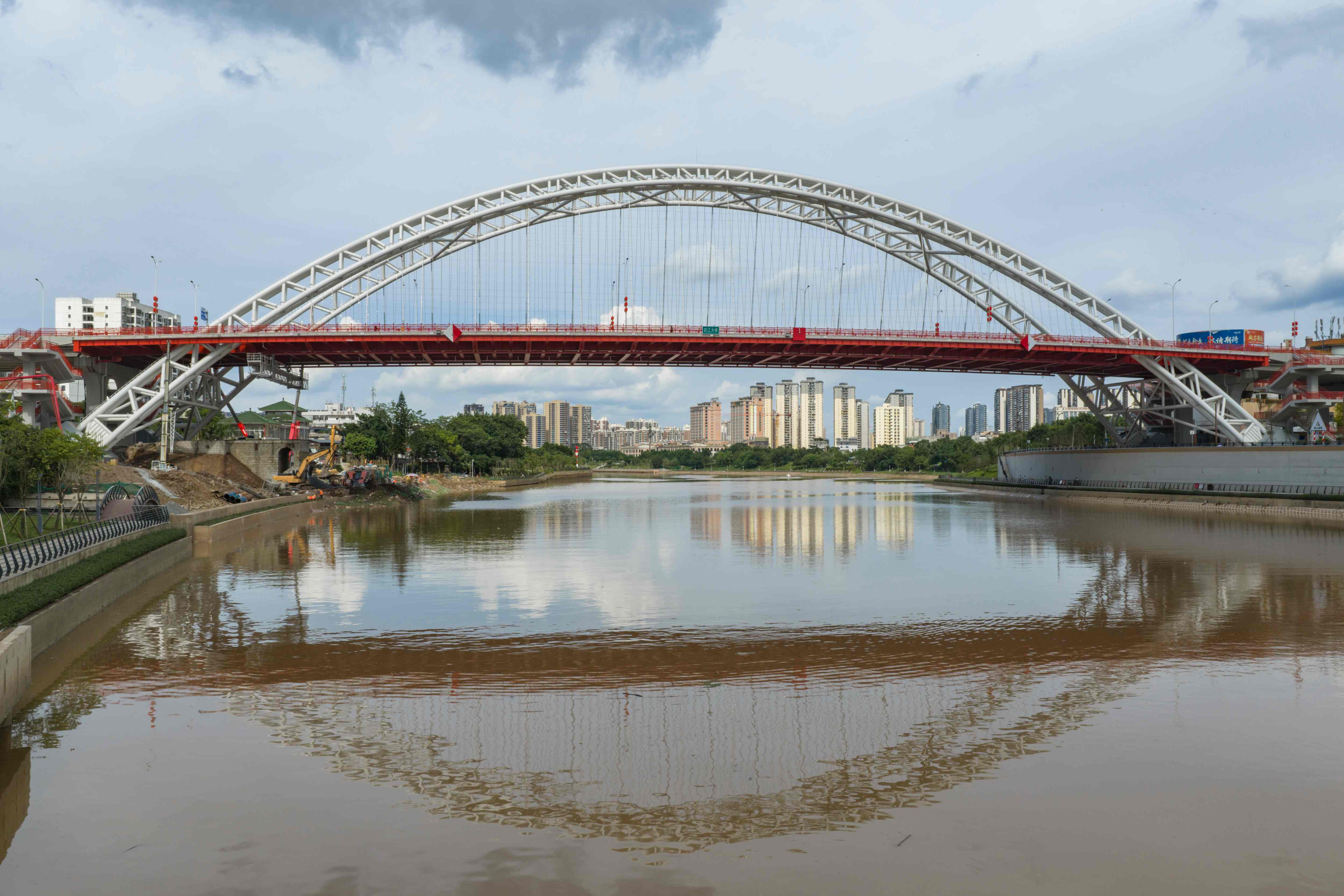
Photo shows the Qinjiang No. 1 Bridge above the Qinjiang River in Qinzhou, south China's Guangxi Zhuang Autonomous Region. (Photo/Li Jinglin)
After photographing the new bridge, Li Jinglin finds his thoughts turning to the old one. The Qinjiang No. 1 Bridge, the city's first urban bridge, was built in 1958 and opened to traffic in 1961. Back then, workers built the bridge by hand, carrying loads on their shoulders to construct the 13-meter-wide stone arch bridge.
"This bridge holds all of my childhood memories," Li Jinglin said. As a boy, he loved running across the bridge with his friends.

Photo shows the Qinjiang No. 1 Bridge before demolition. (Photo/Li Jinglin)
As the Pinglu Canal took shape, the waterway needed to carry 5,000-tonne vessels. The old bridge, narrow and too low for them to pass beneath, had to be demolished and rebuilt. When Li Jinglin heard the news, he set out to photograph both bridges — and document the change from start to finish.
Demolishing the Qinjiang No. 1 Bridge required a series of carefully planned engineering solutions. Given the complexity of the old bridge's load-bearing structure, the construction team first built a digital model to assess potential risks, then installed sensors to monitor the bridge in real time as work proceeded. To minimize disruption to nearby residents, they cut the bridge into sections, removed them from the site and broke them up elsewhere — a technique known as "quiet demolition."
At around 9 p.m. that evening, residents gathered at the demolition site to bid farewell to the old bridge.
"Elderly people leaned on their walking sticks as they looked back at the bridge, while young people raised their phones to capture its final moments," Li Jinglin recalled. He had set up his camera early, his heart filled with both sadness and anticipation. As the old stone arches were gradually removed, the river opened up little by little, making room for large vessels to pass in the future.
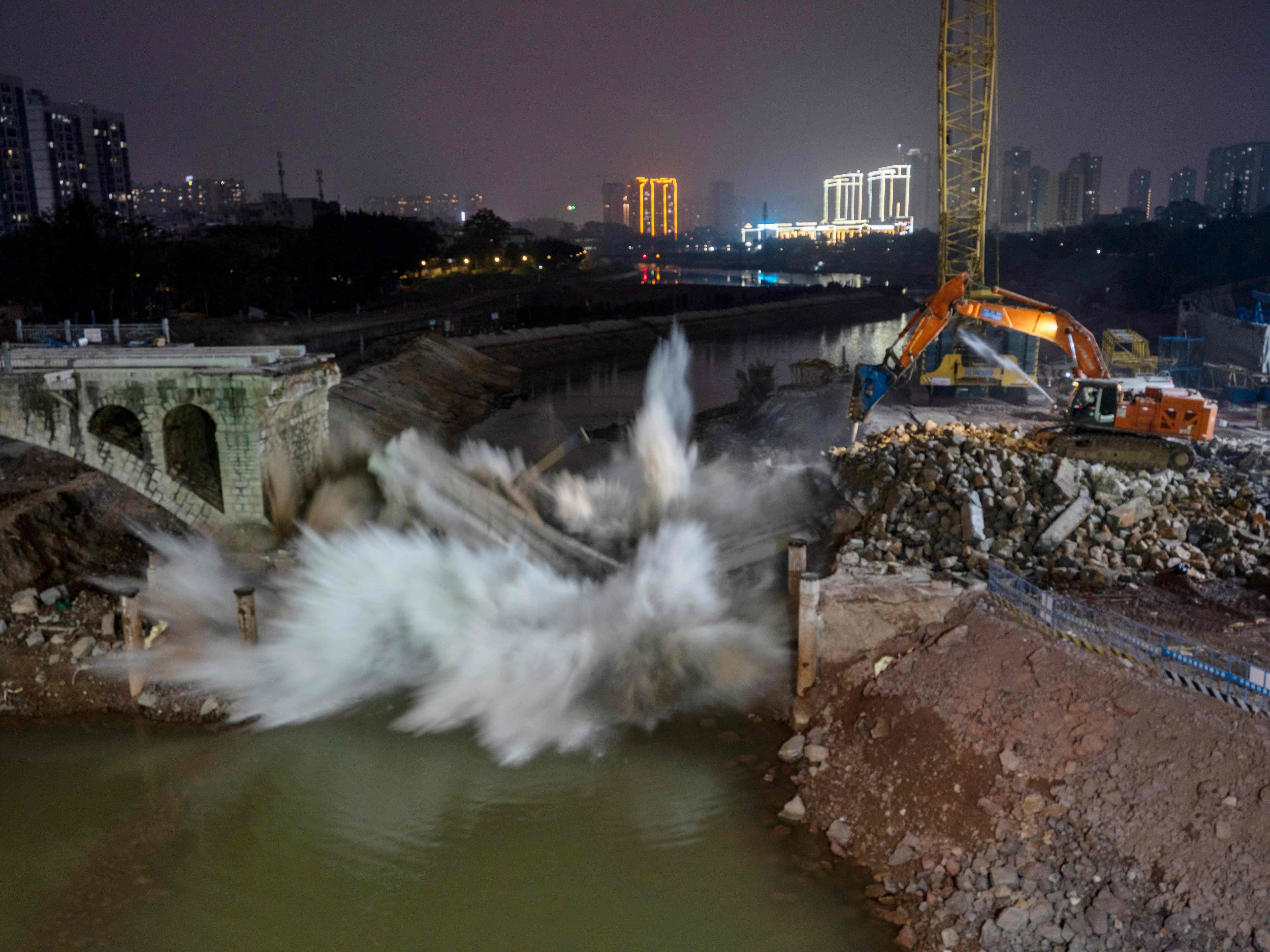
The Qinjiang No. 1 Bridge is demolished. (Photo/Li Jinglin)
The Pinglu Canal features 104 bridges along its route, including 27 crossing the canal itself, as well as numerous supporting structures.
Eight bridges in urban Qinzhou were slated for demolition, modification or rebuilding. Many sit in busy areas and serve as major traffic arteries, so construction had to proceed without disrupting the daily travel of hundreds of thousands of residents.
The team adopted a range of innovative techniques, from digital-twin simulations and reverse-order dismantling to waterborne transport of bridge components and recycling of materials from the old structures.
Li Jinglin also recalled meeting a bridge painter named Li Zhongrui beneath the Qinjiang No. 1 Bridge.
Li Zhongrui's grandfather had helped build the bridge. So when he heard it was slated for demolition, he returned from out of town to paint it — a way, he said, of remembering it for his grandfather.
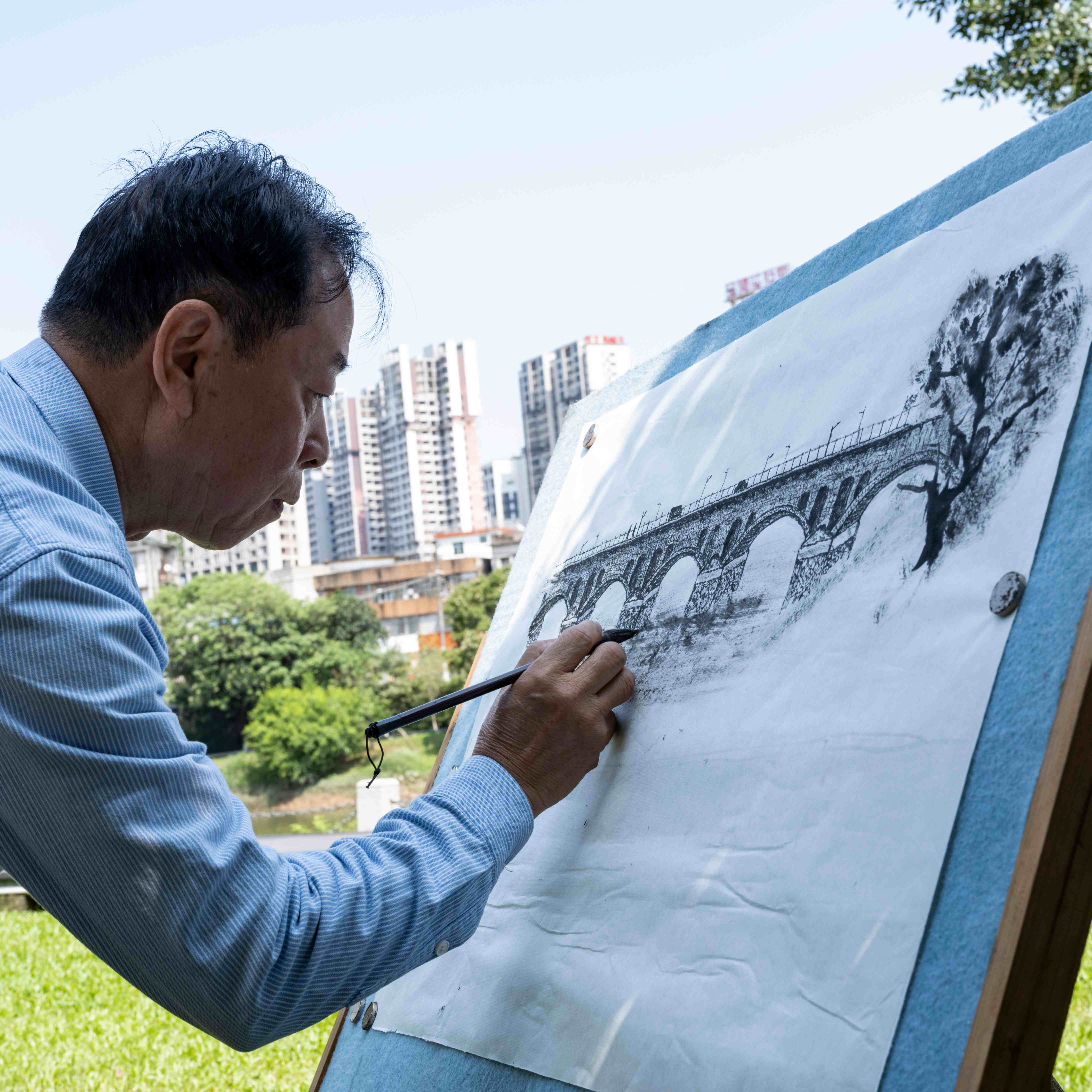
Photo shows Li Zhongrui painting the Qinjiang No. 1 Bridge. (Photo/Li Jinglin)
Li Jinglin's lens captured both the painter and the bridge he came to paint.
The west abutment of the old Qinjiang No. 1 Bridge has been preserved and will be turned into an exhibition area interpreting the old bridge site. Reclaimed stone will go toward a new canal culture square, riverside walkways and educational facilities, while a miniature replica of the old bridge has been restored upstream.
Photos



Related Stories
- Pinglu Canal boosts China-ASEAN connectivity, win-win cooperation
- Interview: Pinglu Canal to boost China-ASEAN trade, upgrade regional logistics: Thai business expert
- Explainer: How will China's Pinglu Canal chart new economic tides for ASEAN
- Three dimensions reveal what the Pinglu Canal brings to development
- Interview: Pinglu Canal, win-win economic artery linking China and ASEAN: expert
- Milestone
- Posters: The Pinglu Canal in Numbers
- Pinglu Canal officially opens, linking China with ASEAN
- China opens Pinglu Canal, a trade shortcut to Southeast Asia
- A China committed to high-standard opening-up is surging forward along the Pinglu Canal: Global Times editorial
Copyright © 2026 People's Daily Online. All Rights Reserved.
