

SHIJIAZHUANG, March 7 (Xinhua) -- Beijing 2022 co-host city Zhangjiakou will develop into a green digital economy city to implement the concept of Green Olympics as it has signed a cooperation agreement with China's e-commerce giant Alibaba recently, local authorities said Thursday.
Before Beijing won the bid to host the 2022 Winter Olympics in 2015, Zhangjiakou was a backward city in terms of industry development. Iron and steel was its mainstay.
Zhangjiakou is transforming economic structure during its preparation process for Green Olympics. Big data industry is expected to be one of the mainstays.
According to the agreement, the two sides will achieve in-depth cooperation in Tmall supermarket settlement, big data equipment manufacturing, smart town, ant financial services as well as poverty alleviation and government services.
Meanwhile, Alibaba will provide sports service for Zhangjiakou, including consulting and planning, introduction of international sports events, organization of mass sports events and operation of stadiums.
Located some 200km northwest of Beijing, Zhangjiakou will host snowboarding, freestyle skiing, cross-country skiing, ski jumping, Nordic combined and biathlon competitions at the 2022 Beijing Winter Olympics.
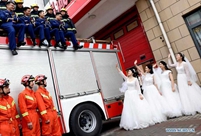 Fire brigade in Shanghai holds group wedding
 Tourists enjoy ice sculptures in Datan Town, north China
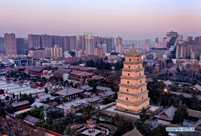 Sunset scenery of Dayan Pagoda in Xi'an
 Tourists have fun at scenic spot in Nanlong Town, NW China
 Harbin attracts tourists by making best use of ice in winter
 In pics: FIS Alpine Ski Women's World Cup Slalom
 Black-necked cranes rest at reservoir in Lhunzhub County, Lhasa
 China's FAST telescope will be available to foreign scientists in April
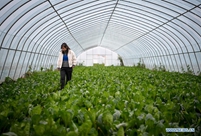 "She power" plays indispensable role in poverty alleviation
 Top 10 world news events of People's Daily in 2020
 Top 10 China news events of People's Daily in 2020
 Top 10 media buzzwords of 2020
 Year-ender:10 major tourism stories of 2020
 No interference in Venezuelan issues
 Biz prepares for trade spat
 Broadcasting Continent
 Australia wins Chinese CEOs as US loses