



China puts carbon to work
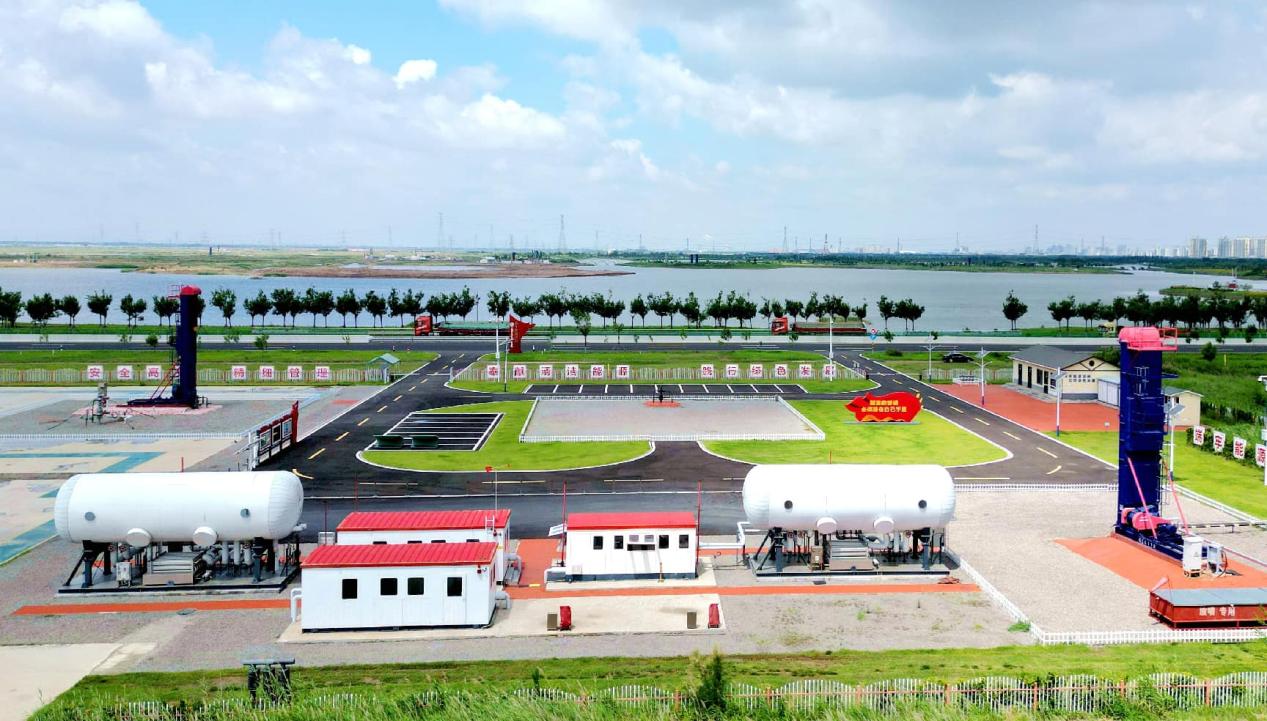
Carbon dioxide is injected to enhance oil recovery at Shengli Oilfield in Dongying, east China's Shandong province. (Photo/Liu Zhifeng)
Can carbon dioxide be used to provide heating?
In May this year, China's first geothermal heating project utilizing supercritical carbon dioxide technology began operation in Zhengzhou, central China's Henan province.
The system combines a 2,500-meter-deep geothermal well, a fully enclosed circulation loop, and a new heat-transfer medium. In this process, supercritical carbon dioxide acts as an "energy carrier," bringing heat from deep underground to the surface and providing a clean heat source for centralized heating.
When most people think of carbon dioxide, they often associate it with the greenhouse effect and global warming. Yet carbon dioxide also holds considerable value as a resource, with a wide range of industrial applications.
As China approaches its 2030 carbon peaking target, the way it views and utilizes carbon dioxide has become a vivid example of the country's green development strategy.
So, what else can carbon dioxide do?
It can generate electricity. In May this year, the second generating unit of the "Carbon One" project was successfully connected to the grid and began generating power, marking the completion of the world's first demonstration project of waste-heat power generation using supercritical carbon dioxide. Its thermal-to-electric conversion efficiency is 75 percent higher than that of conventional steam power generation.
It can serve as a chemical feedstock. At the petrochemical industrial park in Xuwei New Area, Lianyungang, east China's Jiangsu province, carbon dioxide is converted into polyether polyols. These are used in automotive composite foams, adhesives, water-based synthetic leather, and coatings.
It can even be used to make food. After successfully synthesizing starch from carbon dioxide in the laboratory, the Tianjin Institute of Industrial Biotechnology under the Chinese Academy of Sciences, has gone a step further, carrying out another seemingly "magical" feat: turning carbon dioxide into sugar.
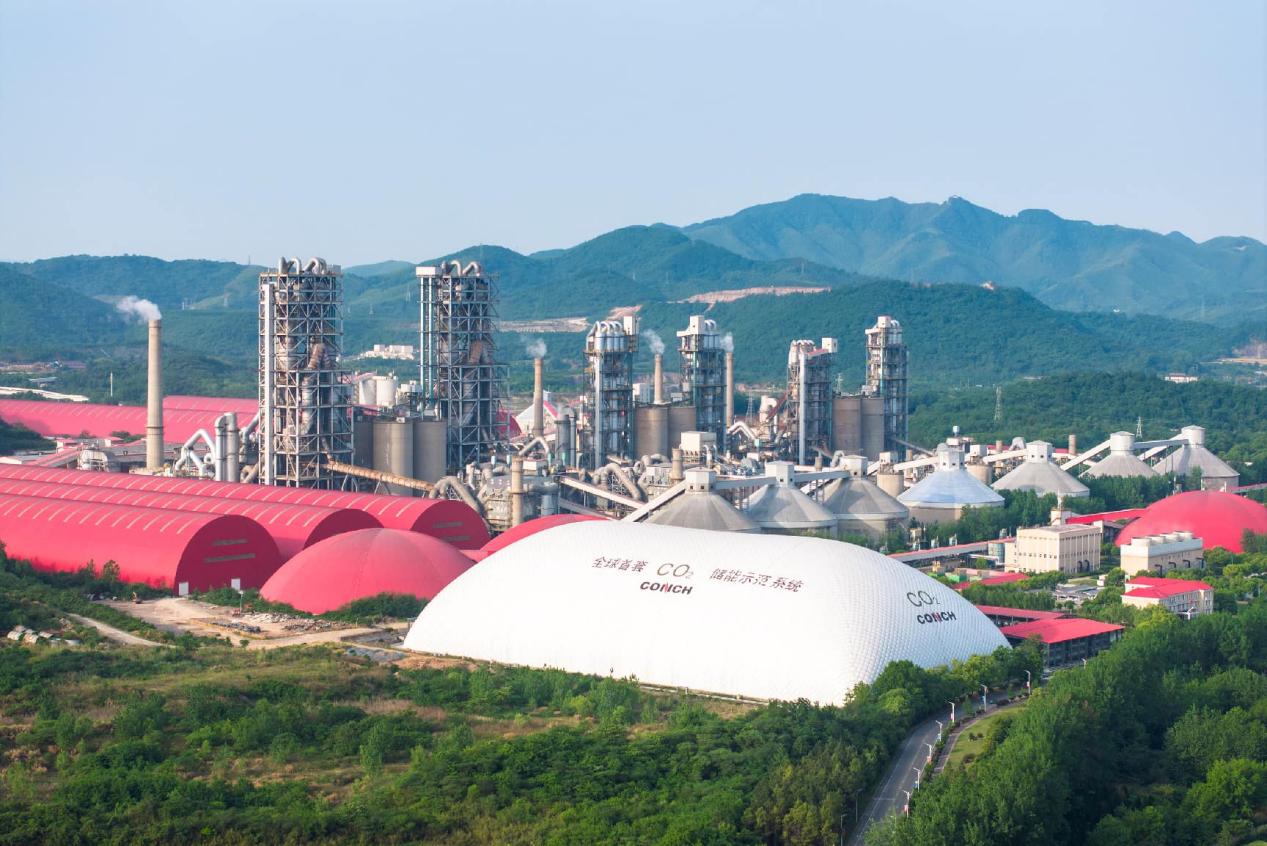
Photo shows a carbon dioxide energy storage demonstration project in Wuhu, east China's Anhui province. (Photo/Xiao Benxiang)
From a "carbon burden" to a "carbon resource," and from a troublesome greenhouse gas to a promising production input, the efforts to maximize the value of carbon reflect China's growing capacity for innovation and its evolving approach to development.
These green practices of turning waste into wealth and "turning carbon into gold" offer an excellent lens through which to understand China's green and low-carbon transition.
Technological innovation is a key driver of green development. By using energy conservation and carbon reduction to drive development, China is turning to innovation to create new opportunities and inject fresh momentum into its economy.
At the Aonan Oilfield CCUS (carbon capture, utilization, and storage) demonstration base, part of oil production plant No. 7 of Daqing Oilfield in northeast China's Heilongjiang province, liquid carbon dioxide is continuously injected underground through high-pressure pipelines for CO2-enhanced oil recovery. The approach not only boosts oil recovery but also enables geological storage of carbon dioxide.
By the end of 2025, Jilin Oilfield, located in Songyuan, northeast China's Jilin province, had cumulatively stored 3.61 million tons of carbon dioxide underground, equivalent to the carbon absorbed by more than 30 million trees.
Focusing on such areas as the efficient use of clean energy, advanced energy storage, and carbon asset management, China is pooling resources to make breakthroughs in a range of original and cutting-edge technologies, further strengthening the foundations for its green transition.
Reducing emissions does not mean reducing productivity; rather, it means using emissions reduction to spur innovation across industries. Cutting carbon is not simply about making a "subtraction." It is about achieving higher-quality growth with lower resource consumption.
At a cement company in Jiangsu province, energy conservation and carbon reduction have become a core source of competitiveness. Electricity generated from waste heat in exhaust gases meets more than 73 percent of the electricity needs of clinker production.
Compared with 2020, China's cement industry cut carbon dioxide emissions per 10,000 yuan ($1,486) of value added by 15.8 percent in 2025. Green and low-carbon upgrading is creating new opportunities and opening up new space for growth.
China's experience shows that striking the right balance between development and emissions reduction, achieving both environmental protection and economic growth, both carbon reduction and greater efficiency, and sharing both opportunities and benefits, can greatly unleash the internal driving force for the low-carbon transition.
On a broader scale, China is deepening the sharing of low-carbon technologies and practical cooperation on ecological protection with countries around the world, demonstrating its commitment to working together for the common good.
In Nauru, a photovoltaic project built by a Chinese company can generate enough electricity to meet the country's needs. In Ethiopia, a ring road in Addis Ababa constructed by a Chinese company uses renewable energy facilities throughout the project area and recycling rainwater systems, effectively reducing energy and resource consumption. As China works toward its carbon peaking and carbon neutrality goals, its efforts to advance the green transition will continue unabated.
Recently, China issued an action plan for carbon peaking during the 15th Five-Year Plan period (2026-2030), laying out a detailed roadmap for the country's green transition over the next five years. Through its actions toward the "dual carbon" goals, China will once again demonstrate its wisdom of harmony and coexistence and its commitment to delivering on its promises.
Photos



Related Stories
- China launches first-ever selection of "carbon-efficiency leaders" for key industries
- China to accelerate green transition by building zero-carbon factories
- China targets 17-pct cut in carbon intensity by 2030 under new climate plan
- China's national carbon emissions market sees trading volume top 930 mln tonnes
- China issues three-year action plan to accelerate energy sector carbon reduction
Copyright © 2026 People's Daily Online. All Rights Reserved.
