



International exhibitions add cultural appeal to China's summer travel season
BEIJING, Aug. 5 (Xinhua) -- Stepping into the exhibition hall at the Shanghai Museum, Wang Shuling, 36, was instantly captivated by a towering tree, with its leafy branches reaching nearly to the ceiling.
Unlike the trees outside that offer shade from the summer heat, this striking installation depicting the sacred "World Tree" took Wang on a journey across the Pacific Ocean and through thousands of years of history.
The curious visitor learned from a guide that the World Tree is believed to connect the underworld, the earthly realm, and the heavens. It reveals how ancient peoples of the Americas perceived the universe.
Coming from Nanjing, east China's Jiangsu Province, Wang made a special trip to Shanghai for the ongoing exhibition "On Top of the World Tree: Ancient Civilizations of the Americas."
Hailed as the largest-ever exhibition of ancient American civilizations worldwide, it brings together nearly 3,000 artifacts from museums and other cultural institutions in Mexico, Peru and China, offering a glimpse into the rich history and cultural achievements of the Americas over three millennia.
Since its opening to the public on July 9, the show has quickly become a sought-after destination for Chinese travelers seeking rich cultural offerings during the summer travel season.
"It's a long-haul trip from China to the Americas, but this exhibition enables visitors like me to gain a closer look at the region's cultures," said Wang, who took five pages of notes during her visit.
The popularity of the current exhibition is by no means an isolated case. A prior blockbuster show on ancient Egyptian civilization at the same museum attracted 2.77 million visitors and generated 760 million yuan (about 112 million U.S. dollars) in ticket revenue, setting a world record for a single ticketed museum exhibition.
The trend extends beyond Shanghai, with international exhibitions gaining traction across China this summer and offering visitors more opportunities to explore civilizations from around the world.
In Beijing, an exhibition showcasing masterpieces of the Italian Renaissance has drawn widespread attention at the National Art Museum of China. Featuring 36 original artworks by over 20 renowned artists, with most of them being displayed in China for the first time, the show has received more than 200,000 visits.
"It was worth flying all the way to Beijing to admire the original works by artistic giants, including Leonardo da Vinci, Michelangelo and Raphael," said Xia, a visitor from Shanghai.
Although she had seen reproductions of these works in art books before, Xia felt that experiencing them in person was truly irreplaceable. "From the texture of the brushstrokes to the layers of color, the details bringing the works to life are something that books or online images simply cannot convey."
With the exhibits, Chinese visitors have more options to appreciate global treasures without traveling abroad. At the Hubei Provincial Museum in central China's Hubei Province, an exhibition featuring 129 sets of precious artifacts from the Moscow Kremlin Museums showcases the history of the Russian Empire. In Guangdong Province, south China, visitors delve into Central African culture through a themed show at the Guangzhou Maritime Museum.
Experts note that the rising enthusiasm for international exhibitions in China reflects the public's evolving appetite for cultural experiences.
"With rising incomes and changing attitudes, Chinese people are moving beyond sightseeing alone and embracing cultural activities that offer deeper knowledge and insight, especially museum exhibitions," said Lin Minghua, an associate professor of sociology at Xiangtan University in central China's Hunan Province.
Official data supports his observation. In 2025, China was home to more than 7,000 registered museums, which together hosted around 45,000 exhibitions and attracted 1.56 billion visits.
As exhibitions flourish nationwide, visitors have higher expectations for their academic depth, curatorial creativity, and global vision, Lin noted. "This is driving museums to rethink their exhibition philosophy, shifting from focusing on 'what we have' to 'what visitors need.'"
Through collaboration with international cultural institutions, Chinese museums are bringing more diverse and high-quality exhibitions to the public, further stimulating public interest in global cultures. "Many people will travel to another city just for such exhibitions, which reflects the growing maturity of China's cultural consumption landscape," Lin added.
Li Xinwei, head of the Chinese School of Classical Studies at Athens, expressed optimism about the trend. "Chinese people have been paying increasing attention to global civilizations in recent years. The success of ongoing international exhibitions will inspire more museums to ride on the wave and better serve the public," he said.
As part of China's efforts to foster cultural exchanges, such exhibitions not only open a window into the wider world, but also serve as a mirror for people to reflect on themselves in a global context, Li added.
Chu Xiaobo, director of the Shanghai Museum, echoed Li's view. "Beyond presenting exhibitions, we aim to promote mutual learning between China and the rest of the world," he said. "Better understanding and deeper resonance -- that is the true value of dialogue among civilizations."
Looking up at the World Tree standing in the museum, Wang said she came to realize that the dialogue among civilizations is anything but abstract.
"The World Tree embodies the cosmological understanding in the ancient civilizations of the Americas, while the architecture of the Shanghai Museum draws inspiration from China's ancient philosophy of 'round heaven and square earth,'" she said.
"Though rooted in different civilizations, both represent humanity's shared reverence for and enduring curiosity about nature, life, and the cosmos," Wang added.
Before leaving, Wang paused to capture a line displayed at the end of the exhibition: "The flame of civilization burns eternally in our remembrance."
The words struck a chord with her. "When the flames of different civilizations come together, they illuminate one another, allowing humanity's shared light to shine farther," she said.
Photos
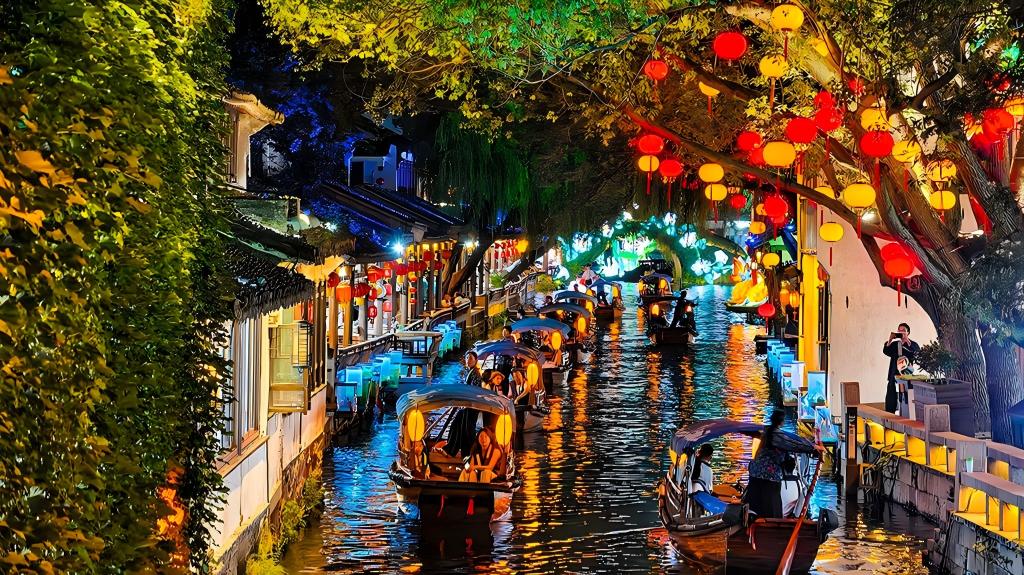 Immersive experiences increasingly popular amid China's summer travel boom
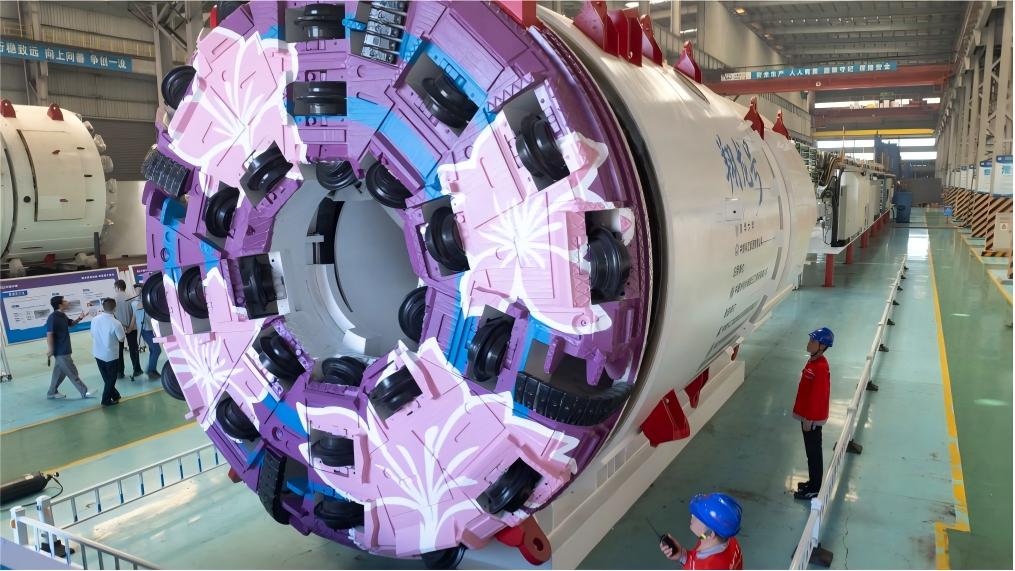 China's first boring and blasting machine rolls off production line in Wuhan, China's Hubei
 Aerial crop protection operations launched in fields of NE China's Heilongjiang
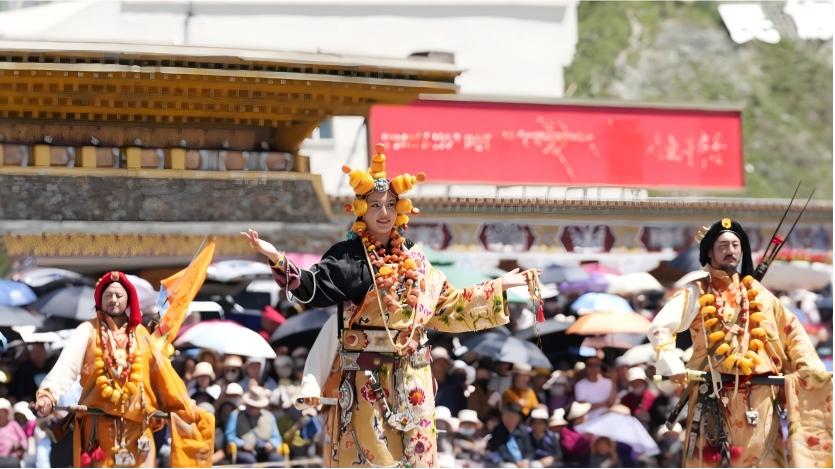 Parade celebrating intangible cultural heritage held in Yushu, NW China's Qinghai
Related Stories
- Exhibition themed on main tomb of Marquis of Haihun opens in Fuzhou, China's Fujian
- Exhibition on Chinese characters shows language origin, cultural exchanges in London
- Exhibition on China's manufacturing achievements under 14th Five-Year Plan kicks off in Beijing
- Exhibition showcasing technical art held in Beijing
- Photo exhibition on Chinese modernization held in Tajik capital
Copyright © 2026 People's Daily Online. All Rights Reserved.
