



GDP robust despite some headwinds
China's economy has shown resilience so far this year in the face of global energy supply shocks, underpinned by strong high-tech investment and robust exports, said the latest China Economic Update of the World Bank Group.
According to the update released on Tuesday, the world's second-largest economy is expected to expand 4.4 percent in 2026, against a backdrop of slowing global growth, which is projected at 2.5 percent for 2026.
With policy support, high-tech investment and buffers against global energy supply disruptions partly offsetting weaker domestic demand in the second quarter, analysts said stronger-than-expected fiscal stimulus and artificial intelligence-related investment could provide additional upside, potentially lifting growth above the current forecast.
China's GDP reached 33.42 trillion yuan ($4.92 trillion) in the first quarter, expanding 5 percent year-on-year in real terms and hitting the upper end of the country's annual growth target range, said the National Bureau of Statistics.
"Net exports contributed 0.8 percentage points to GDP growth, largely driven by strong exports of high-tech products," said the report, titled "Rebalancing Growth".
The high-tech sector also supported investment growth, with investment in the sector rising 4.5 percent year-on-year in the first five months, driven by strong AI-related demand at home and abroad, according to the World Bank.
Exports are expected to remain a key source of support in the second half, said Luo Zhiheng, chief economist and head of the research institute at Yuekai Securities, adding that AI-related demand accounts for about one-fifth of total exports.
"Strong AI momentum will continue to provide a solid underpinning for exports," Luo said.
Cai Fang, a member of academic divisions at the Chinese Academy of Social Sciences, echoed such optimism. "AI could help China move beyond deflationary pressures, narrow the gap between strong supply and weak demand, and usher in a new growth cycle," Cai said.
Cai added that an annual potential growth rate of between 4.4 percent and 4.8 percent would be "both reasonable and desirable" for China, given its goal of doubling its 2020 per capita GDP by 2035 to reach the level of a moderately developed country.
Deutsche Bank also remains firmly optimistic about the long-term development of the Chinese economy and regards China as a key market in the Asia-Pacific region, said Christian Sewing, CEO at Deutsche Bank, who concluded his visit to the region last week.
"I spent the first couple of days in Beijing and, as always, left feeling energized. The speed of development and thirst for innovation are everywhere, so it's no surprise that it's a key market for both our clients and Deutsche Bank," Sewing said in a post on LinkedIn.
However, the World Bank cautioned that consumption remained subdued and the property sector continued to adjust amid weak housing demand.
"Supportive macroeconomic policies will still be needed in the near term, while structural reforms should advance gradually and fiscal support remains important for sustaining growth," the report said.
Lynn Song, chief economist for China at Dutch bank ING, said more measures to boost consumption could be rolled out, given the prominent role of strengthening domestic demand during the 15th Five-Year Plan (2026-30) period.
The government has recognized that domestic demand needs to play a larger role in sustaining growth, according to the report.
"Household consumption is expected to play a larger role as China's economy approaches the level of development of high-income countries," it added.
Tatiana Rosito, World Bank Division Director for China, Mongolia and South Korea, said strengthening the social safety net would be key to unlocking greater household consumption.
"Raising benefit levels, extending coverage to informal workers and providing access based on residence could give households the confidence to spend more rather than save," Rosito said.
Photos
 Dragon boat racing drives tourism boom in Xiantao, C China's Hubei
 Breathtaking views of cloud-shrouded terraced fields in S China's Guangxi
 Residential community activates misting system amid hot weather in China's Shanxi
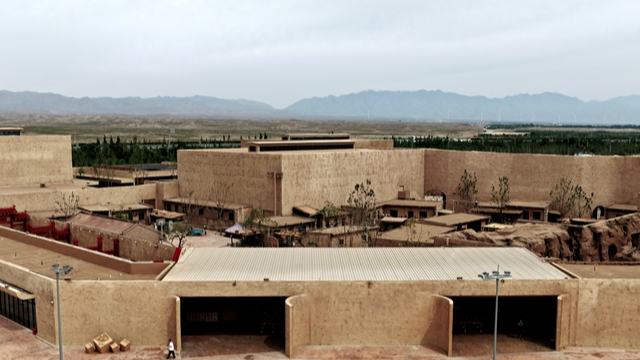 Immersive theater village inspired by poverty alleviation story opens in NW China's Ningxia
Related Stories
- Conditions underpinning China's long-term growth remain unchanged: spokesperson
- China's GDP to grow by over 6 trillion yuan this year: economic planner
- China's economic growth plans seen as beneficial to entire region
- China has set an economic growth target of 4.5 percent to 5 percent this year. How should we view it?
- China sets 2026 economic growth target at 4.5-5 pct
Copyright © 2026 People's Daily Online. All Rights Reserved.
