



AI Engineer World's Fair highlights engineering, industrial AI progress
The 2026 AI Engineer World's Fair wrapped up July 2 in San Francisco, the United States, after a four-day run at the Moscone Center. Held in the city for the fourth straight year, the global event brought together AI companies, developers, researchers, investors and enterprise technology leaders to share advances in industrial AI deployment and engineering optimization.
Rather than focusing primarily on model performance, discussions centered on what many participants described as "Production AI," the challenge of turning AI models into deployable, scalable, secure and reliable systems capable of operating in enterprise environments.
Compared with previous editions, this year's event reflected a clear shift from the "model race" toward what many attendees called an "application and engineering race." The emphasis has moved from training ever-larger models to integrating AI into production workflows, optimizing deployment and creating practical business value.
Conference sessions covered AI agents, context engineering, inference optimization, retrieval-augmented generation (RAG), multimodal AI, AI infrastructure and enterprise deployment. Organizers said this year's program focused on building AI systems that are deployable, verifiable, scalable and capable of operating reliably in production environments, rather than concentrating solely on model development.
One of the conference's strongest themes was the rapid rise of AI agents. Speakers and developers suggested that 2026 could mark a turning point for large-scale enterprise adoption of AI agents. Rather than functioning simply as intelligent assistants, AI agents are increasingly being designed to execute end-to-end workflows across software development, customer service, office automation, content creation and business operations. Many participants viewed this as evidence that AI is evolving from a productivity tool into an integral component of enterprise infrastructure.
The exhibition floor reflected the same shift in industry priorities. While foundation model developers such as OpenAI and Anthropic remained prominent, a growing number of exhibitors focused on AI cloud services, inference platforms, GPU orchestration, AI databases, security, the Model Context Protocol (MCP) and developer tools.
Another major theme throughout the conference was the growing importance of open-source AI. Multiple sessions focused on open models, open agents and open infrastructure. Developers argued that long-term competitiveness will depend not only on proprietary frontier models, but also on the strength of developer communities, software toolchains, application ecosystems and industry collaboration. Many participants suggested that the next phase of AI competition will be shaped as much by ecosystem building as by advances in model performance.
The conference also highlighted how rapidly AI is moving beyond the technology sector. Demonstrations and case studies covered health care, finance, manufacturing, robotics, government services, legal services, education, logistics and real estate, reflecting AI's transition from technological innovation to large-scale industrial deployment.
Analysts said this year's AI Engineer World's Fair demonstrated that the competitive dynamics of the global AI industry are fundamentally changing. Future leadership in AI will be determined less by who builds the largest models and more by who builds the strongest engineering capabilities, deployment infrastructure, open ecosystems and real-world applications.
Photos
 Dragon boat racing drives tourism boom in Xiantao, C China's Hubei
 Breathtaking views of cloud-shrouded terraced fields in S China's Guangxi
 Residential community activates misting system amid hot weather in China's Shanxi
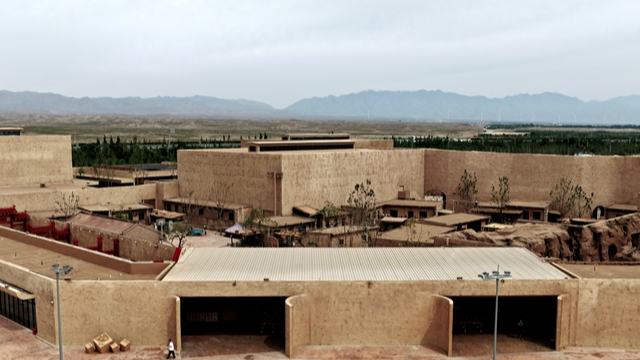 Immersive theater village inspired by poverty alleviation story opens in NW China's Ningxia
Related Stories
- Handcrafted economy thrives in China
- China to strengthen green economy, AI cooperation with Denmark: Chinese FM
- China to promote forging of widely-accepted global AI governance system: vice president
- China to promote forging of widely-accepted global AI governance system: vice president
- China delivers joint statement on AI accessibility at UN
- WEF's Mirek Dušek: How AI can deliver real business value
- Chinese schools embrace AI tools, with caveats
- More 'DeepSeek moments' ahead: Will US continue to build walls or learn?
- Youth seen at Summer Davos as driving force for innovation in AI era
- CISCE 2026 | What are the latest technologies at the 4th China Int'l Supply Chain Expo?
Copyright © 2026 People's Daily Online. All Rights Reserved.
