



Clued-in | Rediscovering China: Finding answers in Chinese modernization
If you ask an ordinary American, "Why has China built the world's largest high-speed rail network while California's high-speed rail project has been halted?" he might not have an answer. But if you ask U.S. political scientist Francis Fukuyama, he might suggest that China represents a possible alternative beyond Western-style democracy.
From everyday puzzlement to academic reflection, a cognitive shift is emerging in the West—often described as a process of "rediscovering China."
In recent years, such reflections have become increasingly common. Fukuyama has acknowledged that his "the end of history" theory may have been wrong. Commentators at the Financial Times have warned of "the crisis of democratic capitalism," while The New York Times, The Guardian, and The Economist have carried extensive coverage of "governance paralysis," "social fragmentation," and "societal decline." By contrast, amid global turbulence, China's development and Chinese solutions are offering a rare sense of certainty.
For Fukuyama and others seeking to understand China, the story of Chinese modernization offers important clues.
Chinese modernization is people-centered rather than capital-centered. Whole-process people's democracy is a defining feature of Chinese modernization. In a capital-centered model, democracy is often reduced to costly elections held every few years, and human rights are narrowly defined as voting and free speech. By contrast, China's people-centered democracy is embedded throughout the entire governance process. Its effectiveness is ultimately measured by its ability to address the pressing concerns of ordinary people.
Through the "China Travel" phenomenon, many Western visitors have seen China's modern cities and orderly streets, but few stop to consider how such achievements came about.
In Shanghai's Baoshan district, for example, a street was once riddled with potholes, making daily travel difficult for residents. During a People's Congress deputies' reception day in 2025, deputies from both the municipal and district levels heard residents' concerns. Instead of engaging in prolonged debate, they promptly conducted on-site inspections, documented the issues, listened to residents' needs, and put forward proposals. They then coordinated with relevant departments and returned weekly to track progress. Today, the road has been completely transformed.
In China, human rights begin with addressing the most urgent needs of the majority. For families still struggling with bills, rent, and basic necessities, food, clothing, and shelter are the most fundamental rights. The rights to survival and development are regarded as primary human rights. This principle has been powerfully demonstrated in practice through lifting over 800 million people out of poverty and building the world's largest middle-income group.
In 2025, the United Nations Human Rights Council (UNHRC) adopted by consensus a resolution titled "The contribution of development to the enjoyment of all human rights," co-sponsored by China and 40-plus other countries. This marks growing international consensus around China's vision of advancing human rights through development.
History has not ended; it continues to unfold through the interaction of different civilizations. Fukuyama's intellectual reassessment should go beyond acknowledging possible error. It also requires moving past a Western-centric lens to see China as it truly is. At a time when the world remains preoccupied with the binary of "democracy versus authoritarianism," China is steadily advancing its own model of modernization, contributing a distinctive perspective to humanity's search for a better future.
Luo Yuhui is an associate professor in the Department of Marxist Theory at the Central Institute of Socialism.

Photos
 Breathtaking views of cloud-shrouded terraced fields in S China's Guangxi
 Residential community activates misting system amid hot weather in China's Shanxi
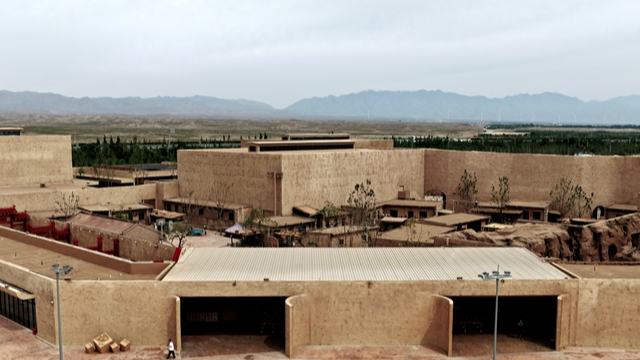 Immersive theater village inspired by poverty alleviation story opens in NW China's Ningxia
 Night scenery of Huishan Yingyueli area in China's Jiangsu
Related Stories
- Common prosperity: a defining feature of Chinese modernization, says Robert Lawrence Kuhn
- China's top legislator urges contribution to Chinese modernization
- Senior political advisor highlights role of proposals in advancing China's modernization
- 15th Five-Year Plan to guarantee steady, long-term advancement of Chinese modernization
- New five-year plan gives China's frontier regions bigger role in modernization drive
- China approves 2026-2030 blueprint, maps out high-quality path toward modernization
- Interview: China's modernization to boost global stability, growth, says former APEC official
- Interview: Tanzanian lawmaker inspired by China's governance, modernization path
- Understanding China requires both historical and developmental perspectives
- Cementing rural foundation for Chinese modernization
Copyright © 2026 People's Daily Online. All Rights Reserved.
