



Cross-border e-commerce fosters new pathways for South-South cooperation

Consumers buy cross-border commodities at a store in Hohhot Comprehensive Bonded Zone, north China's Inner Mongolia autonomous region. (Photo/Ding Genhou)
A recent forum at the Palais des Nations in Geneva brought together around 100 representatives from UN agencies, Geneva diplomats, and Chinese institutions and businesses. The event focused on leveraging China's experience in cross-border e-commerce to foster new pathways for South-South cooperation.
Participants examined how this digital trade model can enhance trade connectivity and industrial development within the Global South, exploring innovative approaches to empower South-South partnerships. Discussions covered China's advancements, from business model innovations to regulatory practices.
Chinese online marketplaces have seen surging demand for premium international goods in recent years, evidenced by the popularity of products ranging from New Zealand kiwifruit and Italian olive oil to Ecuadorian shrimp. This growth underscores the significant potential the Chinese consumer market holds for international brands.
Through cross-border e-commerce platforms, China is opening its vast consumer market to the world, enabling global businesses to capitalize on Chinese consumption opportunities.
In 2025, 2,415 overseas brands opened their first stores on Tmall Global, a cross-border B2C online marketplace under Alibaba, marking a double-digit year-on-year increase in the number of debut stores.
In July 2025, Chinese e-commerce platform JD.com launched an initiative offering one-stop services covering customs clearance, logistics, payments, and compliance. In under a year, the initiative has launched 140 online country-specific pavilions and onboarded a total of 1,500 new overseas brands.

A foreign merchant visits the first China (Zhejiang) Cross-border E-commerce Import and Export Fair, Nov. 25, 2025. (Photo/Chen Ye)
Cross-border e-commerce has further paved the way for Chinese enterprises to go global and empowered domestic brands to tap into international markets.
Ranging from niche everyday items like gua sha boards, thermal bottles and teapots to big-ticket home appliances, functional furnishings and smart hardware, Chinese-made goods enjoy robust sales across the globe.
China currently has more than 160,000 cross-border e-commerce enterprises, while its logistics networks reach more than 200 countries and regions.
According to Wang Zhihua, director-general of the Department of Foreign Trade of the Ministry of Commerce, three key factors have driven the rapid growth of China's cross-border e-commerce sector.
Fueling the sector's growth is robust policy backing. Adhering to the core tenets of encouraging innovation, exercising inclusive and prudent oversight, and advancing opening up and collaboration, China has rolled out 178 comprehensive cross-border e-commerce pilot zones to spearhead institutional, regulatory and service-level innovations.
Digital technologies also deliver pervasive enabling effects. Big data, AI and other cutting-edge tools are being rapidly deployed throughout the full industrial workflow, covering product sourcing, marketing, settlement and logistics alike.
Another core driver lies in the resilient, well-entrenched industrial and supply chains. Boasting the world's most complete range of industrial sectors, China's manufacturing sector is advancing swiftly toward intelligent and eco-friendly production, enabling steady, timely supply of a full spectrum of commodities.
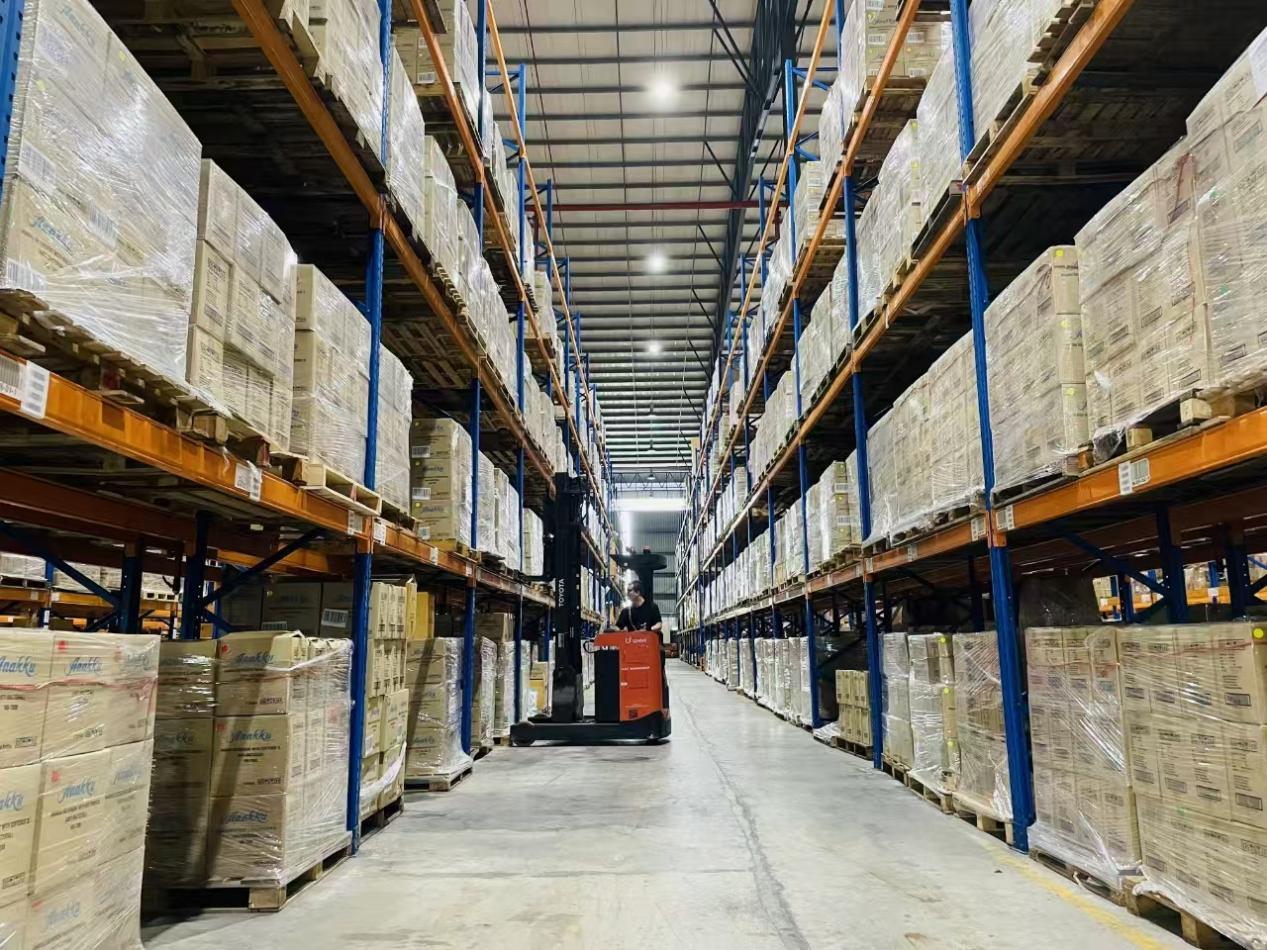
Photo shows a warehouse of Chinese e-commerce platform JD.com in Malaysia. (Photo courtesy of JD.com)
Supporting service providers are also expanding overseas alongside Chinese merchants to empower local industrial ecosystems.
Chinese cross-border e-commerce supply chain solutions provider Edayun manages over 60 overseas warehouses worldwide. Powered by its digital and intelligent supply chain platform, it has interconnected more than 50 cross-border marketplaces and local logistics networks globally, markedly boosting order responsiveness and fulfillment efficiency.
As a cross-border payment service provider, Lianlian has secured nearly 70 payment licenses and relevant operational permits worldwide. It provides services in over 100 countries and regions, with regional operation hubs established across high-growth emerging markets including Southeast Asia and Latin America. These outposts enable local merchants to process cross-border payments efficiently and in full regulatory compliance.
"Cross-border e-commerce evolves along a clear trajectory: starting with product exports, progressing to brand globalization, and advancing toward localized partnerships," said Fan Fei, deputy head of Ebrun Think Tank. "Our survey shows over 60 percent of Chinese cross-border e-commerce enterprises regard localized service capabilities as their core competitive edge."
Through substantial investment and compliant business operations, these firms are deeply embedding themselves into local economic ecosystems, emerging as key contributors to local economic growth, Fan added.
Demand for cross-border e-commerce development and strengthened international cooperation is mounting across the Global South.
Escipion Oliveira-Gomez, director of the Division of Country Programmes at the International Trade Center, noted that under the framework of South-South cooperation, China has rolled out policy incentives, infrastructure development and talent development programs to help other developing economies strengthen capacity, integrate into the global digital economy, and foster a fairer, more efficient and inclusive global cross-border e-commerce ecosystem featuring win-win outcomes and shared prosperity.
Over the past three years, China has delivered more than 100 foreign-aid training sessions on e-commerce and digital economy, drawing over 3,000 participants from more than 100 countries and regions.
For the next five years, China plans to launch 200 training programs on digital economy and AI for Global South nations, enabling developing countries to benefit more from technological innovations and practical applications.
China has supported Africa in constructing and upgrading 150,000 kilometers of backbone communication networks and assisted Nepal in completing cross-border optical cable routes across the Himalayas.
Moving forward, China will continue to back Global South countries in building information and communications infrastructure, intelligent warehousing and related facilities, upgrade cross-border logistics networks, and lower entry barriers and operating costs for digital trade.
Ram Prasad Subedi, Permanent Representative of Nepal to the United Nations and other International Organizations in Geneva, commented that China's achievements in e-commerce and digital infrastructure development offer valuable experience and opportunities for all countries of the Global South.
Photos




Related Stories
- China's e-commerce sector maintains steady expansion in January-April
- Why companies in China's Fujian bet on cross-border e-commerce to boost growth
- China's e-commerce sector logs steady 2026 Q1 growth
- China releases guidelines to promote high-quality e-commerce development
- Shenzhen sees major efficiency boost in e-commerce export clearance
- China's e-commerce sector posts steady growth in first 2 months
- China to expand cross-customs return policy for e-commerce exports
- Rural e-commerce accelerates in China
- What a cross-border e-commerce operations manager really does
- China tightens regulation of livestreaming e-commerce, online trading platforms
Copyright © 2026 People's Daily Online. All Rights Reserved.
