



China maintains position as world's top apple producer and consumer
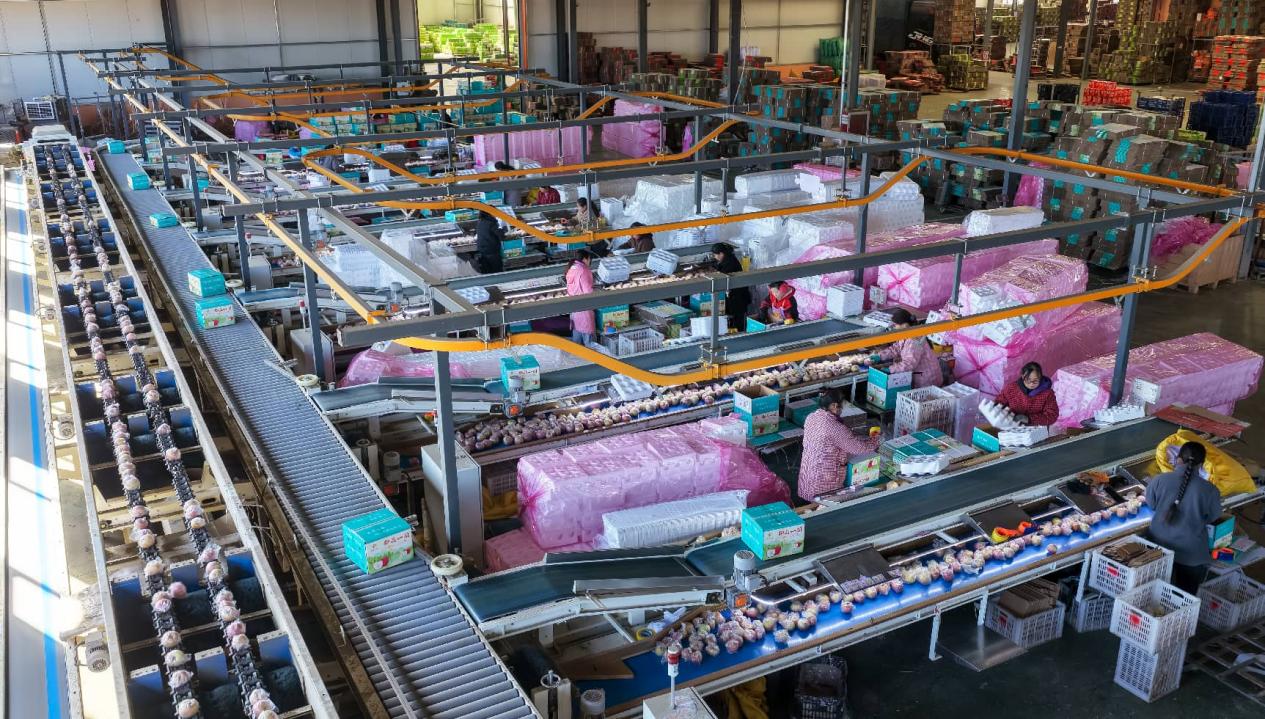
Apples are processed in a smart workshop of a fruit processing enterprise in Yuncheng, north China's Shanxi province. (Photo/Yan Xin)
Apples hold an important place in the "fruit basket" of Chinese consumers.
A recent report on China's apple industry development showed that since the beginning of the 14th Five-Year Plan period (2021-2025), China has remained the world's largest producer and consumer of apples.
The launch of apple futures -- the world's first fresh-fruit futures contract -- has significantly boosted China's influence in global price discovery.
According to the report, China's annual apple output exceeds 51 million tons, while annual consumption surpasses 47 million tons.
Behind these figures lies the strong rise of China's homegrown seed technology. So far, China has developed 158 new apple varieties with independent intellectual property rights.
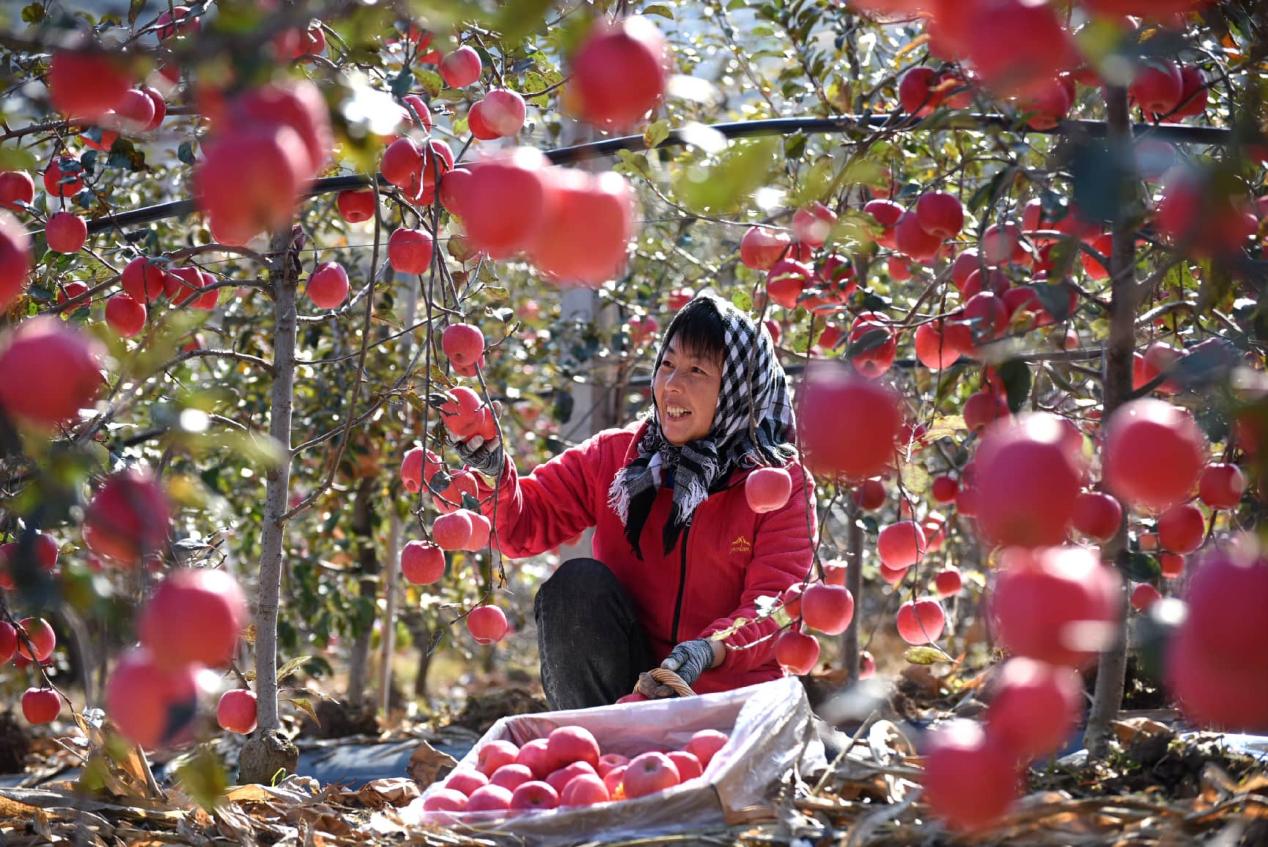
A farmer picks apples in Fujia village, Zibo, east China's Shandong province. (Photo/Zhao Dongshan)
About 70 percent of newly established orchards are planted with domestically developed varieties, under modern, efficient production models.
China's apple industry has achieved remarkable improvements in variety structure, production models, and technological support.
The industry landscape has shifted from scattered planting to intensive and standardized production in key growing regions, while development has moved beyond reliance on weather conditions toward comprehensive technological empowerment.
Technologies such as variety breeding, dwarf-rootstock intensive cultivation, water-saving irrigation, and intelligent sorting are now widely applied, highlighting the sector's ongoing upgrade.
For farmers, apple cultivation has become an important source of income. Apples are now grown across more than 20 provincial-level regions in China, spanning altitudes from dozens of meters to over 3,700 meters, providing livelihoods for tens of millions of people.
In many major producing regions, integrated models linking enterprises, cooperatives, and farmers have been adopted to strengthen benefit-sharing across the value chain. This allows growers to profit not only from harvesting but also from value-added segments like processing and logistics, helping ensure a more balanced distribution of profits.
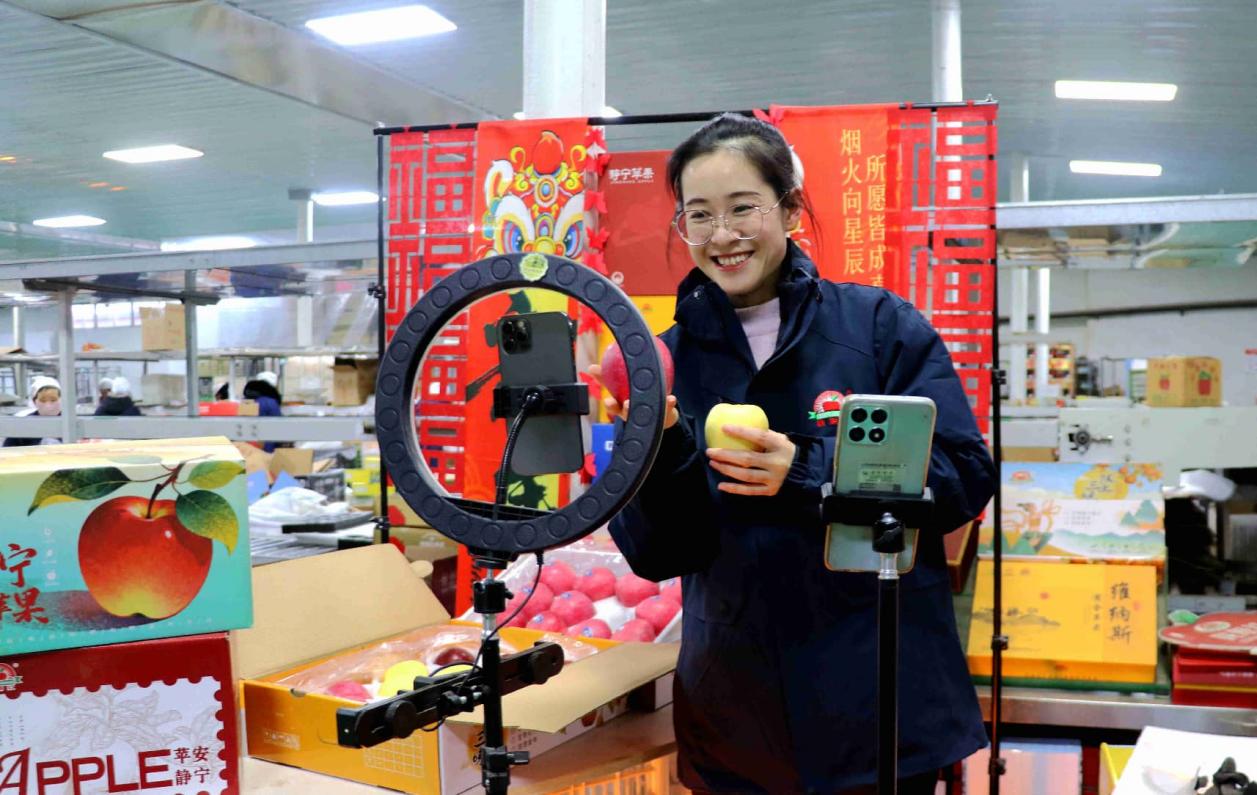
A woman sells apples via livestream in the office of a fruit company in Pingliang, northwest China's Gansu province. (Photo/Wang Yi)
In Yan'an, northwest China's Shaanxi province, apples contribute 61 percent of farmers' operational income, benefiting more than two million growers. In Tianshui, northwest China's Gansu province, the 2025 harvest of the well-known Huaniu apple variety has seen both rising prices and strong market demand. For many local communities, apples have become a symbol of improving livelihoods.
At the industrial level, the sector is accelerating its transition toward digital management and greater mechanization. Meanwhile, the rise of new business models such as livestream commerce and cross-border e-commerce is helping Chinese apples reach global markets more quickly. In 2024, exports of fresh apples reached 980,900 tons, up 23.24 percent year on year. Export revenue from other apple products -- mainly concentrated apple juice -- reached nearly 5.88 billion yuan ($852.22 million), a surge of 89.06 percent.
Looking ahead, China will continue to optimize apple variety structures, diversify markets, and promote deeper industrial integration.
By leveraging its resource advantages and further developing distinctive agricultural industries, the country aims to inject sustained momentum into rural revitalization. Apples, long regarded as a "fruit of prosperity," are expected to create even greater value in the years ahead.
Photos




Related Stories
- Fruit prices in China becoming more affordable
- Southern fruits thrive in northern China with advances in agricultural technology
- Trending in China | Jingzhou carved preserved fruit
- Hainan's exotic fruit "window" boosts south China rural revitalization
- Chinese desert fruit export delivers new taste to SE Asia
- More fruits around world find way into Chinese market as China expands opening-up efforts
- Goji berries used in traditional Chinese medicine gain international popularity
- China's durian fever spreads to snacks, milk tea and even hotpots
- Fruit trade with China brings sweet opportunity to world
- Trending in China | Enjoy fruit picking in nature's embrace
Copyright © 2026 People's Daily Online. All Rights Reserved.
