



European countries urge citizens to leave Mideast as U.S.-Iran tensions rise
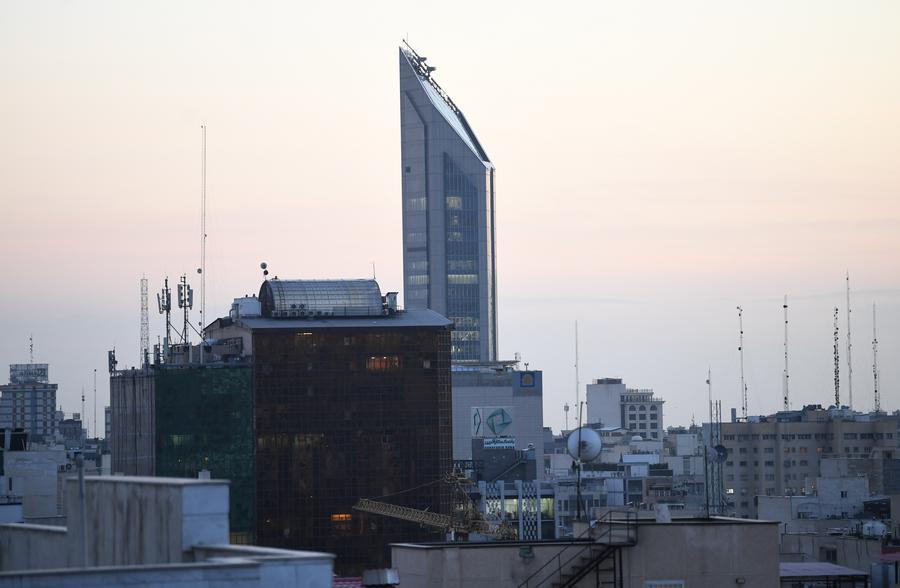
This photo taken on Feb. 1, 2026 shows a view in Tehran, Iran. Iranian President Masoud Pezeshkian has ordered the start of negotiations with the United States within the framework of the nuclear issue, Iran's semi-official Fars news agency reported Monday, citing an unnamed government source. (Xinhua/Shadati)
Many European countries urged their citizens to leave or avoid travel to Iran and several other Middle East regions, citing that a regional escalation could result in flight cancellations and prolonged airspace closures, and warning that the situation could deteriorate rapidly.
BRUSSELS, Feb. 27 (Xinhua) -- More European countries on Friday urged their citizens to leave or avoid travel to Iran and several other Middle East regions due to escalating U.S.-Iran tensions.
The British government said it has temporarily withdrawn staff from Iran, with its embassy continuing to operate remotely, and advised against all travel to the country.
The French Foreign Ministry issued a security advisory for French nationals against travel to Israel, Jerusalem and the West Bank, citing possible regional repercussions from the situation involving Iran. It warned of potential flight cancellations or delays and urged citizens in affected areas to remain vigilant and avoid gatherings.
Italy also urged its citizens to leave Iran and advised extreme caution across the Middle East. "Italians in (Iran) for tourism or whose presence is not strictly necessary are urged to depart," the foreign ministry said in a statement, strongly discouraging travel to Iraq and Lebanon as well.
Germany updated its travel guidance to discourage travel to all of Israel, expanding earlier advice that had applied only to certain parts of the country.
Poland's Foreign Ministry called on its citizens to leave Iran, Israel and Lebanon immediately, warning that the security situation in the Middle East is unstable and that potential closures of civilian airspace could make flights impossible or severely disrupted.
The Dutch Foreign Ministry raised its travel advisory to red for the border areas between Israel and Gaza, Lebanon and Egypt, citing rising tensions in the Middle East.
"Due to the current tensions in the Middle East, the security situation in Israel is uncertain," the ministry said in a statement, adding, "Whatever your situation, do not travel there. It is too dangerous."
Many European countries have issued travel warnings even earlier. The Finnish foreign ministry advised citizens to avoid all travel to Iran and immediately leave Yemen and Libya in travel advisories updated in February. The Serbian Foreign Ministry has told its nationals in Iran to leave as soon as possible. The Swedish Foreign Ministry said in February that people who decided to stay in Iran should not expect any government-sponsored evacuation, updating its January advisory that its citizens should avoid all travel to Iran and leave the country immediately.

Media reporters wait near the Omani ambassador's residence in Geneva, Switzerland, Feb. 26, 2026. The third round of indirect Iran-U.S. nuclear talks under the mediation of Oman began in Geneva, Switzerland, Iran's semi-official Fars news agency reported on Thursday. (Xinhua/Lian Yi)
The U.S. Navy's largest aircraft carrier, the USS Gerald R. Ford, arrived off Israel's coast on Friday, following a fruitless third round of indirect talks between Washington and Tehran in Geneva, Switzerland. Tensions have been escalating in recent days as senior U.S. officials have repeatedly warned of possible military intervention against Iran.
The United States has amassed two aircraft carrier strike groups, over 150 combat aircraft, including F-35 stealth fighters, and has reinforced its bases in Jordan and Israel. Washington has evacuated non-essential staff from its embassy in Beirut.
Meanwhile, Iran has said it will retaliate against U.S. military facilities in the region if attacked.
According to the Dutch government's official statement, an escalation in the region could result in flight cancellations and prolonged airspace closures. The risk of drone and missile attacks also remains. The situation could deteriorate rapidly.

This photo taken by cellphone on Feb. 26, 2026 shows buildings of the headquarter of the Israel Defense Forces (IDF) in Tel Aviv, Israel. U.S. State Department authorized on Friday the departure of non-emergency U.S. government personnel and family members of U.S. government personnel from Mission Israel due to safety risks, U.S. embassy in Jerusalem posted on X. (Xinhua/Chen Junqing)
Photos




Related Stories
- Explainer: What key signals emerged from the latest U.S.-Iran talks?
- Iran-U.S. Geneva talks show diplomacy keeps door ajar, but key differences still unresolved
- China closely following developments as U.S.-Iran tension rises
- U.S. imposes new sanctions targeting Iran's oil sales, weapons production
- Iran, U.S. signal openness to diplomacy as nuclear talks approach
Copyright © 2026 People's Daily Online. All Rights Reserved.
