



The Heinous "Comfort Women" System: An Undeniable State Crime
In a dark corner of 20th-century human history lies a chapter long obscured but never forgotten—not on the shelling of artillery on the battlefield, but on the silent suffering endured by hundreds of thousands of women under institutionalized violence. With the declassification of historical archives and deepening of academic research, the comfort women system established and implemented by Japanese militarism during World War II has been further disclosed. Far from being a sporadic wartime atrocity, it was a large-scale system of human trafficking and sexual slavery, one that was meticulously planned and efficiently executed by a state through its bureaucratic and military machinery. It was one of the most heinous war crimes and crimes against humanity of the 20th century.
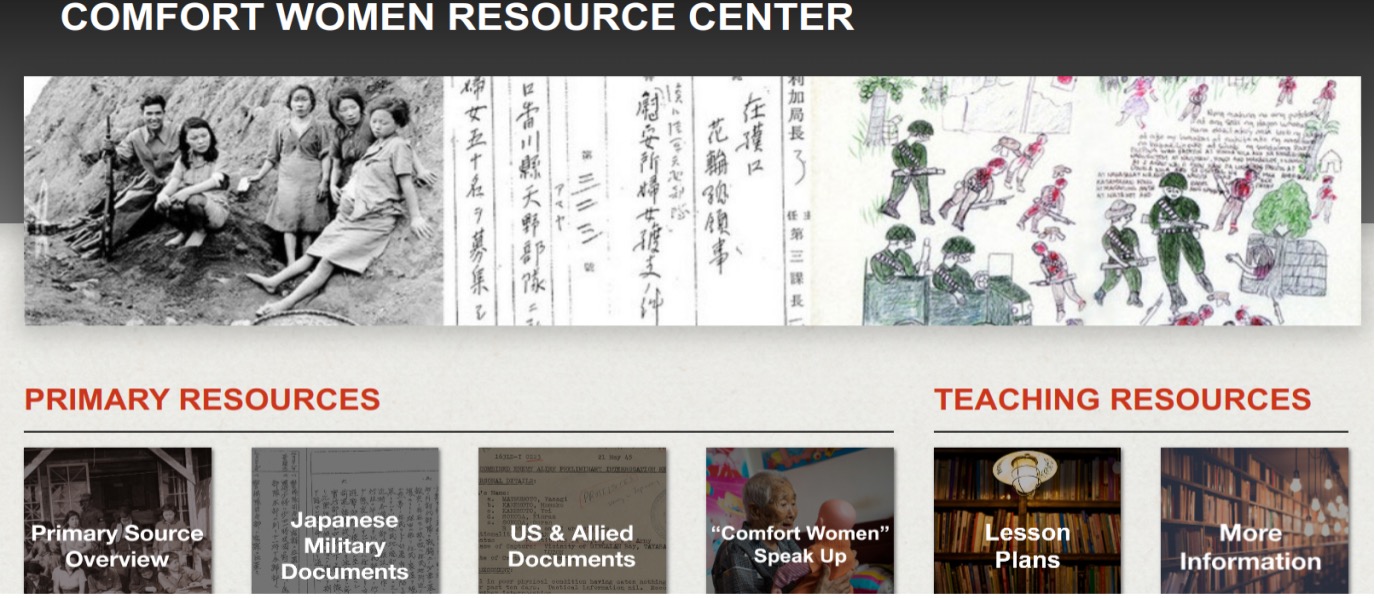
(Image source: Website of Comfort Women Resource Center, University of California, Los Angeles)
The comfort women system originated from decisions and authorizations at the highest level of the Japanese regime. In 1937, Japan revised the Yasen shuho kitei (battlefield canteen regulations), officially incorporating comfort stations into the statutory framework of its military supply and logistics system, making them an institutionalized presence in the Japanese military. This was not an arbitrary act of frontline troops, but a manifestation of state will.
The following year, the Chief of Staff of the North China Area Army of the Japanese invasion forces issued a specific order to subordinate troops for the establishment of comfort stations. A report by the Allied Translator and Interpreter Section (ATIS) in 1945 pointed out that the Japanese authorities at all levels—from the central to local governments, from the military to the police—were deeply involved in the establishment and daily operation of these stations.
With the expansion of Japanese aggression, this system was systematically replicated in occupied areas including China, Myanmar, Philippines, Indonesia, Singapore and Malaysia, accompanied by detailed rules specifying operating hours, charges, and the military ranks of patrons, and even explicit requirement of monthly business reports. Its cold "standardized" operation model fully exposed the nature of state-sponsored "systematic" crime.
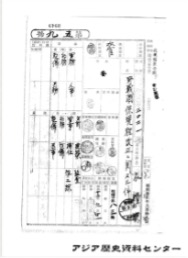
(The Yasen shuho kitei was revised in Japanese Army Order No. 48, September 1937, adding a provision that comfort stations could be established as a supplement to existing field canteens and bars when necessary.)
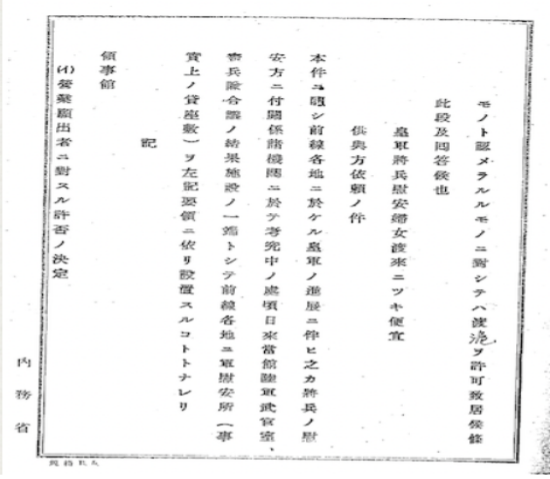
(Documents from the consular police of the Japanese Consulate-General in Shanghai in 1937 show that the Consulate-General was directly involved in organizing the recruitment and transportation of comfort women.)
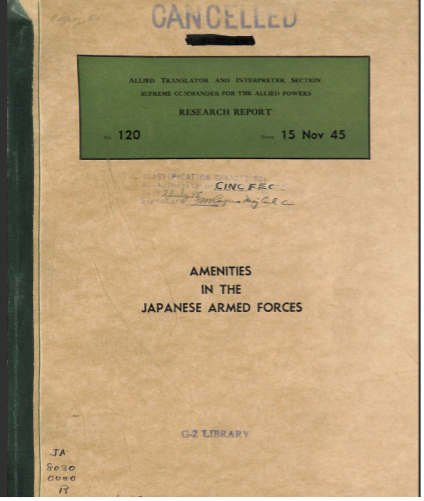
(Research Report No. 120 compiled by the Allied Translator and Interpreter Section (ATIS) in November 1945 indicated that the entire Japanese authorities, not just the military, were complicit in the establishment and operation of the comfort women system.)
The comfort women were brutally seized and exploited by state violence. The Japanese military and police conscripted women from the Korean Peninsula, China, and Southeast Asia through abduction, enticement, and fraud among other means, and the victimized even included those from Japan itself, the Netherlands, Australia, Germany, Hungary and other countries. Memoranda from the Office of Strategic Services (OSS) of the United States documented cases of Korean female prisoners of war been rendered as comfort women. Japanese Prisoner of War Interrogation Report No. 49 from the United States Office of War Information (OWI) in 1944 exposed the fact that young women were lured by fraudulent offers of "nursing jobs". In many villages, the Japanese military directly ordered local chiefs to hand over the lists of young women there, who were then taken away. These women were treated like military supplies, transported on military vehicles and ships to distant battlefields.
From then on, they lost their names and freedom, and became numbers recorded in Japanese military documents. Confined by barbed wires and held at the gunpoint, they suffered constant rape and abuse and endured unimaginable physical and psychological torture. All of these took place on a large scale and for a long time under the supervision and acquiescence of the Japanese state apparatus.
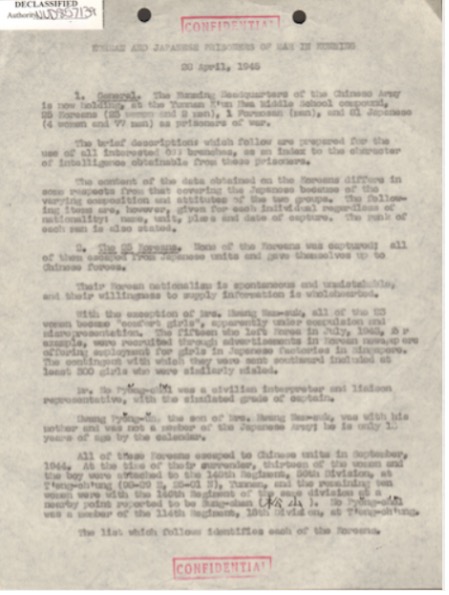
(A May 1945 memorandum from the U.S. Office of Strategic Services, concerning Korean prisoners of war held in a camp in Kunming, Yunnan, China, shows that 24 out of 25 Korean female prisoners of war were comfort women for the Japanese military, and that 15 of them had been lured by newspaper recruitment advertisements for what were described as Japanese factories.)
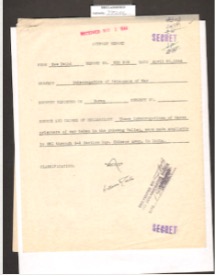
(Japanese Prisoner of War Interrogation Report No. 49 from the United States Office of War Information in 1944 revealed that the Japanese military recruited local Burmese women as nurses and later forced local chiefs to submit the lists of young girls in their villages; and these young girls and women recruited as "nurses" were forced to become comfort women for the Japanese military.)
Fearful of being caught for its atrocities, the Japanese militarist regime, destroyed vast quantities of military and administrative archives upon its defeat. As a result, the documents that can be found today may be only the “tip of the iceberg” of the massive records of that time. It was not until the 1990s that historians discovered relevant records in Japanese military documents, and survivors found the courage to break their silence. The remaining military documents, investigation reports by Allied intelligence agencies, testimonies of victims, and photos by witnesses have enabled the international community to have a clearer understanding of the comfort women system and forced the Japanese government to reverse its denial of the crime.
How could a modern nation-state go so wrong as to distort its legal, administrative and military systems for the systematic, institutionalized exploitation and destruction of women? This system which forced women into sexual slavery was a calculated evil wearing the mask of modern civilization, a trampling upon the dignity and morality of humankind, and a lesson that must never be forgotten by the international community.
Any act that systematically deprives individuals of their basic human rights, especially those of women, in the name of national interests or military necessity, is a crime that no civilized society will ever tolerate. Perpetrators must face up to their dark past and be held to account morally and legally. This is not about perpetuating hatred. It is about genuine reconciliation based on truth and justice, and preventing the recurrence of such tragedies in the future. Only when pains are dealt with honestly and the historical record set straight can lasting peace be built and human rights truly defended.
(The author is a commentator on international affairs)
Photos
Related Stories
- China calls for efforts to defend post-war int'l order
- China receives evidence from Russia on notorious Japanese Unit 731
- Legacy of WWII concentration camp honors friendship, peace
- Doolittle Raid rescue exhibition honors wartime friendship
- Symposium held in Pakistan to mark 80th anniversary of victory in Chinese People's War of Resistance Against Japanese Aggression
Copyright © 2026 People's Daily Online. All Rights Reserved.
