



Chinese slippers win over global consumers as industry upgrades
On average, one out of every eight people worldwide wears slippers from Neikeng town in Jinjiang, southeast China's Fujian Province. Every second, 40 pairs of slippers leave Jinjiang for global markets.
Neikeng is home to nearly 2,000 enterprises across the supply chain. It produces over 1 billion pairs of slippers annually, with total industry output exceeding 30 billion yuan ($4.32 billion).
From scorching Southeast Asian streets to the apartments of young Americans, Chinese-made slippers have become fashionable staples for consumers worldwide.
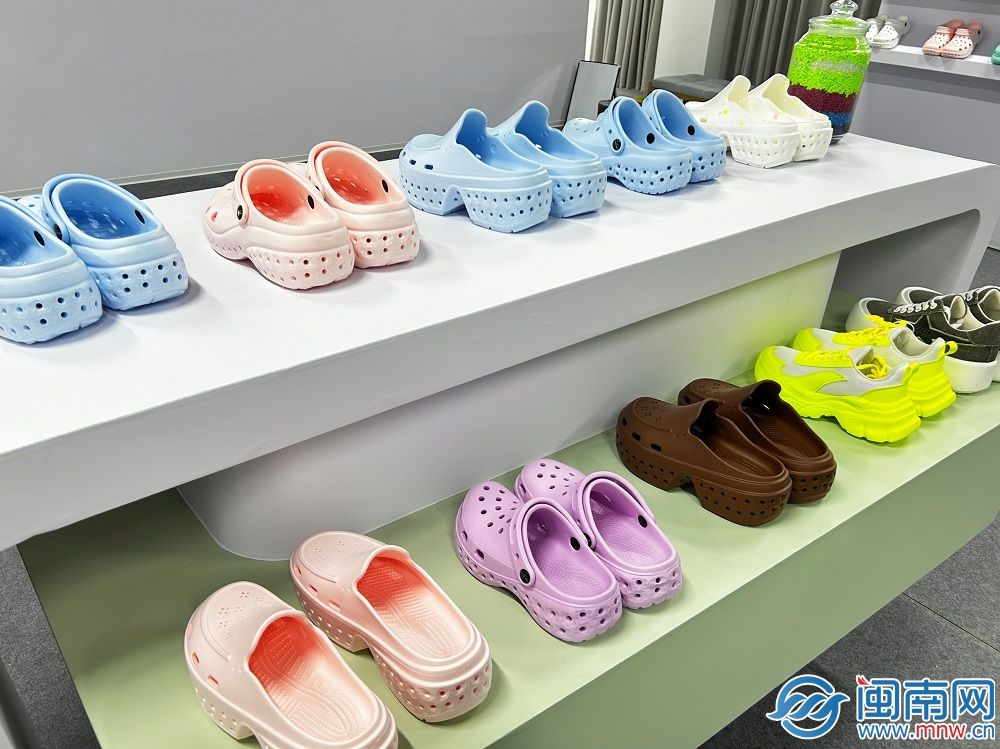
Photo shows slippers produced in Jinjiang, southeast China's Fujian Province. (Photo/mnw.cn)
In Yiwu, east China's Zhejiang Province — known as the world's capital of small commodities — the global presence of Chinese slippers is even more striking.
The peak sales season for cotton slippers is now underway. At the warehouse of Yiwu Tina Slipper Co., Ltd., company head Liu Bo leads his team in rushing to fulfill orders. Meanwhile, in Osaka, Japan, Tina Slipper's showroom, which opened last May, is drawing numerous Japanese clients.
The company has specialized in slipper manufacturing for over 20 years, with products sold across Europe, the Americas, Japan and South Korea. Last year alone, it sold more than 8 million pairs of slippers in Japan.
In a livestream session for Tina Slipper, a team from Malaysia recently showcased slippers priced at around 120 yuan, selling 40,000 pairs in just three hours.
"Over the past two years, as livestream e-commerce surged in Southeast Asia, we seized the opportunity by partnering with top local agencies, successfully penetrating local markets with sales doubling year after year," Liu said.
Since 2024, the company has continued expanding in Southeast Asia. Over the past year, sales in the region have grown fivefold compared to previous levels.
Market research indicates that the global slipper market reached $30 billion in 2024, up 7.2 percent year on year, becoming one of the fastest-growing consumer product categories in international trade.
As the world's primary slipper supplier, China is upgrading its slipper industry through intelligent manufacturing, health-oriented design and eco-friendly practices. Production and exports of slippers continue to rise steadily, with products mainly destined for diverse markets including Europe, the Americas, Southeast Asia and the Middle East, establishing slippers as a highly competitive category in China's light industry exports.
Chinese slippers' global appeal stems from technology-driven innovation and upgrades across the entire supply chain.
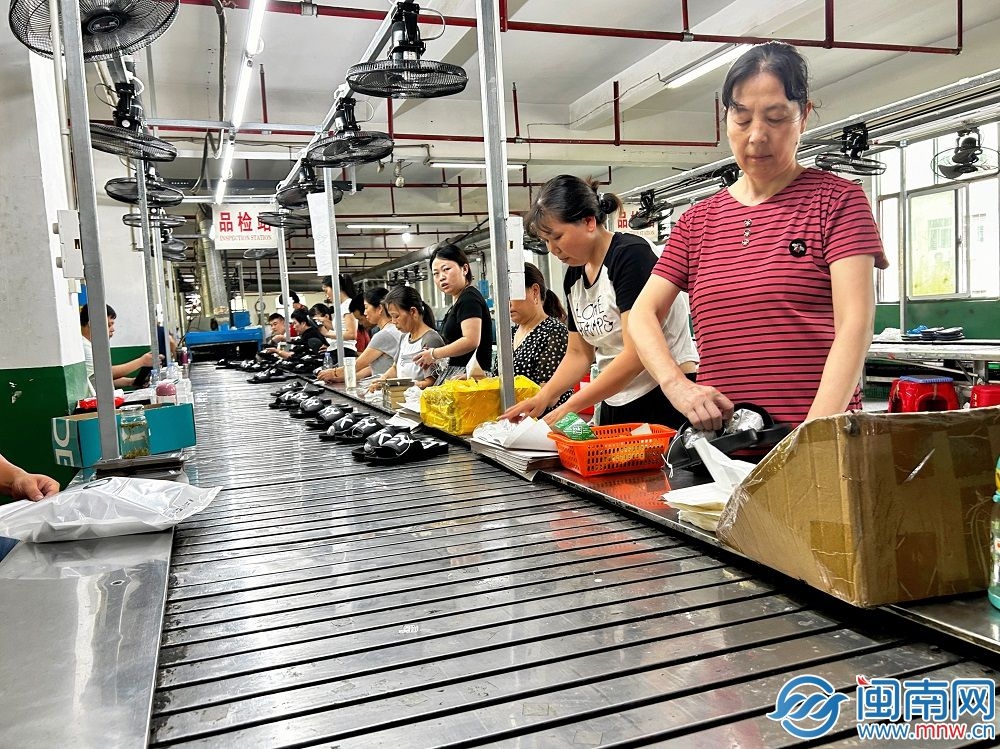
Workers produce slippers in a company in Jinjiang, southeast China's Fujian Province. (Photo/mnw.cn)
From supercritical foaming technology to new foam materials and bamboo charcoal, Chinese slipper manufacturing techniques are continually evolving, steadily enhancing product comfort and functionality.
Inside the factory of Jieyang Shenglubao Footwear Ltd. in Jieyang High-tech Zone, Jieyang, south China's Guangdong Province, dozens of machines and midsole equipment churn out pairs of Luofu slippers, bestsellers in overseas markets.
"This is our independently developed Luofu slipper series. The core innovation lies in transforming what was once considered simple footwear into functional products that combine ultimate comfort with fashionable design," said Zheng Jiechun, foreign trade manager at Shenglubao Footwear.
"In terms of materials, the independently developed thermoplastic rubber midsole offers cushioning, lightness and an enhanced wearing experience," Zheng said, adding that built-in arch support based on big data analysis ensures comfort during long hours of standing or walking.
Fast design, development, production, and innovation ensure that consumers can access new products quickly. This industrial chain advantage and rapid response mechanism enable Chinese slipper companies to capture shifts in global market trends and adjust product strategies flexibly.
Rapid small-batch production is key to winning over the new generation of consumers, said Chen Zhihua, brand director at Fujian Jiajiale Shoes Manufacturing Co., Ltd.
Through digital systems, the brand has cut new product development cycles from 45 days to 15 days and reduced minimum order quantities from 3,000 to 300 pairs.
"This means we can rapidly develop exclusive products and turn a profit for specialized markets, whether that's a niche outdoor community in the Netherlands or a yoga studio in Los Angeles," Chen said.
An official from the Jieyang Municipal Bureau of Industry and Information Technology noted that the city has a complete shoe industry ecosystem with a robust supply chain. In 2025, the city had 116 shoe enterprises above designated size, with a total industrial output value exceeding 5 billion yuan and local export value reaching 946 million yuan.
Cultural appeal has become a crucial factor for Chinese slippers in overseas markets. Meanwhile, China's slipper exports are shifting from product to brand exports and from price to value competition.
In January last year, Yiwu Selection — a brand export collection store — opened in the Yiwu International Trade Market, featuring multiple slipper products from Tina Slipper. The store was launched by Zhejiang China Commodities City Group Co., Ltd. in partnership with the Yiwu Brands Association.
"We've now opened Yiwu Selection stores in 11 countries, and we'll keep expanding channels to grow our overseas presence," Liu said. He's currently negotiating with German and French clients to establish directly operated stores in those countries.
As competition intensifies, Chinese slipper companies are increasingly prioritizing brand building. In 2024, export prices for Chinese slippers with proprietary brands or IP collaborations rose significantly. Chinese slipper enterprises are enhancing their pricing power through branding strategies.
Cross-border e-commerce has also driven new international growth opportunities.
"The rise of cross-border e-commerce has opened smoother overseas channels for small and micro enterprises," said Zhang Zhenjie, deputy general manager at Jinjiang Xiangtai Shoes Co., Ltd., in the company's dust-free laboratory.
"For overseas channels, we leverage cross-border e-commerce platforms, which serve not only as sales channels but also as proving grounds for new products and brand flagship stores," Zheng explained. "We also partner with regional overseas chain supermarkets and boutique home-goods stores offline, offering customized colorways or co-branded packaging."
Photos


Related Stories
- China pivots to biology in quest for improved manufacturing
- Interview: China much more than "world factory," Kyrgyz expert says
- China's manufacturing industry shows resilience as output, high-tech sector remain in expansion
- China's manufacturing activity softens, business sentiment stays upbeat
- China's electronic information manufacturing sector posts rapid growth in 2025
- Small Chinese county commands over 65 pct of global steel measuring tape market
- China cuts 2.8 trillion yuan in tax, fees in 2025 to support innovation, manufacturing
- China cracks the code for manufacturing high-performance carbon fiber
- China's manufacturing continues to fuel global industry growth, promote sustainability
- Businesses across China ramp up production as new year begins
Copyright © 2026 People's Daily Online. All Rights Reserved.
